2026-11-13
Lower Blepharoplasty vs. Lower Eyelid Fat Repositioning: Skin Laxity Decides the Approach (Part 1)
Choice between lower eyelid fat repositioning and lower blepharoplasty depends on skin laxity. Transconjunctival repositioning suits minimal laxity; skin incision suits sagging skin.
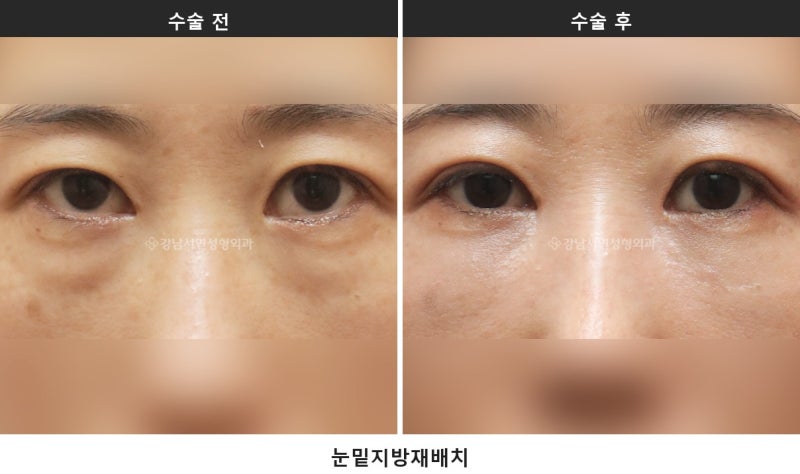
EYE SURGERY · Lower Eyelid Surgery Information
Whether there is skin laxity determines the surgical approach
■ The Bottom Line
Lower blepharoplasty and lower eyelid fat repositioning both address puffy fat under the eyes, but they take different approaches. When there is little to no skin laxity and only the fat needs to be addressed, the usual standard is transconjunctival lower eyelid fat repositioning, which works through the inside of the lower eyelid. When skin laxity is also present and the skin needs to be addressed, lower blepharoplasty, which involves a skin incision, is generally chosen.
■ Lower Eyelid Fat Repositioning: Accessed Through the Inner Conjunctiva
Lower eyelid fat repositioning is performed through the inner conjunctiva, the mucous membrane on the inside of the lower eyelid, so no scar is visible from the outside. Rather than removing the fat, it is moved to the hollowed areas to fill them in. To reduce the chance of the bulge returning, the orbital septum is also reinforced. When the midface looks hollow alongside the fat bulge, fat grafting may be added to restore volume.
■ Lower Blepharoplasty: Addressing Skin Along With Fat
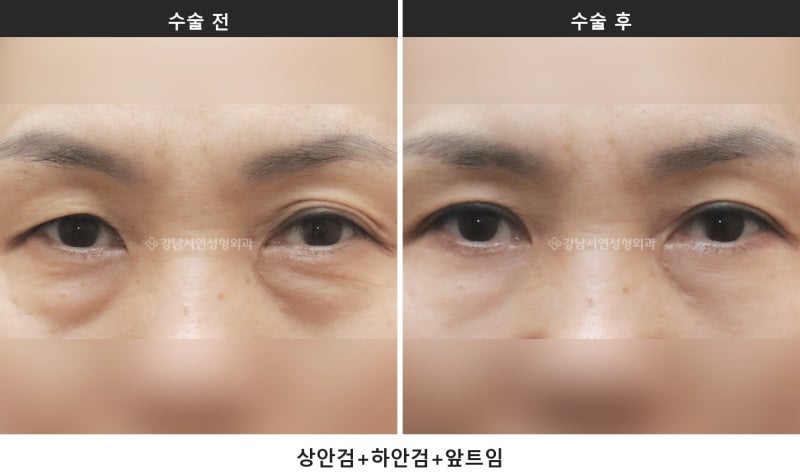
Lower blepharoplasty is a skin-incision fat repositioning procedure performed when there is skin laxity or when midface lifting is needed. An incision is made along a pre-planned line to remove excess skin and protruding fat. Orbital septum reinforcement and midface lifting are performed as well, after which the skin and muscle are pulled upward, secured, and sutured.
■ Which Option Is Right for Your Eyes?
When there is little to no skin laxity and only the fat needs to be addressed, the transconjunctival method is suitable. When skin laxity is present and must be addressed together, the skin-incision method (known in Korea as “middle-aged lower blepharoplasty”) is appropriate. The type of under-eye fat, skin elasticity, and the degree of midface hollowing all affect which method is best, so even similar under-eye concerns can call for different approaches. It is better to get a proper evaluation first rather than deciding on a method in advance.
■ Can Under-Eye Fat Be Massaged Away?
Many people ask whether under-eye fat bulging can be eliminated with massage or skincare. To answer up front: temporary puffiness and under-eye fat bulging have different causes. Puffiness is caused by temporary fluid or waste buildup and can ease over time or with cold compresses. Under-eye fat bulging, however, is a structural condition in which the fat tissue itself has shifted out of place and protrudes, so massage alone will not return it to its original position.
As we age, the orbital septum that supports the fat weakens, and the fat is pushed downward, appearing as a visible bulge. Because this is a change in the internal structure rather than surface swelling, pressing on it with massage will not return the fat to its original place.
■ Fat Is Repositioned, Not Removed
Simply removing fat tends to cause the area to sink or lose firmness over time, so both procedures are built around repositioning an appropriate amount of fat. Removing too much fat can actually make the area look hollow or reduce firmness. That is why a practical benchmark when choosing a clinic is whether they preserve the aegyosal (the soft fullness under the eyes that gives a friendly, smiling look) while combining repositioning with orbital septum reinforcement.
■ Will Dark Circles Improve Too?
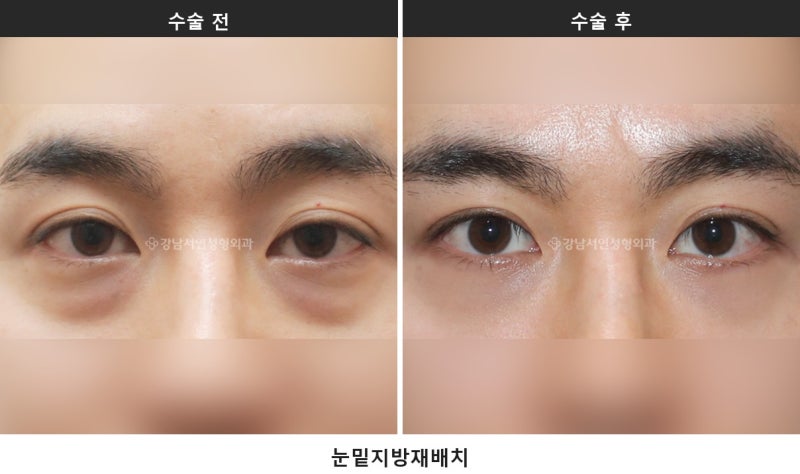
Dark circles generally fall into three categories: pigmentation type, vascular type, and structural type. Of these, the one that lower eyelid fat repositioning can improve is the structural type, where protruding under-eye fat casts a shadow. When pigmentation or blood vessels are the cause, surgery will not resolve the problem, so accurately identifying the cause is the first step.
If the dark coloring remains when you gently stretch the skin, it is closer to the pigmentation type. If under-eye shadows are clearly visible in bright light, the structural type may be suspected. However, several types often occur together, so it is best to confirm the exact classification through a proper evaluation.
■ Lower Blepharoplasty Scars Are Not Inevitable
The idea that lower blepharoplasty always leaves a scar is not accurate. If protruding under-eye fat is the main concern, the fat is repositioned through the inner conjunctiva using the transconjunctival method. In this case, no external scar is visible at all, and orbital septum reinforcement is performed alongside fat repositioning to help prevent recurrence.
When there is skin laxity or midface lifting is needed, the skin-incision approach (lower blepharoplasty) is used. Even then, the key to minimizing scarring is making a precise incision along the planned design, removing the sagging skin and fat, and then using meticulous sutures that pull and secure the skin and muscle in place.
■ Aegyosal Loss and Recurrence Are Determined at the Diagnosis Stage
People worried about lower blepharoplasty side effects are mostly concerned about the under-eye area looking flat due to loss of aegyosal, or about reduced firmness from excessive fat removal. If too much under-eye fat is removed during surgery, the aegyosal can disappear along with it, leaving the under-eye area looking flat and smooth. Rather than removing all of the under-eye fat, approaching the area by repositioning only the protruding portions while preserving the aegyosal can help reduce these side effects.
If fat is repositioned without reinforcing the orbital septum, the area may sag again or the bulge may recur over time. Performing septum reinforcement alongside repositioning, so the relocated fat does not slip out of place again, is the key to preventing recurrence.
If the main issue is under-eye fat bulging but the skin is unnecessarily incised, or conversely, if there is skin laxity but only the transconjunctival method is insisted upon, achieving a satisfying result can be difficult. It is important to choose the method by accurately distinguishing the type of under-eye fat and the condition of the skin.
■ Disclaimer
This content is provided for medical information purposes only. It does not recommend any specific surgery or guarantee results. Complications such as bleeding, infection, and inflammation may occur after surgery, and outcomes and recovery periods may vary depending on individual skin conditions. For accurate diagnosis and follow-up, please be sure to consult a specialist.
The photos in this post were taken with the patients’ prior consent.
Part 2 is the post below
Frequently Asked Questions
What is the difference between lower blepharoplasty and lower eyelid fat repositioning?
Both procedures address puffy fat under the eyes, but they take different approaches. When there is little to no skin laxity and only fat needs to be addressed, lower eyelid fat repositioning, performed through the inner conjunctiva, is the usual choice. When skin laxity is present, lower blepharoplasty, which involves a skin incision, is the standard approach.
Which procedure is suitable if there is no skin laxity?
When there is little to no skin laxity and only fat needs to be addressed, transconjunctival lower eyelid fat repositioning, performed through the inside of the lower eyelid, is appropriate. Because the incision is made on the inside, no scar is visible from the outside, and orbital septum reinforcement is also performed to reduce the chance of the bulge returning.
If there is skin laxity, should I get lower blepharoplasty?
When there is skin laxity or midface lifting is needed, lower blepharoplasty using a skin incision is considered the better fit. The key is to make a precise incision along the planned design, remove sagging skin and fat, and then suture while pulling and securing the skin and muscle, which minimizes scarring.
Can under-eye fat bulging be removed with massage?
No, massage alone will not return protruding under-eye fat to its original position. Temporary puffiness can ease over time or with cold compresses, but under-eye fat bulging is a structural change in which the fat tissue has shifted out of place.
Will lower blepharoplasty always leave a scar?
No, lower blepharoplasty does not always leave a scar. If the main issue is under-eye fat bulging, the transconjunctival method, performed through the inner conjunctiva, leaves no visible external scar. When the skin must be incised, the key to minimizing scarring is precise suturing.
Can aegyosal disappear after surgery?
Yes, if too much under-eye fat is removed, the aegyosal can disappear along with it. Approaching the area by repositioning only the protruding portions while preserving the aegyosal can help reduce this side effect.