2026-10-26
Eyelid Hollowing After Double Eyelid Surgery: Adhesion or Volume Loss? Identify the Cause First
Hollowing above the eyelid after double eyelid surgery can come from adhesion or volume loss. Each needs a different fix, so identifying the cause comes first.
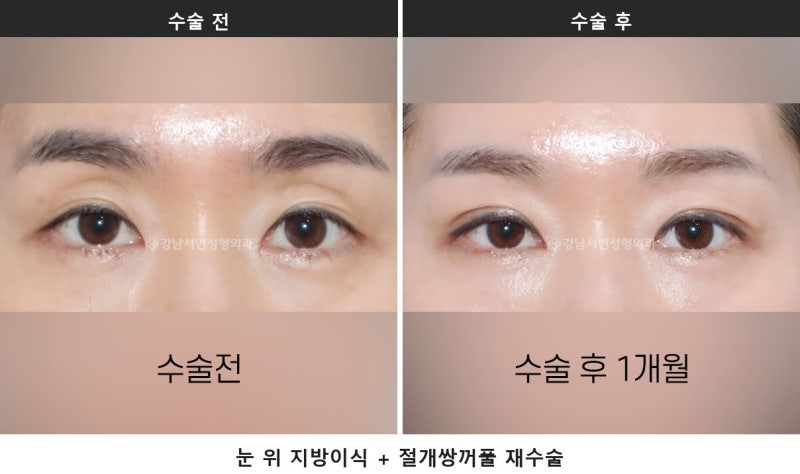
EYE REVISION · Eye Revision Surgery Information
The approach depends on what is causing the hollowing above the eyelid.
■ The Bottom Line
There is more than one reason the upper eyelid area can look sunken. It may be caused by adhesion, where tissue sticks together after a line-creating procedure such as two-line double eyelid surgery, or it may be caused by a simple lack of volume in the upper eyelid. The two require different solutions. If adhesion is the cause, the adhesion must be released and steps must be taken to keep it from re-forming. If volume loss is the cause, filling the deficient area is considered. So when planning double eyelid surgery or a revision, identifying the cause comes first if there is hollowing above the eyelid.
■ Hollowing of the Upper Eyelid Has Two Main Causes
The first is adhesion. After procedures such as two-line double eyelid surgery, the most difficult situation is when tissue adheres together. In these cases, the adhesion must be released, and treatment must also prevent it from re-forming. Without that step, the condition will not improve. Extra folds that develop after double eyelid surgery and failed double eyelid revisions are examples where this adhesion must be properly released. The second is volume loss. In this case, the upper eyelid lacks volume, so the area sinks and a wrinkle forms in that spot.
■ How to Tell Whether It Is Adhesion or Volume Loss
An extra fold caused by adhesion does not disappear even when the upper eyelid is filled; it only improves once the adhesion is released. Conversely, a wrinkle caused by volume loss may improve when the missing volume is restored. Both causes can exist at the same time, so rather than judging by appearance alone, the condition of the eyelid is examined directly during consultation before a plan is made.
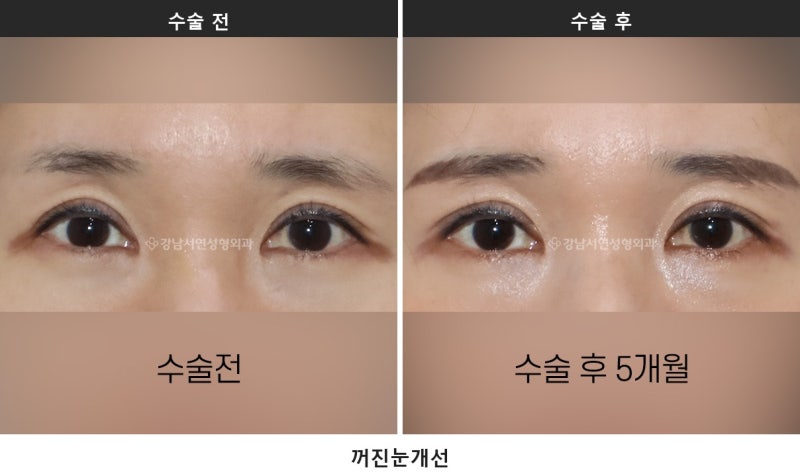
■ When Volume Is Lacking, Fat Grafting Is Considered
When volume is lacking, one option is to harvest fat with a cannula and inject fine fat into the upper eyelid. Typically about half of the transplanted fat survives. If too much is injected from the start, the fat that does take can form lumps, and a separate surgery may be needed to remove them. For that reason, slightly less than seems necessary is injected, with reinforcement in a second stage if needed. This is not a recommendation for eyelid fat grafting on its own. It is a supplementary option considered when upper eyelid hollowing is present during double eyelid surgery or a revision.
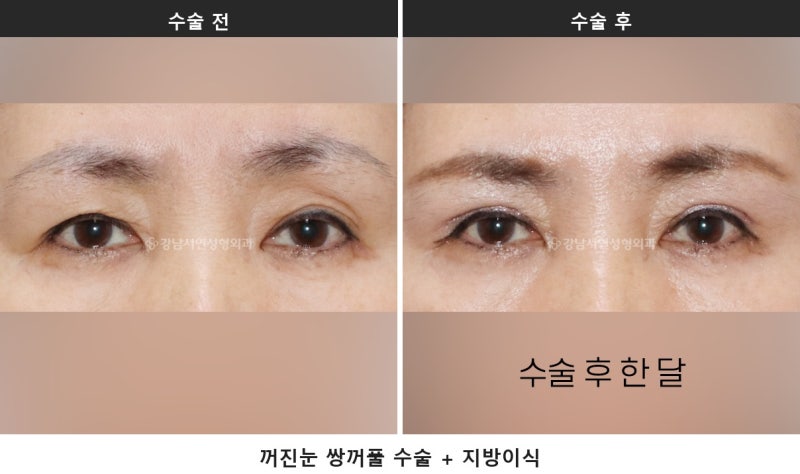
■ If Skin Sagging Is Also Present, Fat Repositioning Is Checked Too
When the upper eyelid is hollow along with skin sagging, some cases are treated with fat grafting alone. However, it is also common for the fat pads above the eyelid to have shifted upward toward the brow. In such cases, the fat pads are first repositioned downward, and fat grafting is then added. This approach can reduce the amount of fat that needs to be transplanted. Excessive fat grafting can leave the surface lumpy or unnatural.
■ When Combined with Eye-Corner Correction or Incisional Double Eyelid Surgery
Sunken-looking eyes with hollowing above the lid often also have a double-fold or triple-fold eyelid. In some cases where there is a double fold and a sleepy look, eye-corner correction alone may solve the problem. When the hollowing above the lid is very pronounced, fat grafting and incisional double eyelid surgery may be performed together. In aging eyes, a sleepy, tired look can also appear alongside hollowing above the lid. Ultimately, the necessary procedures differ from case to case, and the key is determining the combination that suits each eye.
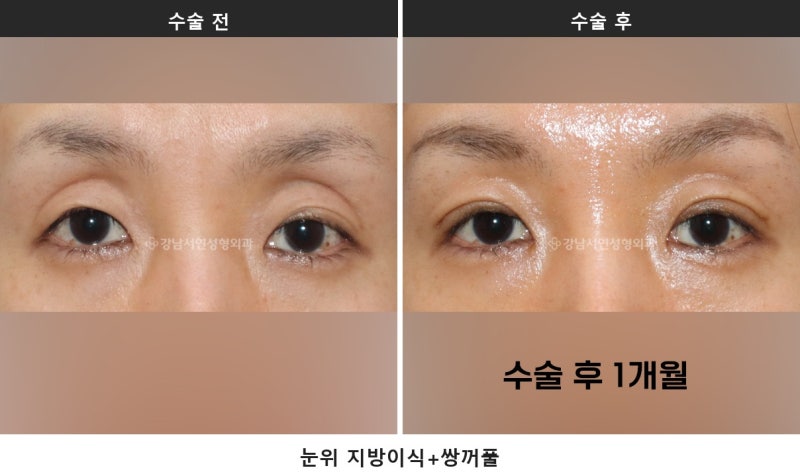
■ What to Know About Recovery After Surgery
Even when fat grafting is done at the same time, the appearance keeps changing immediately after surgery, at one week, and at one month. Around one month, the fat has settled to a degree and much of the swelling has subsided, but the double eyelid line may still show swelling and incision marks, which fade over time. If the extra fold is still there right after surgery, it may mean the adhesion has not been released, so the cause is rechecked while monitoring recovery.
■ Helpful Things to Organize Before a Consultation
It helps to write down whether you have had double eyelid surgery or a line-creating procedure such as two-line surgery before, when the hollowing above your eyelid first became noticeable, whether you have an extra fold, and how your eyes look when closed versus open. If you have previous surgical records, it is a good idea to bring them along.
■ This Article May Help If You Are Wondering About the Following
- Anyone concerned that the upper eyelid looks sunken after double eyelid surgery or a revision
- Anyone wondering whether upper eyelid hollowing is caused by adhesion or volume loss
- Anyone worried about the appearance of the upper eyelid after two-line surgery
- Anyone wanting to know whether upper eyelid fat grafting can be done together with double eyelid surgery
■ Recovery Timeline
Surgery time: About 1 hour
Anesthesia: Sedation or local anesthesia
Clinic visits: 1–2 times
Suture removal: 4–12 days later
Hospitalization: None (same-day discharge)
Return to daily activities: 5–7 days later
The timeline above may vary depending on whether fat grafting is done at the same time and the extent of the revision.
■ FAQ
Q1. Why does the upper eyelid area become sunken?
There are two main causes: adhesion, where tissue sticks together after a line-creating procedure such as two-line surgery, and a lack of volume in the eyelid. The two can also occur together.
Q2. Can hollowing caused by adhesion be resolved with fat grafting?
If adhesion is the cause, filling the area with fat will not improve it. The adhesion must be released and steps taken to prevent it from re-forming. That is why identifying the cause comes first.
Q3. Is more fat grafting always better?
No. Since about half typically survives, injecting too much can lead to lumps or an uneven surface. It is better to inject slightly less and reinforce in a second stage if needed.
Q4. Can it be done together with eye-corner correction or double eyelid surgery?
Depending on the condition of the eyes, it may be performed together with eye-corner correction or incisional double eyelid surgery. If there is a double fold along with a sleepy look, eye-corner correction alone may sometimes be enough, so the decision is made after examination.
■ Gangnam Seoyeon Plastic Surgery's Approach
At Gangnam Seoyeon Plastic Surgery, Chief Director Choi Dong-il first determines whether the cause of upper eyelid hollowing is adhesion or volume loss. If adhesion is the cause, treatment focuses on releasing it and preventing it from re-forming. If volume is lacking, the approach may involve repositioning the fat and a small amount of fat grafting. The method is chosen to suit each case.
Gangnam Seoyeon Plastic Surgery approaches upper eyelid hollowing based on three principles.
First, identifying the cause comes before choosing a method.
Second, avoiding excessive grafting and reinforcing in stages when needed.
Third, a comprehensive judgment that considers eye-corner correction and double eyelid surgery together.
If you would like to see similar cases, you can view upper eyelid fat grafting and double eyelid revision cases in the before-and-after photos on the Gangnam Seoyeon Plastic Surgery website.
■ Disclaimer
This content is written to provide medical information and does not recommend any specific surgery or guarantee results. Complications such as bleeding, infection, and inflammation may occur after surgery, and results and recovery periods may vary depending on individual skin condition and the method chosen. Accurate diagnosis and selection of a method must always be confirmed through consultation with a specialist.
The photos in this post were taken with the patients' prior consent.
Frequently Asked Questions
Why does the upper eyelid area become sunken?
There are two main causes. Adhesion, where tissue sticks together after a line-creating procedure such as two-line surgery, can be one cause, and sinking can also occur when the eyelid lacks volume. The two can also coexist.
Can hollowing caused by adhesion be resolved with fat grafting?
If adhesion is the cause, filling the area with fat will not improve it. The adhesion must be released and steps taken to prevent it from re-forming, which is why identifying the cause before fat grafting is important.
Is more fat grafting always better?
No. Since about half of the transplanted fat typically survives, injecting too much from the start can cause lumps or an uneven surface. For that reason, a slightly conservative amount is injected, with a second-stage reinforcement if needed.
Can it be combined with eye-corner correction or double eyelid surgery?
Yes. Depending on the condition of the eyes, it may be performed together with eye-corner correction or incisional double eyelid surgery. If there is a double fold along with a sleepy look, eye-corner correction alone may sometimes be enough, so the decision is made after examination.
How can you tell whether it is adhesion or volume loss?
Rather than judging by appearance alone, the condition of the eyelid is examined directly during consultation. An extra fold caused by adhesion does not disappear even when the upper eyelid is filled and only improves once the adhesion is released, whereas a wrinkle caused by volume loss may improve when the missing volume is restored.
How long is the recovery period after surgery?
Return to daily activities is 5–7 days after surgery, and suture removal is 4–12 days after surgery. No hospital stay is required, and patients go home the same day. Surgery takes about 1 hour, and the timeline may vary depending on whether fat grafting is done at the same time and the extent of the revision.