2026-10-28
Blepharoptosis Explained: When Weak Eyelid Muscles Cover Your Eyes
Blepharoptosis is when weakened eyelid muscles let the upper lid cover the iris. Learn the difference between true and pseudo types and when eye-lift surgery helps.
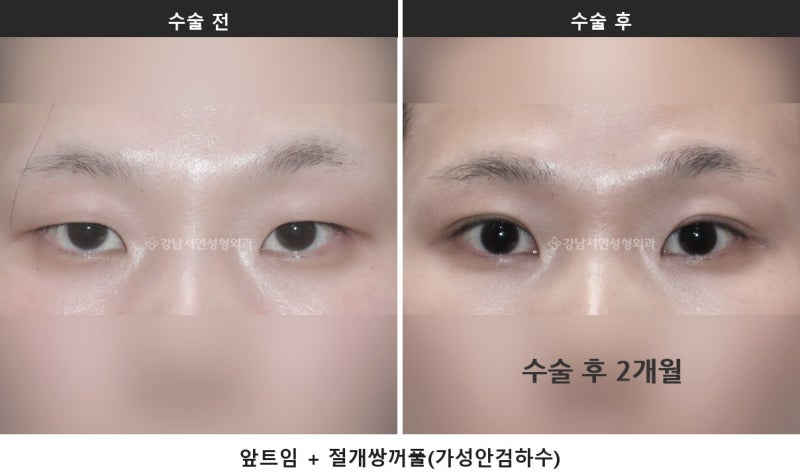
EYE SURGERY · Eyelid Surgery Information
A guide to the difference between true and pseudo blepharoptosis, and how it leads to eye-lift surgery
■ The Bottom Line
Blepharoptosis is a condition in which the muscle that lifts the upper eyelid is weakened, causing the lid to cover more of the iris than usual. The normal distance from the center of the pupil to the upper eyelid is 4–5 mm, while in blepharoptosis it drops to about 1–2 mm, creating a sleepy, tired look. Mild blepharoptosis can be improved with eye-lift surgery, so once you understand what blepharoptosis is, the reason for eye-lift surgery becomes clear as well.

■ What Blepharoptosis Means and How It Is Measured
Blepharoptosis (眼瞼下垂) is a condition in which the upper eyelid droops and covers the iris. An ideal eye shows more than 80% of the iris when open. A distance of 4–5 mm from the center of the pupil to the eyelid is considered normal, while 1–2 mm is classified as blepharoptosis. Because so much of the eye is covered, this creates a sleepy impression.
■ True and Pseudo Blepharoptosis Are Different
Blepharoptosis is broadly divided into true and pseudo types. In true blepharoptosis, the muscle that opens the eyes is weak, so the eyelid covers the iris, and the person compensates by using the forehead muscles to open the eyes, which is uncomfortable. Pseudoptosis, by contrast, has no problem with the eye-opening muscle itself, but drooping of the eyelid makes it look like blepharoptosis. Because the surgical approach differs depending on the type, accurate diagnosis is essential.
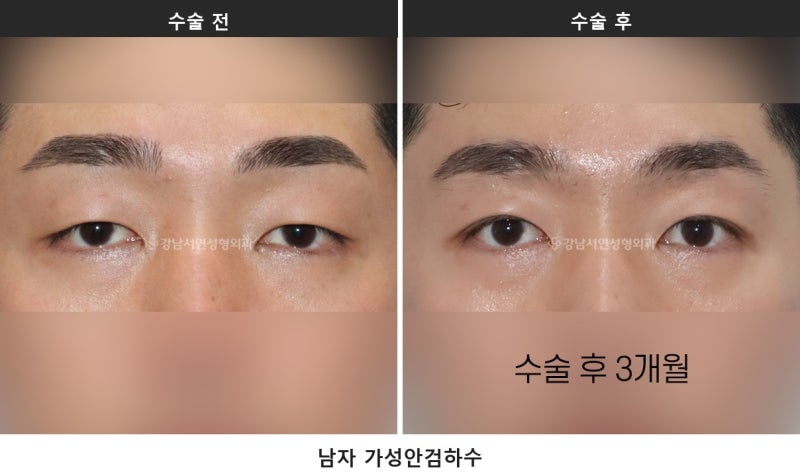
■ Problems That Can Arise If Blepharoptosis Is Left Untreated
If blepharoptosis is left untreated, you will keep using your forehead muscles to open your eyes, which can cause forehead wrinkles. It can also lead to uneven eye sizes, headaches, and reduced vision. This is why some cases require correction beyond simply making the eyes look smaller.
■ Mild Cases Call for Eye-Lift Surgery; Severe Cases Need a Different Approach
Eye-lift surgery is a procedure that improves mild blepharoptosis by correcting eye-opening function, clearing up the sleepy look and making the eyes appear more alert. At Gangnam Seoyeon Plastic Surgery, most cases are performed with an incision technique that preserves the orbicularis oculi muscle. The non-incision method is applied cautiously in no more than 10% of cases, only when the skin is thin and eye-opening strength is good. If the levator muscle has little or no function, or is damaged, standard eye-lift surgery may not solve the problem. In such cases, we consider a highly advanced procedure using the common fascial sheath (CFS) located deep within the eye. This method offers easier eye-opening and good results for eye closing, but it requires a high level of surgical skill.
You can find the specific methods of eye-lift surgery in the article 'Eye-Lift Surgery: Correcting Your Eye-Opening Strength.'
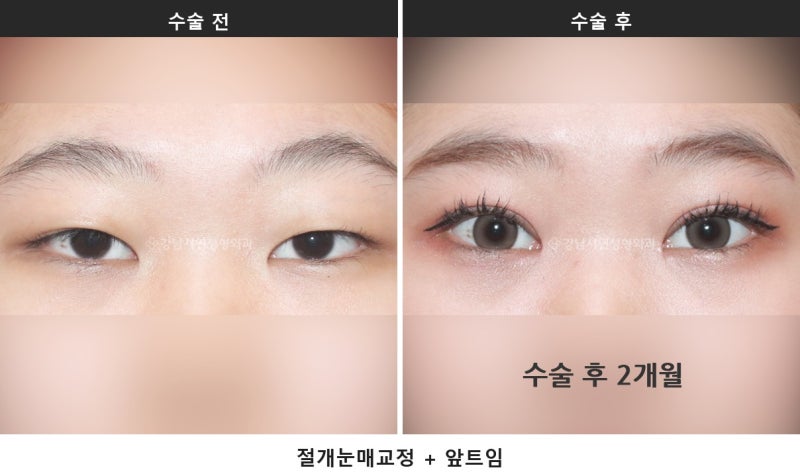
■ A Typical Eye-Lift Case for Women
For women, eye-lift surgery is often designed to make sleepy-looking eyes larger and more defined while naturally revealing the double eyelid crease. Depending on the crease length and overall look, inner corner (medial canthoplasty) or outer corner (lateral canthoplasty) openings can be performed together for a more open, refreshed eye shape. The incision technique carries a relatively low risk of the crease loosening.
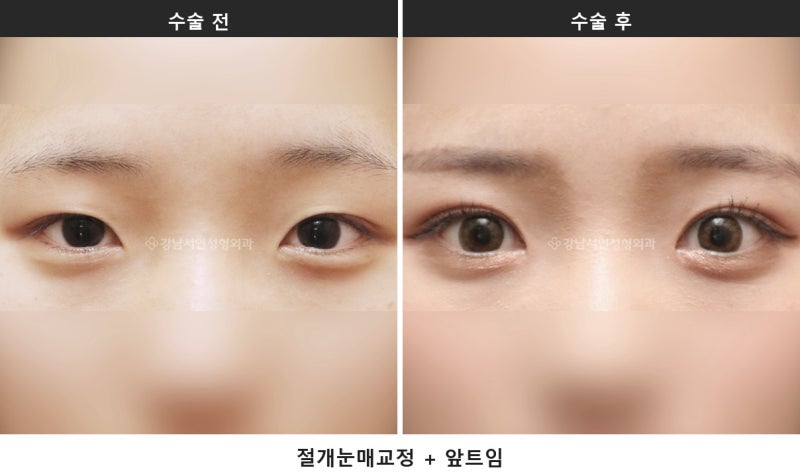
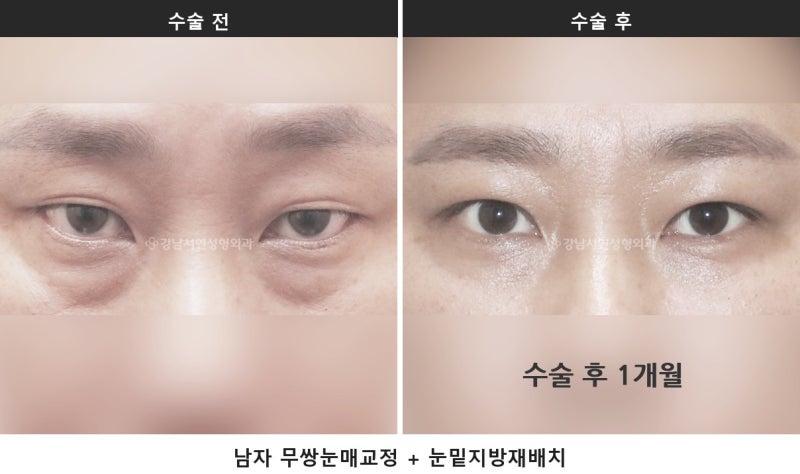
■ Men's Crease-Free Eye-Lift Case
Men's approach differs from women's: rather than making a double eyelid visible, the goal is to correct eye-opening strength either without a crease or by covering the crease with soft tissue so it doesn't show. Men's skin tends to be thicker, so creases often loosen easily; for this reason, most cases are performed with an incision technique, and the non-incision method is cautiously applied in only about 10–20% of cases. It is considered for those who tense their brows and forehead to open their eyes, or who are concerned about a sleepy, heavy-looking appearance. In 2018, Gangnam Seoyeon Plastic Surgery published an SCI-level paper on crease-free eye-lift surgery for men in a U.S. aesthetic plastic surgery journal.
■ This Article Can Help If You Have These Questions
- Those who want to know the exact meaning of blepharoptosis
- Those who want to understand the difference between true and pseudo blepharoptosis
- Those who notice their forehead or eyebrows straining when they open their eyes
- Those who wonder how blepharoptosis connects to eye-lift surgery
■ Recovery Timeline
Surgery time: 30–60 minutes
Anesthesia: Sedation or local anesthesia
Follow-up visits: 1–2 times
Suture removal: 4–12 days later
Hospital stay: None (same-day discharge)
Return to daily life: 3–7 days later
Major swelling typically subsides within 1–2 weeks, and natural results settle in around 3–6 months. Recovery may vary depending on the severity of blepharoptosis and the method chosen.
■ FAQ
Q1. How can I tell if I have blepharoptosis?
You can check whether more than 80% of the iris is visible when your eyes are open, and whether the distance from the center of the pupil to the upper eyelid is 4–5 mm (1–2 mm suggests possible blepharoptosis). For an accurate judgment, it is best to get an examination.
Q2. What is the difference between true and pseudo blepharoptosis?
True blepharoptosis involves a weak eye-opening muscle, while pseudoptosis involves no muscle problem but looks like blepharoptosis because the eyelid droops.
Q3. Can all blepharoptosis be resolved with eye-lift surgery?
Mild blepharoptosis can be improved with eye-lift surgery. However, if the levator muscle has little or no function or is damaged, a different approach such as common fascial sheath (CFS) surgery may be needed, so diagnosis comes first.
Q4. Do men undergo the same surgery?
The principle of correcting eye-opening strength is the same, but for men the design is different: the approach shifts toward covering the double eyelid with soft tissue rather than revealing it.
■ Gangnam Seoyeon Plastic Surgery's Approach
At Gangnam Seoyeon Plastic Surgery, Chief Director Choi Dong-il personally oversees each case from consultation through surgery. We comprehensively evaluate eyelid thickness, eye-opening muscle strength, and skin elasticity to first determine whether a case is true or pseudo, and whether it is mild or severe. We then take a dynamic fixation approach that preserves the orbicularis oculi muscle.
At Gangnam Seoyeon Plastic Surgery, we approach blepharoptosis based on three principles.
First, precise diagnosis that distinguishes between true and pseudo blepharoptosis.
Second, choosing a method that considers eye-opening strength and left-right balance.
Third, delicate surgery that preserves the orbicularis oculi muscle.
If you would like to see similar cases, you can view eye-lift before-and-after photos on the Gangnam Seoyeon Plastic Surgery website.
■ Disclaimer
This content is provided for medical information purposes only and does not recommend any specific surgery or guarantee results. Complications such as bleeding, infection, and inflammation may occur after surgery, and results and recovery periods may vary depending on individual skin condition and the method chosen. Please always confirm an accurate diagnosis and treatment options through consultation with a specialist.
The photos in this post were taken with the patients' prior consent.
Frequently Asked Questions
What does blepharoptosis mean?
Blepharoptosis is a condition in which the upper eyelid droops and covers the iris. A distance of 4–5 mm from the center of the pupil to the eyelid is considered normal, while 1–2 mm indicates blepharoptosis. For an accurate judgment, it is best to get a consultation.
What is the difference between true and pseudo blepharoptosis?
True blepharoptosis involves a weak eye-opening muscle, while pseudoptosis involves no muscle problem but looks like blepharoptosis because the eyelid droops. Because the surgical approach differs depending on the type, diagnosis is important.
What problems can occur if blepharoptosis is left untreated?
It can cause forehead wrinkles and uneven eye sizes, and may also lead to headaches or reduced vision. This is why some cases require correction beyond simply making the eyes look smaller.
Can all blepharoptosis be resolved with eye-lift surgery?
Not all cases. Mild blepharoptosis can be improved with eye-lift surgery, but if the levator muscle has little or no function or is damaged, standard eye-lift surgery may not solve the problem and a different approach may be needed. That is why diagnosis comes first.
Do men have the same surgery as women?
The principle of correcting eye-opening strength is the same, but the design differs. Rather than revealing the double eyelid, men's surgery aims for either no visible crease or covering the crease with soft tissue. It is mostly performed with an incision technique.
How long is the recovery after eye-lift surgery?
Most people return to daily life 3–7 days after surgery, and major swelling subsides within 1–2 weeks. Suture removal takes place 4–12 days after surgery, and natural results settle in around 3–6 months. Recovery may vary depending on the severity of blepharoptosis and the method chosen.