2026-10-18
Middle-Aged Under-Eye Bulges or Hollows: Fat Repositioning or Lower Blepharoplasty?
Under-eye fat that bulges or hollows out and casts shadows is repositioned and the septum reinforced rather than simply removed. The right option depends on skin laxity.
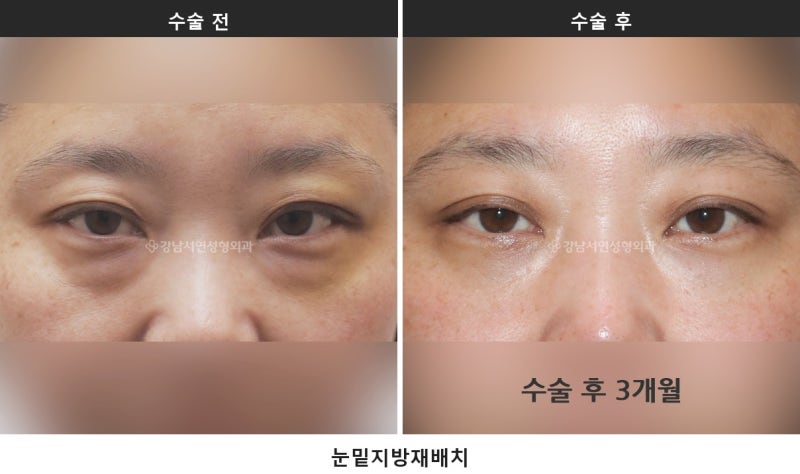
EYE SURGERY · Under-Eye Surgery Information
Check the degree of skin laxity before your consultation
■ The Short Answer
When under-eye fat bulges out or sinks in and creates a shadowed look, the approach is not simply to remove the fat, but to reposition an appropriate amount and reinforce the septum. If there is little skin laxity and only the fat needs attention, transconjunctival fat repositioning, which is performed through the inner conjunctiva, is considered. If skin laxity also needs to be addressed, skin-incision fat repositioning (lower blepharoplasty for middle-aged patients) is considered. Which option is right for you is determined after a detailed evaluation of your under-eye condition.
■ Why Under-Eye Fat Shouldn't Simply Be Removed
When under-eye fat protrudes, it casts a shadow in that area that can look like a dark circle. On the other hand, removing too much fat can make the area look hollow or reduce firmness. Removing an appropriate amount of fat is not a problem, but when fat is removed indiscriminately, the area tends to hollow out again or lose firmness over time. For this reason, Gangnam Seoyeon Plastic Surgery takes the approach of repositioning an appropriate amount of fat to create a dimensional under-eye contour. However, dark circles caused by pigmentation, rather than by shadows from fat protrusion, may require separate care.
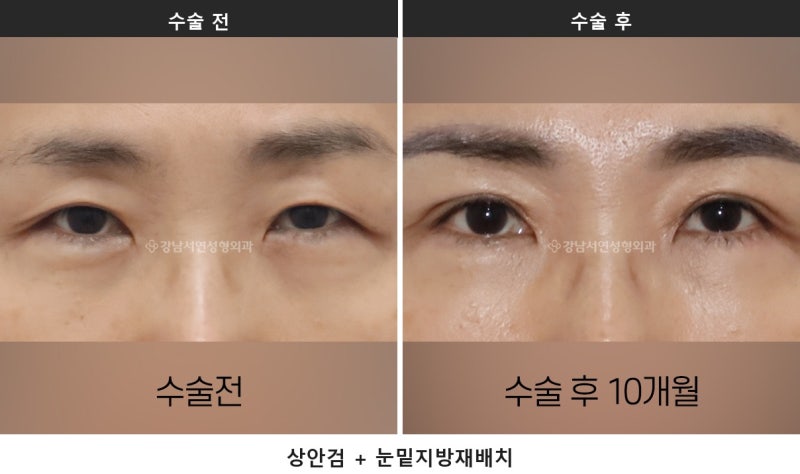
■ Option A. Transconjunctival Fat Repositioning: No Visible Scar
This procedure is performed through the inner conjunctiva, the lining of the lower eyelid, so no scar is visible on the skin. The technique varies depending on the type of under-eye fat. In simple fat protrusion, where only the fat bulges, fat repositioning and septum reinforcement fill the volume toward the nasal side and help reduce recurrence. When fat protrusion is accompanied by midface hollowing that makes the area look sunken, fat grafting is used after repositioning to restore volume to the depressed area.
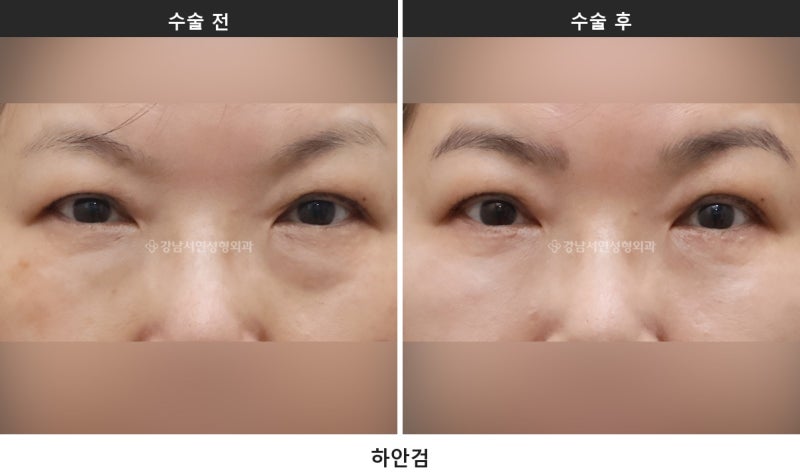
■ Option B. Skin-Incision Fat Repositioning, Known as Lower Blepharoplasty
This is performed when there is skin laxity or when a midface lift is needed. After an incision along the planned design line, excess skin under the eye and protruding fat are trimmed. This is followed by fat repositioning, septum reinforcement, and midface lifting. The skin and muscle are then pulled upward, secured in place, and the incision is closed. The biggest difference from Option A, which approaches through the conjunctiva, is that this method incises the skin and therefore also addresses sagging skin.
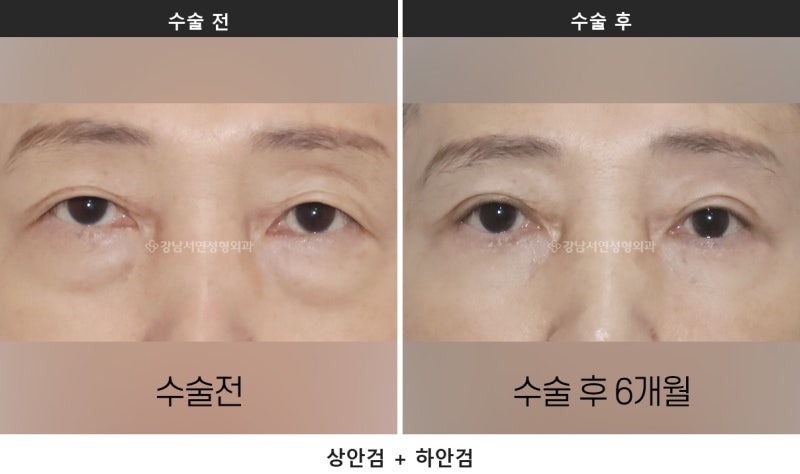
■ Which Option Is Right for Your Eyes?
When there is little skin laxity and only the fat needs to be addressed, the transconjunctival approach is suitable. When skin laxity needs to be addressed along with the fat, the skin-incision approach (lower blepharoplasty for middle-aged patients) is suitable. Even for the same under-eye concern, the best method depends on the type of under-eye fat, skin elasticity, and the degree of midface hollowing. Rather than deciding on a method in advance, it is better to get a proper evaluation first.
■ In Some Cases, It Is Combined With Upper Eyelid Surgery
If there are also concerns about drooping upper eyelids or eye shape, upper blepharoplasty combined with under-eye fat repositioning, or upper and lower blepharoplasty performed at the same time, may be considered. Looking at both the upper and lower eyelids allows the plan to account for the balance of the entire eye. However, whether to combine procedures and the scope of surgery are determined individually based on the condition of each eye.
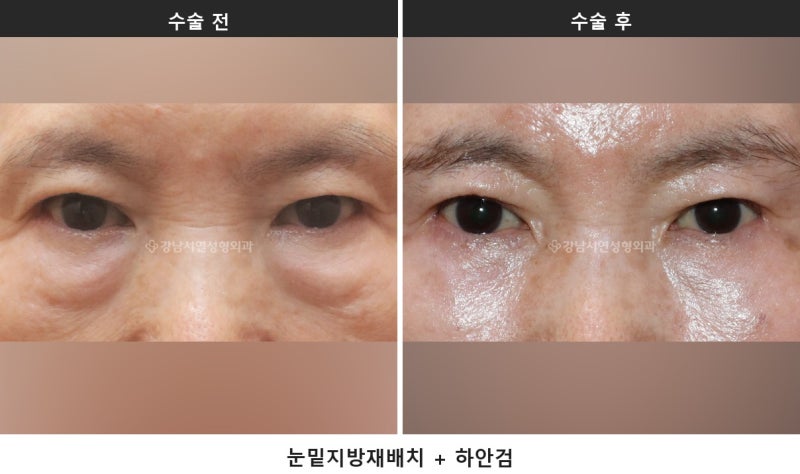
■ When Under-Eye Fat Repositioning and Lower Blepharoplasty Are Performed Together
In eyes that need both fat repositioning and skin tightening, the two approaches may be combined. This applies to cases where both fat protrusion and skin laxity are present. Which areas are addressed and how they are addressed is determined through a detailed evaluation before surgery.
■ Concerns About the Smile Line and Recurrence
Two concerns that patients often raise when considering under-eye surgery are loss of the smile line (aegyosal) and recurrence. Through a detailed evaluation, Gangnam Seoyeon Plastic Surgery identifies the boundary between the smile line and the fat, shapes the under-eye area while preserving the smile line, and reinforces the septum to reduce the likelihood of recurrence. However, natural changes due to aging may appear over time.
■ Things to Organize Before Your Consultation
Look in the mirror and note whether the under-eye area looks puffy, or whether it looks hollow and shadowed, or whether the skin looks loose. Also record any past under-eye or eyelid surgery, as this will make your consultation more precise. Telling us specifically what bothers you most will help determine the right approach.
■ This Article May Help If You
- Are concerned about under-eye puffiness or hollowing that has appeared with middle age
- Want to know whether under-eye fat repositioning or lower blepharoplasty is right for you
- Want to know first whether there is skin laxity
- Are worried about loss of the smile line and recurrence
■ Recovery Timeline
Surgery time: 30–60 minutes
Anesthesia: Sedation or local anesthesia
Clinic visits: 1–2
Suture removal: 4–12 days later
Hospitalization: None (same-day discharge)
Return to daily activities: 3–7 days later
The timeline above may vary depending on the surgical method and the scope of combined procedures.
■ FAQ
Q1. What is the difference between under-eye fat repositioning and lower blepharoplasty?
Transconjunctival under-eye fat repositioning is approached through the inner conjunctiva, so no scar is visible on the skin. Lower blepharoplasty (skin-incision fat repositioning) involves an incision in the skin to address sagging skin and protruding fat together, and it includes midface lifting.
Q2. Wouldn't it be better to remove the fat?
Simple removal tends to lead to re-hollowing or reduced firmness over time, so the approach is to reposition an appropriate amount of fat and reinforce the septum.
Q3. Will dark circles also improve?
When under-eye fat protrusion creates shadows that look like dark circles, fat repositioning may improve them. Pigmented dark circles may require separate treatment.
Q4. Will it come back?
Septum reinforcement is performed to reduce the likelihood of recurrence. However, natural changes due to aging may appear over time.
■ Gangnam Seoyeon Plastic Surgery's Approach
At Gangnam Seoyeon Plastic Surgery, Dr. Choi Dong-il, CEO, evaluates the type of under-eye fat, skin laxity, and the boundary between the smile line and the fat in detail. Based on this, the clinic recommends whether the transconjunctival or skin-incision approach best suits the condition of your eyes. If you were disappointed with a previous surgical outcome, the cause is analyzed first, and a personalized approach is proposed.
Gangnam Seoyeon Plastic Surgery approaches under-eye surgery based on three principles.
First, a three-dimensional approach that repositions an appropriate amount of fat rather than removing it.
Second, a precise evaluation that preserves the smile line.
Third, septum reinforcement to reduce the likelihood of recurrence.
If you would like to see similar cases, you can view the lower blepharoplasty and under-eye fat repositioning before-and-after photos on the Gangnam Seoyeon Plastic Surgery website.
■ Disclaimer
This content is written solely to provide medical information and does not recommend any specific surgery or guarantee results. Complications such as bleeding, infection, and inflammation may occur after surgery. Results and recovery periods may vary depending on individual skin condition and the method chosen. Please be sure to confirm an accurate diagnosis and treatment method through a consultation with a specialist.
The photos in this post were taken with the patients' prior consent.
Frequently Asked Questions
What is the difference between under-eye fat repositioning and lower blepharoplasty?
Under-eye fat repositioning (transconjunctival) is approached through the inner conjunctiva, so no scar is visible on the skin. Lower blepharoplasty differs in that it incises the skin to address sagging skin and protruding fat together. The transconjunctival approach is considered when there is little skin laxity, while lower blepharoplasty is considered when sagging is present.
Shouldn't I remove all the under-eye fat for better results?
Not necessarily. Removing fat indiscriminately can lead to re-hollowing or reduced firmness over time, so repositioning an appropriate amount of fat and reinforcing the septum is considered instead. Removing an appropriate amount of fat is not in itself a problem.
Will the smile line be preserved during surgery?
The approach aims to preserve the smile line by identifying the boundary between the smile line and the fat through a detailed evaluation. However, natural changes due to aging may appear over time.
Will it come back after surgery?
Septum reinforcement is performed to reduce the likelihood of recurrence. However, natural changes due to aging may appear over time.
How long is the recovery period after surgery?
Return to daily activities is 3–7 days after surgery, and suture removal is 4–12 days after. There is no hospitalization, and patients are discharged the same day. Surgery takes 30–60 minutes and requires 1–2 clinic visits. The recovery period may vary depending on the surgical method and the scope of combined procedures.
Are there side effects or complications after surgery?
Yes, complications such as bleeding, infection, and inflammation may occur, as noted in the disclaimer. Results and recovery periods may vary depending on individual skin condition and the method chosen, so an accurate diagnosis should be confirmed through consultation with a specialist.