2026-11-04
Can Eyelid Retraction Surgery Be Fixed Just by Removing Eye-Shape Correction Sutures? Timing Makes All the Difference
Overcorrection after eye-shape correction often can't be fixed by suture removal alone once months have passed. Revision usually needs levator recession and Müller's muscle separation.
EYE REVISION · Eyelid Revision Surgery Information
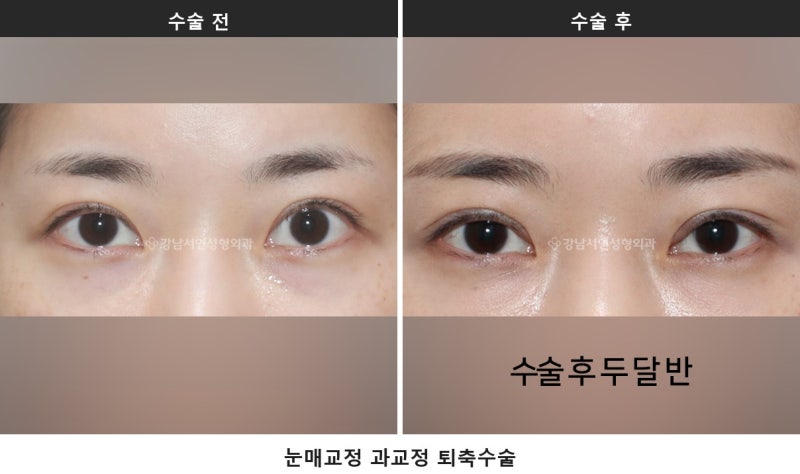
Overly wide-open eyes often can’t be fixed just by removing the sutures.
■ The Short Answer
Overcorrection side effects from eye-shape correction often appear as eyelid retraction, where the eyes open more than necessary and look startled. The most common cause is an earlier procedure that overstrengthened the eye-opening muscles. If several months have passed, simply removing the sutures is often not enough, and levator recession and Müller’s muscle separation are frequently required.
■ Why Does Eye-Shape Correction Overcorrection Happen?
Eye-shape correction adjusts the strength of the muscles that lift the eyelids. Creating more muscle strength than necessary can lead to overcorrection, where the eyes open excessively. In a normal eye, the upper eyelid lightly covers about 1.5–2 mm of the iris. In an overcorrected eye, that coverage disappears and the whites become visible above the iris.
■ “Can’t I Just Remove the Sutures?” The Answer Depends on Timing
Right after surgery, removing the eye-shape correction sutures often resolves the overcorrection. However, once several months have passed, removing the sutures and releasing the adhesions usually doesn’t solve the problem. At this stage, eyelid retraction surgery is needed: the levator muscle, which lifts the eyelid, is receded by an exact amount, and Müller’s muscle attached to the conjunctiva is precisely separated.
The most common question in eyelid retraction consultations is whether removing the eye-shape correction sutures is enough. The short answer: it depends on timing.
■ Levator Recession + Müller’s Muscle Separation: What’s the Difference?
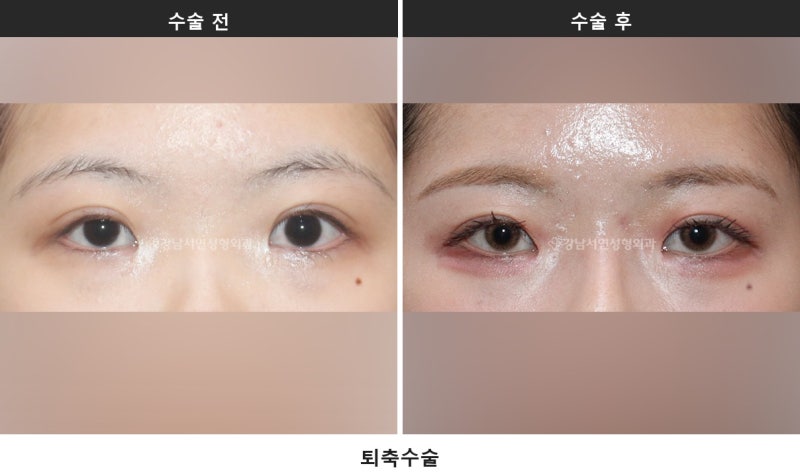
The core of eyelid retraction surgery is levator recession and separation of the conjunctiva and Müller’s muscle.
Levator recession moves the muscle that lifts the eyelid back by an exact amount, reducing the degree of overopening. Müller’s muscle, which is attached to the conjunctiva and also helps open the eyes, must be precisely detached so that the result looks natural and no left-right asymmetry develops.
Because this is a highly demanding procedure in which both steps must be performed accurately at the same time, a procedure that only goes through the motions of releasing adhesions is unlikely to produce good results and may cause asymmetry.
■ These Are Signs of Overcorrection
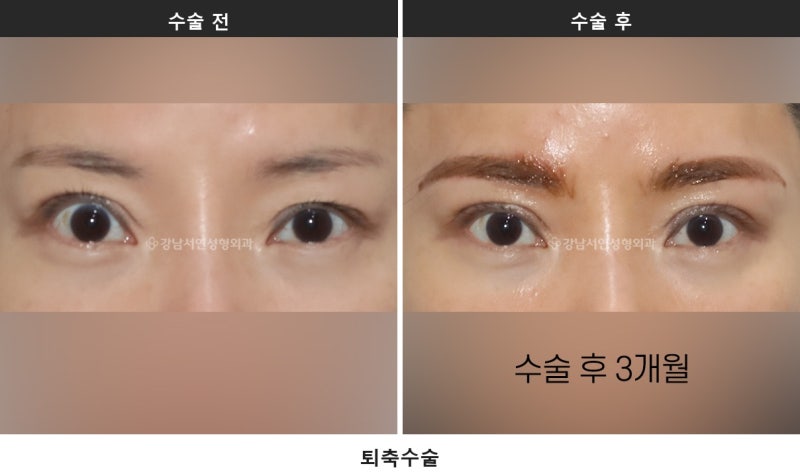
- People whose eyes look unnaturally large or startled after eye-shape correction
- People with the whites showing above the iris, causing a foreign body sensation or dryness
- People whose eyes look just as wide open even after the sutures have been removed
- People who feel discomfort because the mucous membrane (conjunctiva) is pulled up
■ Recovery Timeline
Surgery time: 30–60 minutes
Anesthesia: Sedation or local anesthesia
Clinic visits: 1–2 times
Suture removal: 4–12 days after surgery
Hospitalization: None (same-day discharge)
Return to daily life: 3–7 days after surgery
The timeline above may vary depending on the degree of overcorrection and how much time has passed since surgery.
■ FAQ
Q1. How can I tell whether it’s an overcorrection?
If the upper eyelid barely covers the iris and the whites are visible above it, overcorrection may be suspected. An accurate diagnosis requires confirmation by a specialist.
Q2. If it’s right after surgery, is it okay to just have the sutures removed?
Right after surgery, removing the sutures often resolves the problem. However, if several months have passed, a precise revision that separates the levator muscle and Müller’s muscle is often needed.
Q3. If asymmetry is severe in only one eye, can only that eye be corrected?
In many cases, yes. However, diagnosis and design must also account for left-right balance, so the scope of correction is determined through a detailed evaluation.
Q4. Is there no possibility of recurrence?
Outcomes may vary depending on individual tissue condition and muscle characteristics, so accurate diagnosis and careful surgical planning are important.
■ Gangnam Seoyeon Plastic Surgery’s Approach
At Gangnam Seoyeon Plastic Surgery, Dr. Choi Dong-il, the clinic’s chief director, personally handles everything from consultation through surgery. The team accurately assesses when the overcorrection occurred and how severe it is, then determines whether removing the sutures is enough or whether precise eyelid retraction surgery is required.
Gangnam Seoyeon Plastic Surgery approaches eye-shape correction overcorrection based on three principles.
First, a precise diagnosis by an experienced plastic surgery specialist.
Second, custom design that considers the shape of the eyes and the entire face.
Third, minimizing tissue damage through thorough planning and meticulous surgical technique.
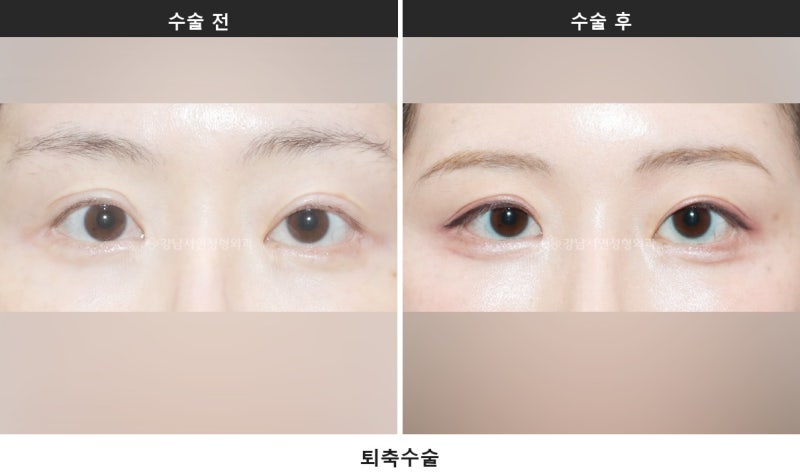
If you’d like to see similar cases, you can view eyelid retraction surgery cases in the before-and-after photos on the Gangnam Seoyeon Plastic Surgery website.
■ Disclaimer
This content is provided for medical information purposes only and does not recommend a specific surgery or guarantee any results. Complications such as bleeding, infection, and inflammation may occur after surgery, and results and recovery periods may vary depending on individual skin condition. For an accurate diagnosis and follow-up, please be sure to consult a specialist.
The photos in this post were taken with the patients’ prior consent.