2026-11-06
Before Eyelid Retraction Surgery, Check Whether Your Upper Lid Covers 1.5–2 mm of the Iris
Eyelid retraction makes eyes look startled, usually from overcorrection in past eye-shape surgery. Check if your upper lid covers 1.5–2 mm of the iris.
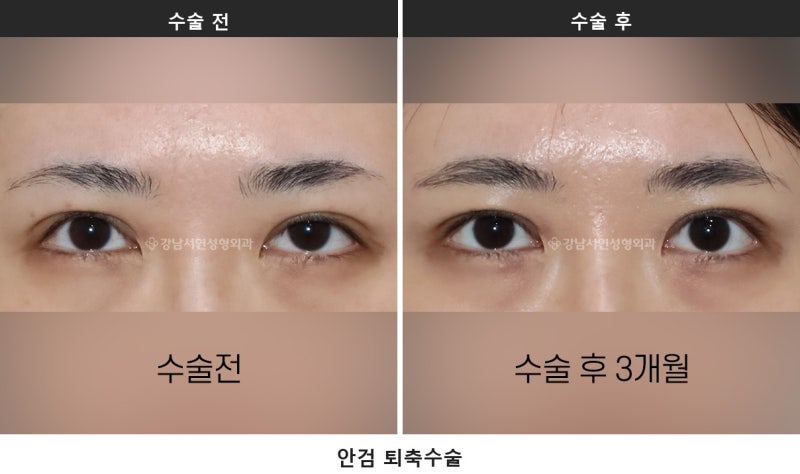
EYE REVISION · Eye Revision Surgery Guide
Eyes Opened Wide Like Startled Eyes from Overcorrection: Why the Levator and Müller's Muscles Also Need to Be Examined
■ The Short Answer
Eyelid retraction refers to a condition in which the eyes open so wide that they look startled, usually after eye-shape correction surgery. It most often results from overcorrection in a previous procedure, although in rare cases it can be caused by a condition such as hyperthyroidism.
■ What Is Eyelid Retraction?
Retraction is a condition in which the eyes open so wide that they look startled. In a normal eye, the upper eyelid slightly covers about 1.5–2 mm of the iris. With retraction, that coverage disappears and the white of the eye becomes visible above the iris. Knowing this benchmark lets you gauge whether your own eyes show signs of retraction.
■ Signs to Watch For
If the whites of your eyes are slightly visible even when your eyes are closed, or if your eyes look unusually large when open and dryness has worsened, eyelid retraction could be a possibility.
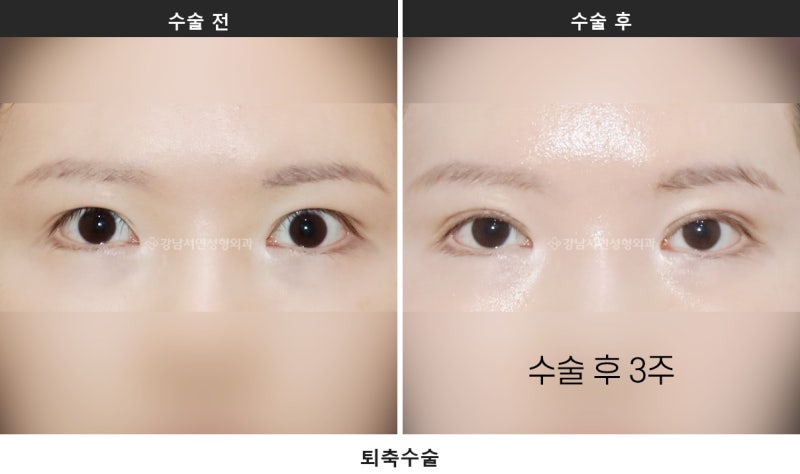
■ Why Does It Happen? Two Causes
Retraction has two main causes.
The first is disease-related. Systemic conditions such as hyperthyroidism can cause the eyelids to open excessively. In these cases, a medical evaluation is also needed.
The second is overcorrection from a previous eye-shape correction surgery. This is the most common cause seen in clinical practice. When an earlier procedure excessively strengthens the eye-opening function, retraction symptoms often appear gradually over time.
Eyelid retraction refers to the eyes opening excessively. It most often develops as a side effect of eye-shape correction surgery, though in some cases it is present from birth.
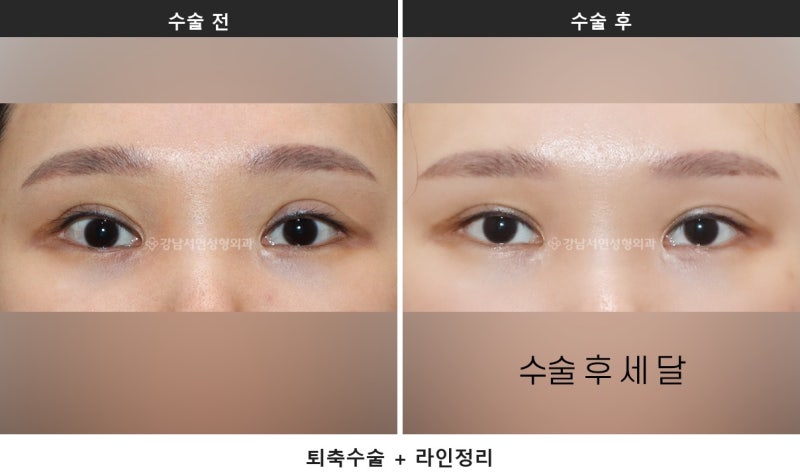
■ Who Typically Seeks This Treatment
- Those who are concerned about looking excessively wide-eyed, as if startled
- Those who feel discomfort from overcorrection after a previous eye-shape correction procedure
- Those who experience a foreign-body sensation or dryness because the conjunctiva is everted
- Those with significant asymmetry who need correction on only one side
■ Recovery Timeline
Surgery time: 30–60 minutes
Anesthesia: Sedation or local anesthesia
Follow-up visits: 1–2
Suture removal: 4–12 days after surgery
Hospital stay: None (same-day discharge)
Return to daily life: 3–7 days after surgery
These timelines may vary depending on your individual eye condition and surgical history.
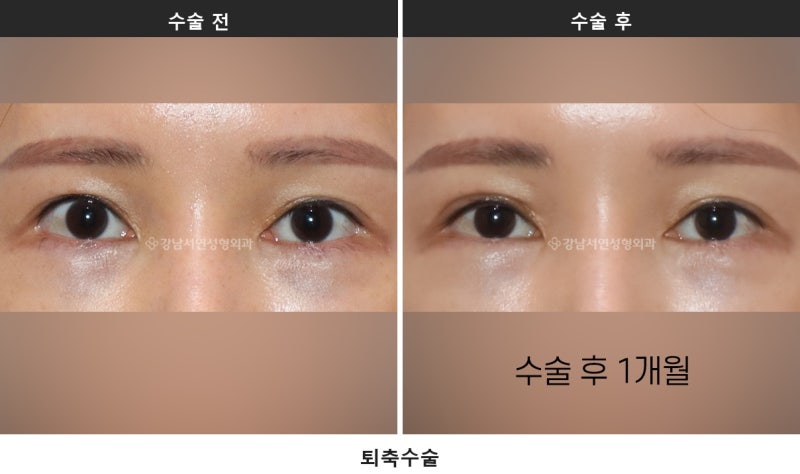
■ FAQ
Q1. What is eyelid retraction surgery?
This surgery corrects eyes that open excessively, creating a startled appearance. It typically involves recessing the levator muscle, which is responsible for opening the eyes, and separating the conjunctiva from Müller's muscle.
Q2. How can you tell a normal eye from a retracted one?
In a normal eye, the upper eyelid covers about 1.5–2 mm of the iris. If that coverage is gone and the white of the eye shows above the iris, retraction may be present.
Q3. Can I have surgery if I have hyperthyroidism?
When hyperthyroidism causes retraction, a medical evaluation and management may also be needed. Informing your doctor of relevant medical history during consultation helps ensure an accurate diagnosis.
■ Gangnam Seoyeon Plastic Surgery's Approach
At Gangnam Seoyeon Plastic Surgery, Chief Director Dr. Choi Dong-il carefully examines eyelid tension and tissue condition before determining the direction of eyelid retraction correction.
Gangnam Seoyeon Plastic Surgery approaches eyelid retraction correction based on three principles.
First, a precise diagnosis by an experienced board-certified plastic surgeon.
Second, a tailored treatment plan suited to each individual.
Third, a stable approach aimed at reducing the risk of recurrence.
If you would like to see similar cases, you can view eyelid retraction surgery cases in the before-and-after photos on the Gangnam Seoyeon Plastic Surgery website.
■ Disclaimer
This content has been prepared solely to provide medical information. It does not recommend any specific surgery or guarantee results. Complications such as bleeding, infection, and inflammation may occur after surgery. Results and recovery periods may vary depending on individual skin condition. Please be sure to confirm an accurate diagnosis and progress through consultation with a specialist.
The photos in this post were taken with the patients' prior consent.
Frequently Asked Questions
What is eyelid retraction?
It refers to a condition in which the eyes open so wide that they look startled. It most often develops from overcorrection after a previous eye-shape correction procedure, and in rare cases it can be caused by a systemic condition such as hyperthyroidism.
How can you tell a normal eye from a retracted eye?
The key is whether the upper eyelid covers about 1.5–2 mm of the iris. In a normal eye, this area is covered, but with retraction, the coverage disappears and the white of the eye becomes visible above the iris.
What kind of evaluation is needed if hyperthyroidism is the cause?
If a systemic condition such as hyperthyroidism is the cause, a medical evaluation and management may also be needed. Informing your doctor of relevant medical history in advance during consultation helps ensure an accurate diagnosis.
How long does eyelid retraction surgery take, and when can I return to daily life?
Surgery takes 30–60 minutes, and the general guideline for returning to daily life is 3–7 days afterward. There is no hospital stay, as you go home the same day, and suture removal takes place 4–12 days after surgery. These timelines may vary depending on your individual eye condition and surgical history.
Can eyelid retraction be present from birth?
Yes, in some cases eyelid retraction is present from birth. However, it most often develops as a side effect of eye-shape correction surgery, and recovery time may vary depending on your previous surgical history.
Can complications occur after eyelid retraction surgery?
Yes, complications such as bleeding, infection, and inflammation can occur. Results and recovery periods may vary depending on individual skin condition, and an accurate diagnosis should be confirmed through consultation with a specialist.