2026-06-20
Eyelid Retraction Correction: Definition and Before & After Photos
Learn about eyelid retraction correction (overcorrection repair) after ptosis surgery, including surgical methods and recovery tips from Gangnam Seoyeon Plastic Surgery.
Hello!
At Gangnam Seoyeon Plastic Surgery, we always strive for the highest patient satisfaction :)
Today, we will discuss eyelid retraction correction, a procedure performed when eyes have been overcorrected following ptosis surgery.
This post is based on the presentation by Director Choi Dong-il at the 15th Ophthalmic Plastic Surgery Research Group Academic Symposium held on July 3, 2022.
Over the past decade, ptosis surgery has become significantly more common. While many cases are successful, the number of side effects following ptosis surgery has also increased.
In particular, surgery intended to make small, sleepy-looking eyes appear larger can sometimes lead to overcorrection, resulting in a ‘startled’ look and functional side effects.
In such cases, a procedure called ‘eyelid retraction correction’ is performed. Since the term ‘eyelid retraction’ can be unfamiliar, many people are confused about its exact meaning.
Through today’s post, we will explain it clearly and accurately.
The photos below have not been edited in any way, except for brightness adjustments :)

What is Eyelid Retraction Correction?
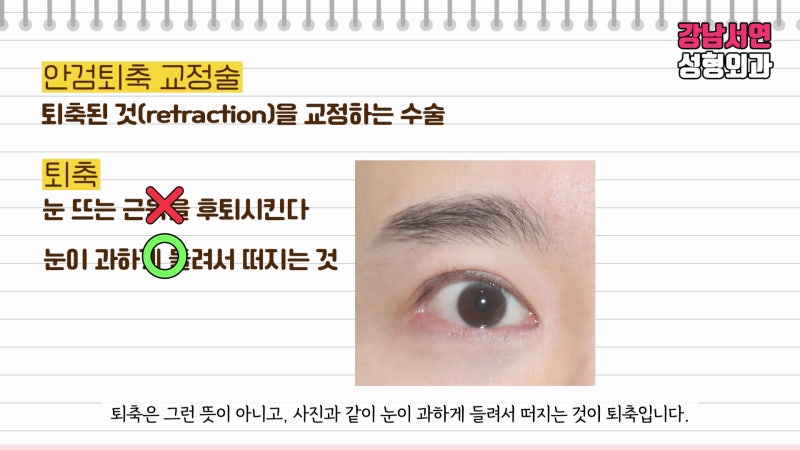
First, let’s define the term. Eyelid retraction correction is a surgery to fix a ‘retracted’ state.
Some people mistakenly think ‘retraction’ refers to the act of moving the eye-opening muscle backward, but that is incorrect. Retraction refers to the condition where the eyelid is pulled up excessively high, as shown in the photo.
Therefore, the surgery to correct these excessively raised eyes is called eyelid retraction correction.
Surgical Method for Eyelid Retraction Correction
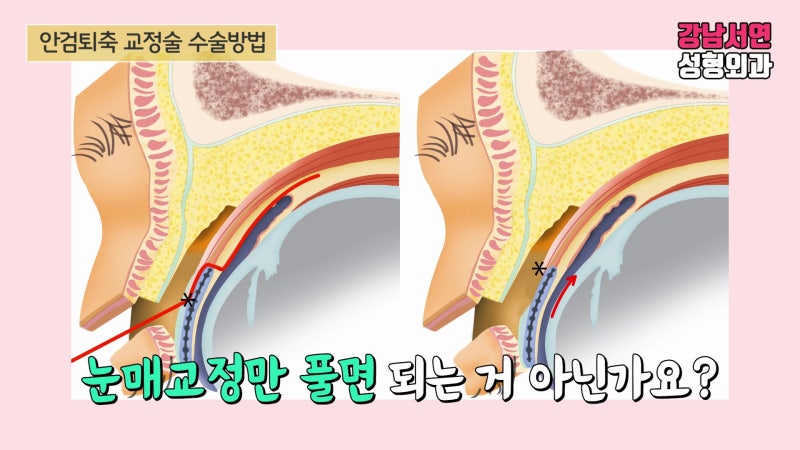
How is eyelid retraction correction performed? You might think that since it’s a side effect of overcorrection, simply ‘undoing’ the ptosis surgery would suffice.
However, simply removing the sutures from the ptosis surgery will never correct a retracted eye.
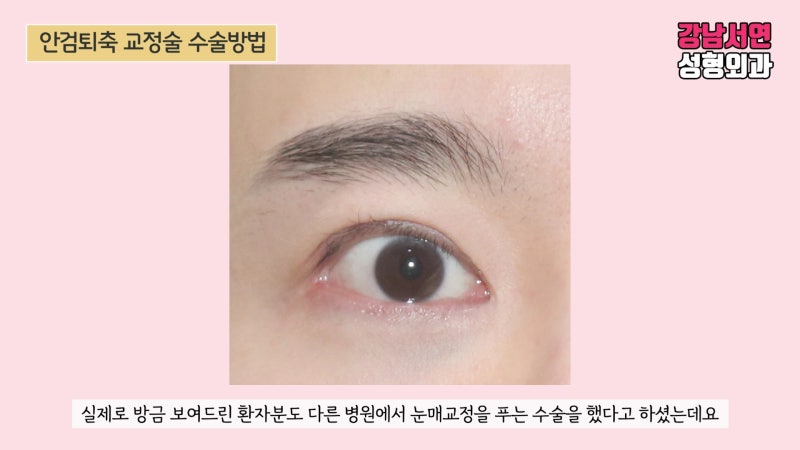
The patient in the photo above actually underwent surgery at another clinic to ‘undo’ their ptosis correction. They were told the eye-opening muscle was released and the Müller’s muscle was separated, yet no correction occurred at all.
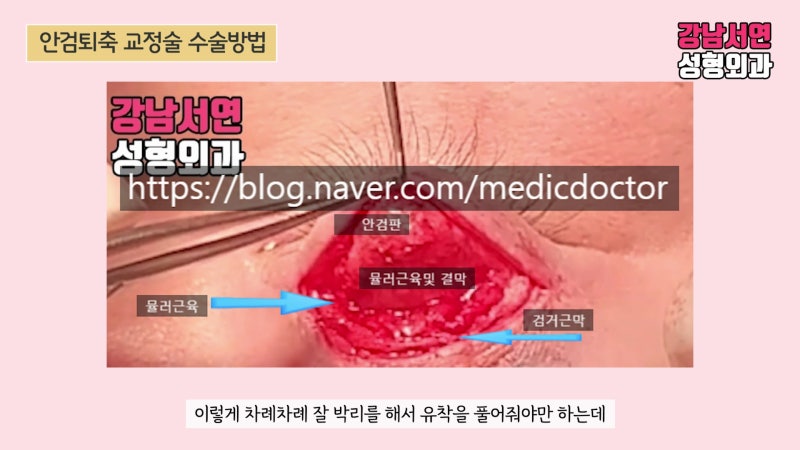
Proper eyelid retraction correction requires first separating the levator muscle (the eye-opening muscle) from the tarsal plate to expose the Müller’s muscle, and then separating the conjunctiva from the Müller’s muscle.
Adhesions must be carefully released step-by-step. This surgery involves many variables and is difficult for those without extensive experience to perform successfully.
Precautions for Eyelid Retraction Correction
There are several variables in eyelid retraction correction surgery.
One common issue is when the correction looks successful immediately after surgery, but the eyes return to a ‘staring’ look later. If the eyes appear over-opened again within 2 to 3 weeks post-op, early revision is necessary.
This happens because the eyes may appear smaller and corrected while under anesthesia during surgery, but once the anesthesia wears off and time passes, it becomes clear that the retraction was not sufficiently addressed. This is why it is crucial to be treated by an experienced surgeon.
Additionally, recurrence of the ‘staring’ look can occur between 1 and 2 months post-op due to scarring or contracture. In these cases, we decide whether to perform further retraction or wait and monitor the progress based on the patient’s condition.
While the probability of needing early revision is relatively higher for eyelid retraction correction, it doesn’t happen to everyone, so there is no need to worry excessively.
Furthermore, the risk of asymmetry is relatively higher compared to other surgeries. Again, this is not a guaranteed outcome. Because asymmetry involves many variables, we typically do not perform early revision for it but rather re-correct after 6 months.
Eyelid Retraction Before & After Photos
Finally, let’s look at a case of eyelid retraction correction.
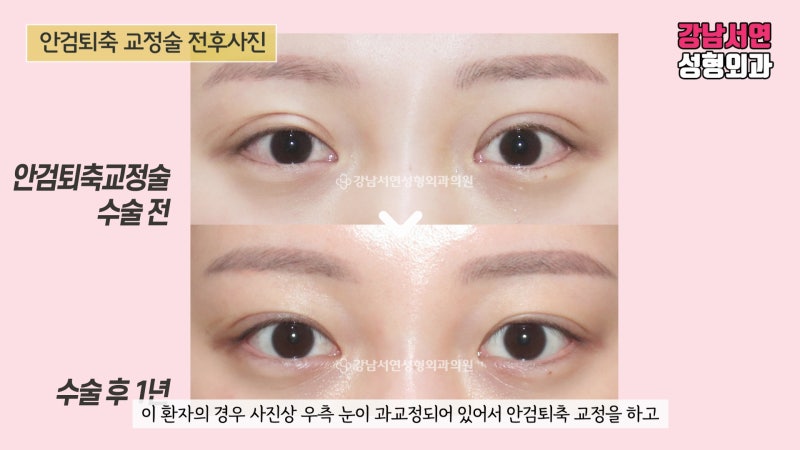
In this case, the eye on the right side of the photo was overcorrected, so retraction correction was performed. The eyelid line on the left side was relatively low, so it was adjusted slightly higher.
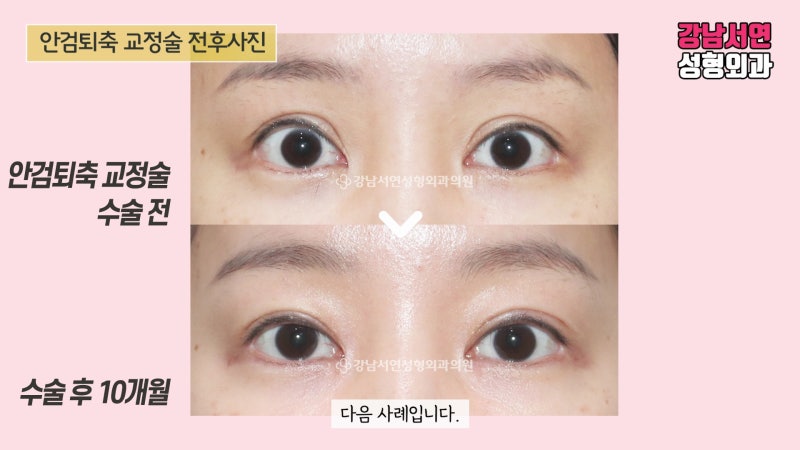
Here is another case.
You can find more detailed information regarding eyelid retraction in the video below.
↓↓↓↓↓↓
Gangnam Seoyeon Plastic Surgery complies with medical laws. The photos in this post were taken under identical conditions with the patient’s prior consent. Please note that side effects such as bleeding, infection, and inflammation may occur after plastic surgery or procedures depending on the individual.
- Single Board-Certified Plastic Surgeon Representative Director system - Accurate assessment of eye condition / Recommends only necessary surgeries - Operating room equipped with CCTV |
Feel free to visit for a 1:1 consultation with a board-certified plastic surgeon :)
If you have any questions or wish to schedule a consultation, please leave a comment, contact us via KakaoTalk Plus Friend @SeoyeonPlasticSurgery, or call us at 02-535-8889 :)






#GangnamSeoyeonPlasticSurgery #GangnamSeoyeon #SeoyeonPlasticSurgery #Epicanthoplasty #EpicanthoplastyRestoration #EpicanthoplastyReview #DoubleEyelidSurgeryReview #ChoiDongIl
Frequently Asked Questions
What exactly does 'eyelid retraction' mean?
Yes, it refers to the phenomenon where the eyes are excessively opened due to overcorrection from ptosis correction surgery. It's easy to misunderstand it as meaning to retract the eye-opening muscles, but it actually refers to a state where the eyelid is abnormally pulled upwards, making the eyes appear startled, and correcting this is what eyelid retraction correction surgery does.
Can eyelid retraction be resolved by simply removing the ptosis correction sutures?
No, simply removing the ptosis correction sutures does not correct a retracted eyelid. A delicate dissection process is absolutely necessary, which involves separating the levator muscle (the eye-opening muscle) from the tarsal plate, exposing the Müller's muscle, and then separating the conjunctiva from the Müller's muscle to release adhesions sequentially.
What should I do if my eyes become wide open again after surgery?
If your eyes become wide open again within 2-3 weeks after surgery, you should receive early correction. It may have appeared well-corrected under anesthesia, but over time, the retraction may not have been sufficiently achieved. On the other hand, if it occurs between 1-2 months, you should observe the progress before deciding on reoperation.
Can asymmetry occur after eyelid retraction correction surgery?
Yes, the probability of asymmetry occurring is relatively higher compared to other surgeries. However, it does not always occur, and if asymmetry does develop, there are many variables, so correction is usually performed after 6 months post-surgery rather than early correction.