2026-11-17
Will Lower Eyelid Surgery Always Leave a Scar? It Depends on the Transconjunctival or Skin-Incision Approach
Lower eyelid surgery doesn't always leave a visible scar. Fat-focused cases can use an inner-eyelid approach, while skin incisions are designed to minimize scarring.
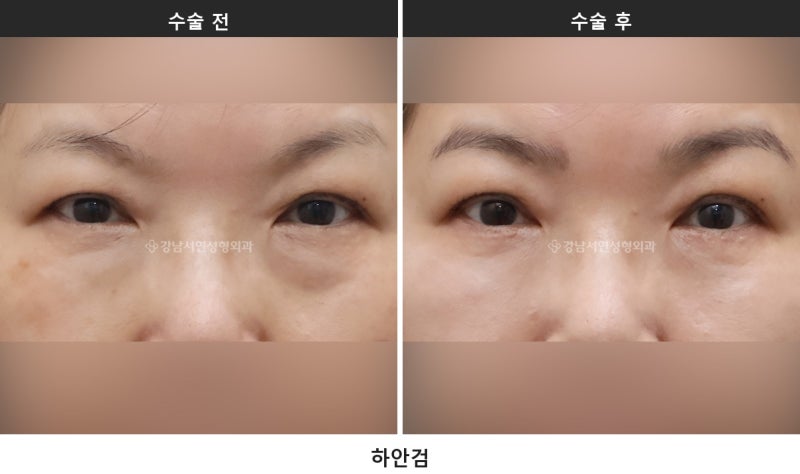
EYE SURGERY · Eye Surgery Guide for Middle Age
The approach differs entirely depending on whether the issue is fat alone or also involves skin sagging
■ The Bottom Line
Many people postpone lower eyelid surgery out of concern about scarring, but in reality, depending on the condition under the eyes, scars are often completely invisible or minimized. If the main cause is fat protrusion under the eyes, the surgery is performed through the inner lining of the lower eyelid (conjunctiva), so no scar is visible from the outside. Even when an incision is needed due to skin sagging, the scar is minimized through precise design and meticulous suturing.
■ When the Scar Is Completely Invisible — The Transconjunctival Approach
If the main problem is protruding fat under the eyes, the fat is repositioned through the inner lining of the lower eyelid using the transconjunctival approach. With this method, no scar is visible from the outside. Along with repositioning the fat, the orbital septum is strengthened to help prevent recurrence.
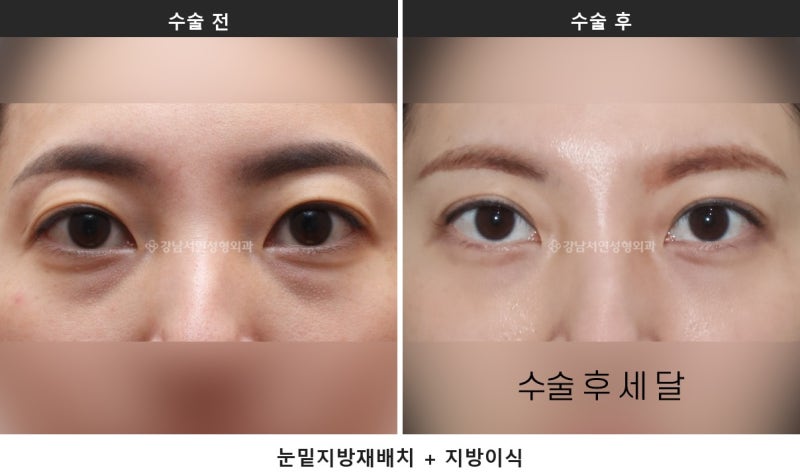
■ Even When an Incision Is Needed, Scarring Is Minimized
Lower eyelid surgery using a skin incision with fat repositioning is performed when there is skin sagging or a midface lift is needed. Even in these cases, the key is to make the incision precisely along the design, trim the loose skin and fat, and minimize scarring through delicate suturing that pulls and secures the skin and muscle.
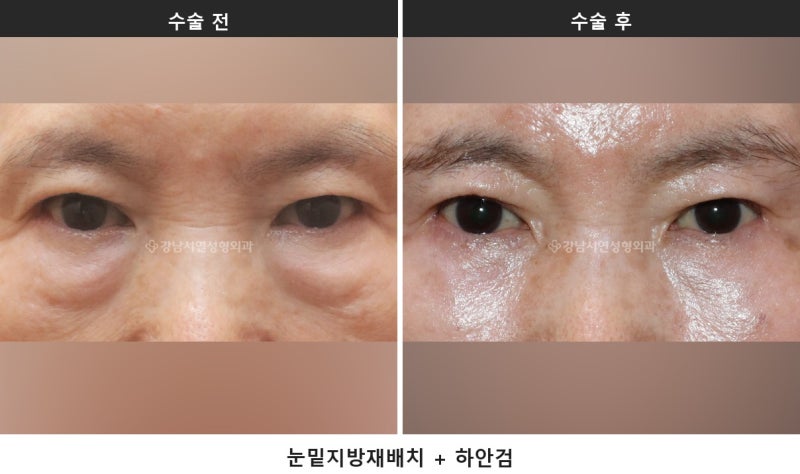
■ How to Assess Your Concern About Scarring
“Lower eyelid surgery always leaves a scar” is not an accurate assumption. Minimizing scarring depends on accurately diagnosing the type of under-eye fat and skin condition, then deciding whether the transconjunctival or skin-incision method is needed. The point is not to avoid incisions at all costs, but to choose the method that suits your specific eye condition.
■ Who Is Most Likely to Worry About Scarring
- Those considering lower eyelid surgery who are concerned about leaving a scar
- Those who are unsure whether the issue is fat alone or also involves skin sagging
- Those who have been very worried about scars from previous procedures
- Those whose job or daily habits involve frequently touching the under-eye area
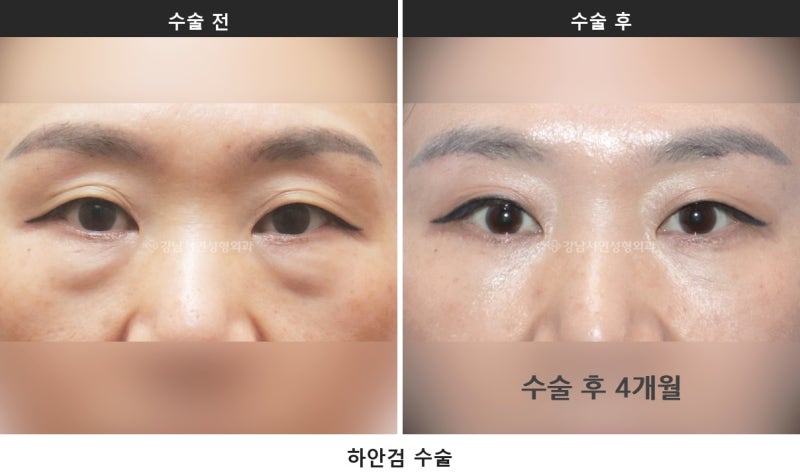
■ Recovery Timeline
Surgery time: 30–60 minutes
Anesthesia: Sedation or local anesthesia
Clinic visits: 1–2 times
Suture removal: 4–12 days after surgery
Hospitalization: None (same-day discharge)
Return to daily life: 3–7 days after surgery
These timeframes may vary depending on whether the transconjunctival or skin-incision method is chosen.
■ FAQ
Q1. Does lower eyelid surgery always leave a scar?
No. If fat protrusion is the main cause, the approach is made through the inner conjunctiva, so no scar is visible from the outside.
Q2. Will a skin incision leave a large scar?
The principle is to minimize scarring through precise design and suturing. Results may vary depending on individual skin condition.
Q3. How do you decide between the transconjunctival and skin-incision methods?
The decision is made by accurately diagnosing whether the main problem is fat protrusion under the eyes or whether skin sagging is also present.
Q4. How long does recovery take?
As a general guideline, suture removal is 4–12 days after surgery and return to daily life is 3–7 days after surgery.
■ Gangnam Seoyeon Plastic Surgery’s Approach
At Gangnam Seoyeon Plastic Surgery, Dr. Choi Dong-il, CEO and chief physician, personally handles everything from consultation through surgery. After precisely evaluating the type of under-eye fat and skin condition, we determine the method that can minimize scarring.
At Gangnam Seoyeon Plastic Surgery, we approach lower eyelid surgery based on three principles.
First, a precise diagnosis by an experienced board-certified plastic surgeon.
Second, a customized design that takes into account the shape of the eyes and the entire face.
Third, minimizing tissue damage through meticulous planning and delicate surgery.
If you would like to see similar cases, you can view lower eyelid surgery examples in the before-and-after photos on the Gangnam Seoyeon Plastic Surgery website.
■ Disclaimer
This content is provided for general medical information only. It does not recommend any specific surgery or guarantee results. Complications such as bleeding, infection, and inflammation may occur after surgery, and outcomes and recovery periods may vary depending on individual skin condition. Please be sure to confirm an accurate diagnosis and your progress through consultation with a specialist.
The photos in this post were taken with the patients’ prior consent.
Frequently Asked Questions
Does lower eyelid surgery always leave a scar?
No. If fat protrusion under the eyes is the main cause, the approach can be made through the inner conjunctiva so that no scar is visible from the outside. Depending on the condition under the eyes, scars are often completely invisible or minimized.
Will a skin incision leave a large scar?
It cannot be said that a large scar will definitely remain. The principle is to minimize scarring through precise design and suturing, and results may vary depending on individual skin condition.
How do the transconjunctival and skin-incision methods differ?
The choice is made after accurately determining whether the main problem is fat protrusion under the eyes or whether skin sagging is also present. If fat protrusion is the primary cause, the transconjunctival method is used. If skin sagging or a midface lift is needed, the skin-incision method is chosen.
How long is the recovery period?
As a general guideline, suture removal is 4–12 days after surgery and return to daily life is 3–7 days after surgery. Surgery takes 30–60 minutes, and the recovery period may vary depending on whether the transconjunctival or skin-incision method is chosen.
Is hospitalization required for lower eyelid surgery?
No hospitalization is required; patients are discharged the same day. Anesthesia is either sedation or local anesthesia, and clinic visits are 1–2 times.
How is the exact surgical method determined?
The clinic explains that the key is for a specialist to accurately diagnose the type of under-eye fat and skin condition before deciding. Results and recovery periods may vary depending on individual skin condition, so please confirm them through a consultation with a specialist.