2026-06-20
Why Men Should Avoid Non-Incisional Ptosis Correction
Discover why the incisional method is often superior for men's ptosis correction. We explain the risks of non-incisional surgery and when it might actually be appropriate.
Hello!
To ensure high patient satisfaction,
Gangnam Seoyeon Plastic Surgery always does its best :)
When performing ‘monolid’ ptosis correction for men, the incisional method is used in most cases.
This is because the non-incisional method often does not suit male patients well.
Today, we will look into why non-incisional ptosis correction is inappropriate for many men,
and the potential side effects that can occur
when non-incisional surgery is performed in unsuitable cases :)
The photos below have not been edited
in any way, except for brightness adjustments :)

Cases Where Non-Incisional Ptosis Correction Should Be Avoided
First, let’s discuss the cases where non-incisional ptosis correction is not recommended.
It would be helpful to keep these in mind when considering surgery.
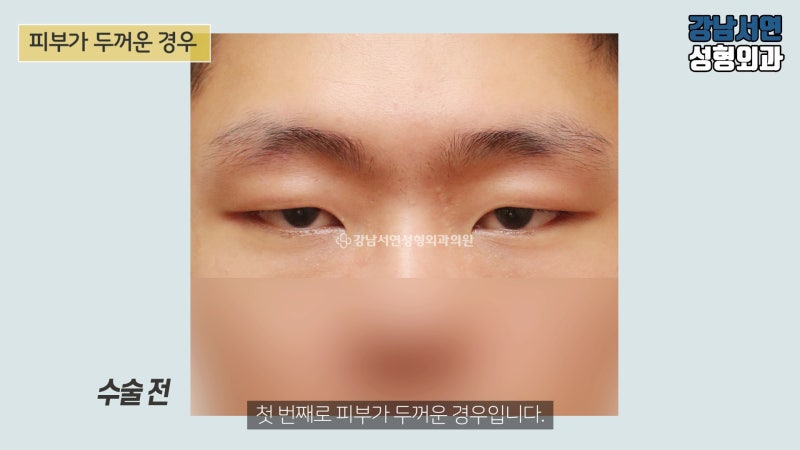
1) When the skin is thick
If the skin is thick, the double eyelid fold can easily unravel even after surgery.
From a surgeon’s perspective, we have no choice but to recommend a method that is durable and long-lasting.
Men’s skin is significantly thicker than women’s,
and often appears bulky due to a higher amount of subcutaneous tissue, so we recommend the incisional method.
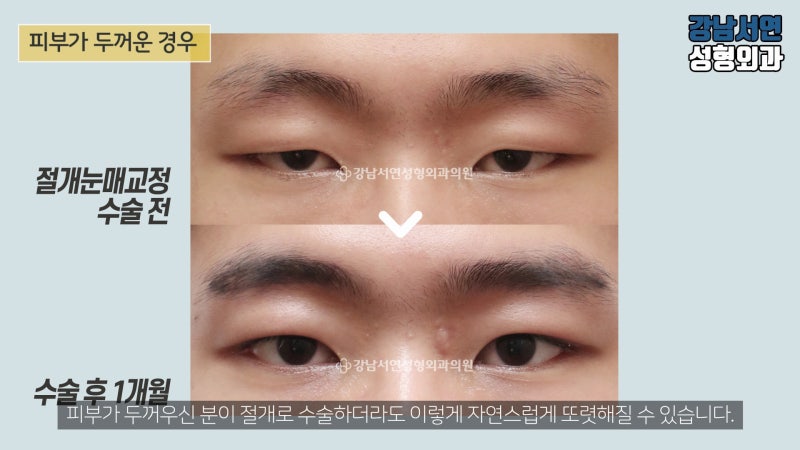
Even for those with thick skin, incisional surgery can result in this kind of natural and clear definition.
2) When the eye-opening function is poor
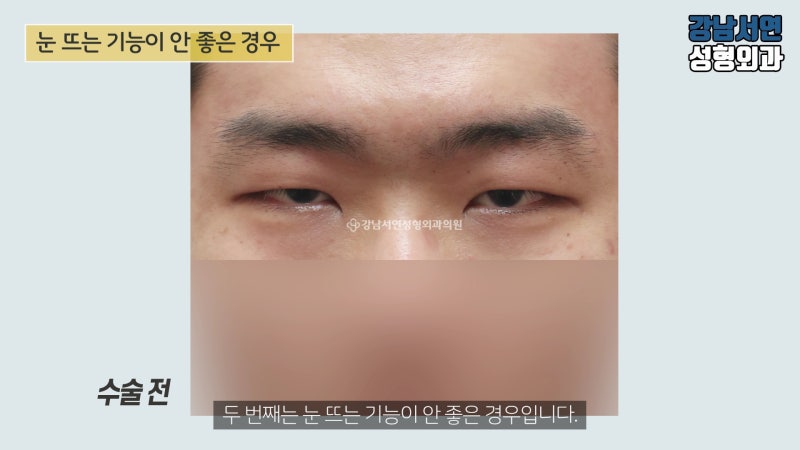
For individuals whose eyes look severely sleepy, non-incisional surgery has almost no effect.
Furthermore, forcing a non-incisional surgery can lead to side effects such as a severe ‘tugging’ sensation.
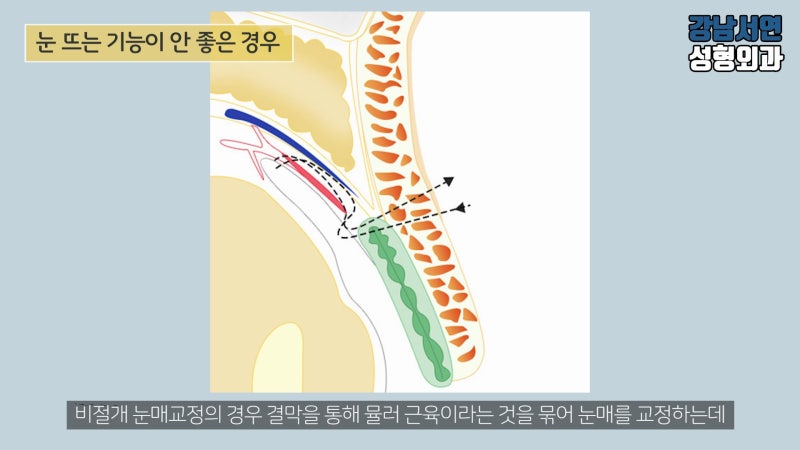
In non-incisional ptosis correction, the Müller’s muscle is tied through the conjunctiva to correct the eye shape.
Since the amount of correction possible is limited,
I personally believe it is only worth considering for patients with very mild ptosis—those who open their eyes almost normally but want them slightly larger.
If one gets greedy and pulls the Müller’s muscle too tight, it causes significant discomfort.
Because of this, there are many unfortunate cases where patients come in for a secondary incisional surgery after a failed non-incisional one.
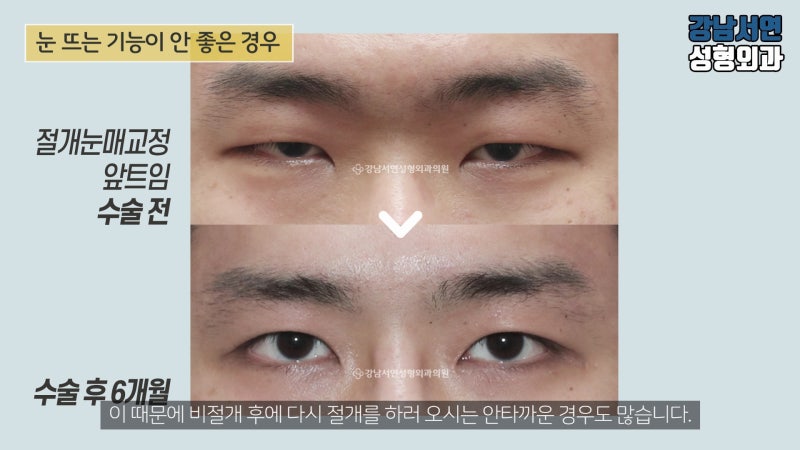
Additionally, when eye-opening function is poor, people often use their forehead to open their eyes, leading to forehead wrinkles.
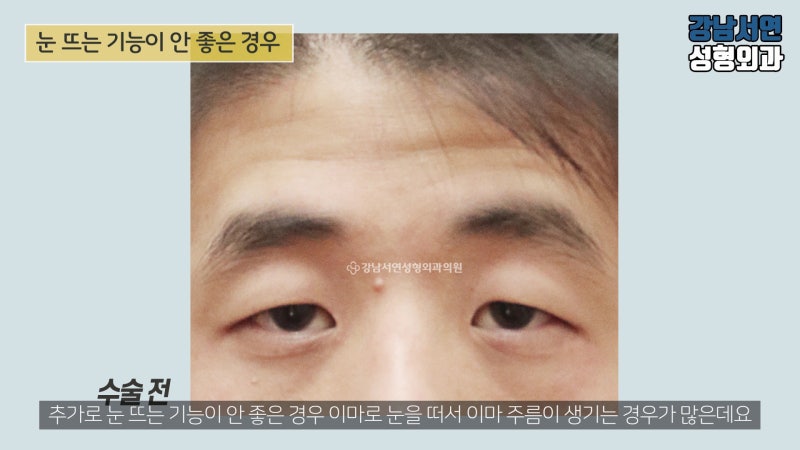
Usually, those who lack the strength to open their eyes wide compensate by using their forehead muscles.
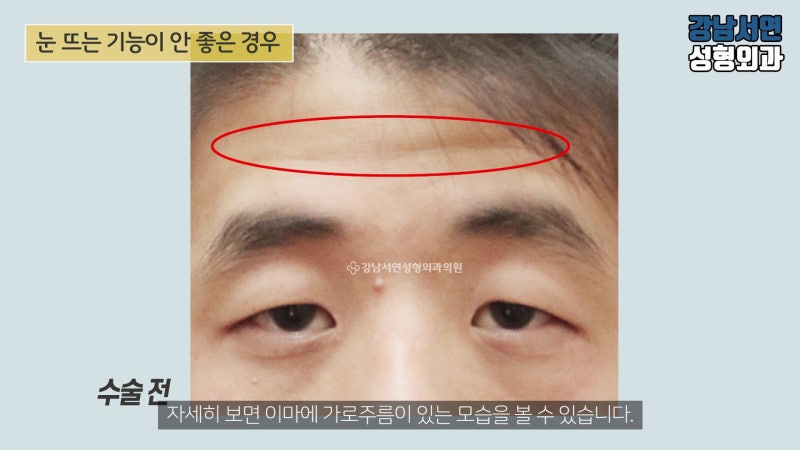
If you look closely, you can see horizontal wrinkles on the forehead.
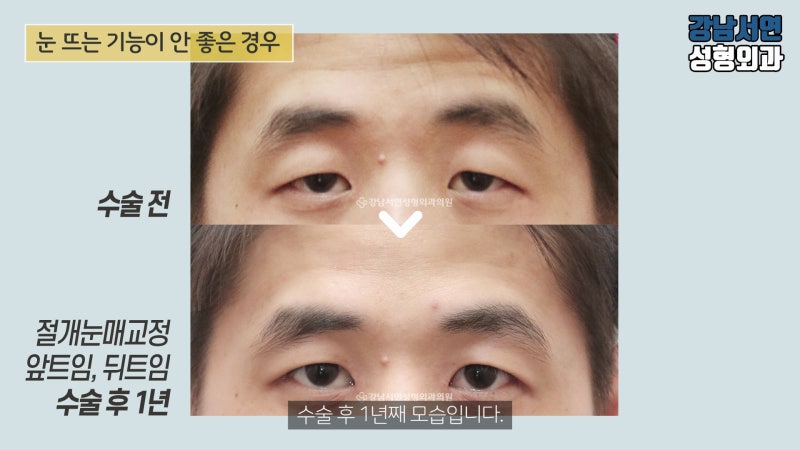
This is the appearance one year after surgery.
Since the forehead is no longer being used, the eyes can open well without creating forehead wrinkles.
Sometimes, it may seem like there isn’t a huge difference before and after incisional ptosis correction.
This is often because the patient was already making their eyes look larger by using their forehead before the surgery.
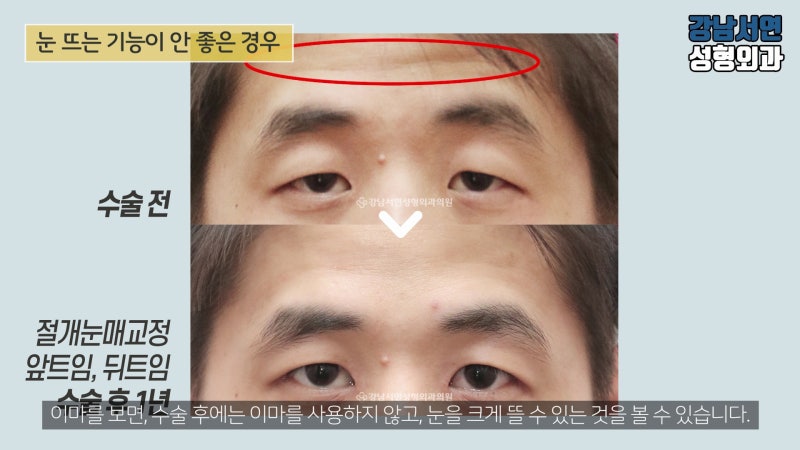
So, while the eyes alone might not show a dramatic change, looking at the forehead reveals that after surgery, the patient can open their eyes wide without using forehead muscles.
3) Revision surgery
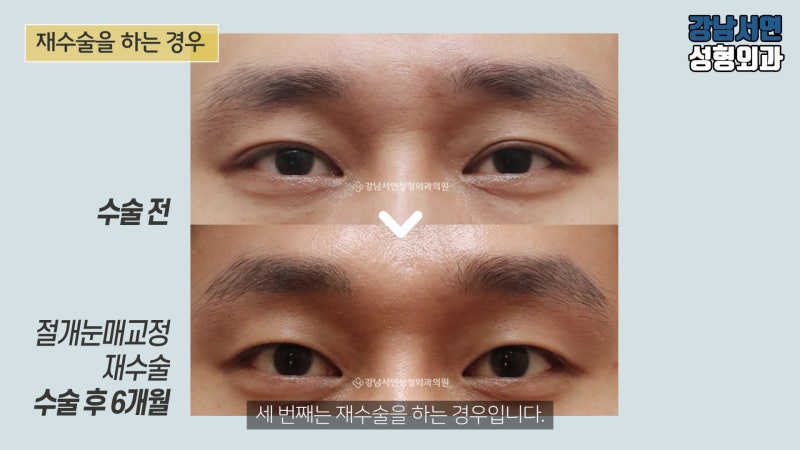
Revision surgery must be done using the incisional method.
If done incorrectly, it can result in double lines or fail to correct the issue, so it is essential to opt for the incisional method.
4) When there is a lot of fat in the eyelids
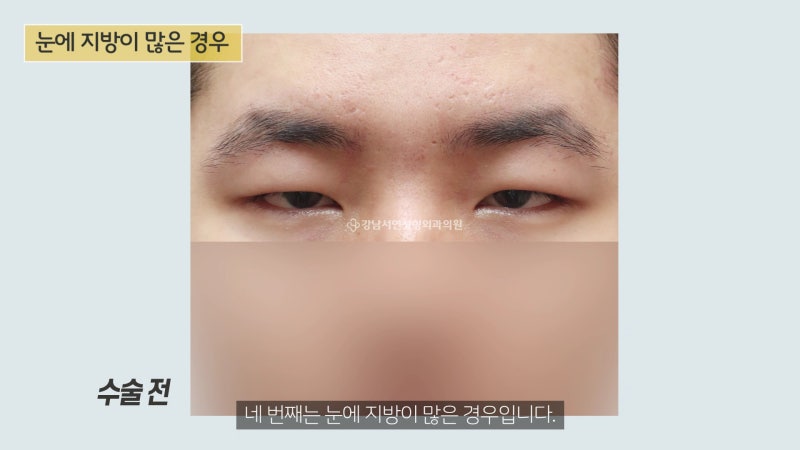
In this case, fat must be appropriately removed, which is difficult to achieve with a non-incisional approach.
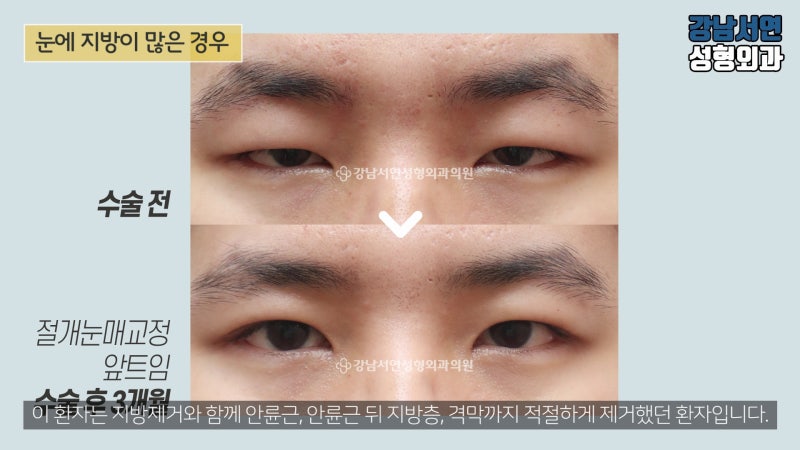
This patient underwent fat removal along with the appropriate excision of the orbicularis oculi muscle, the submuscular fat layer, and the septum.
5) When there is a natural double eyelid
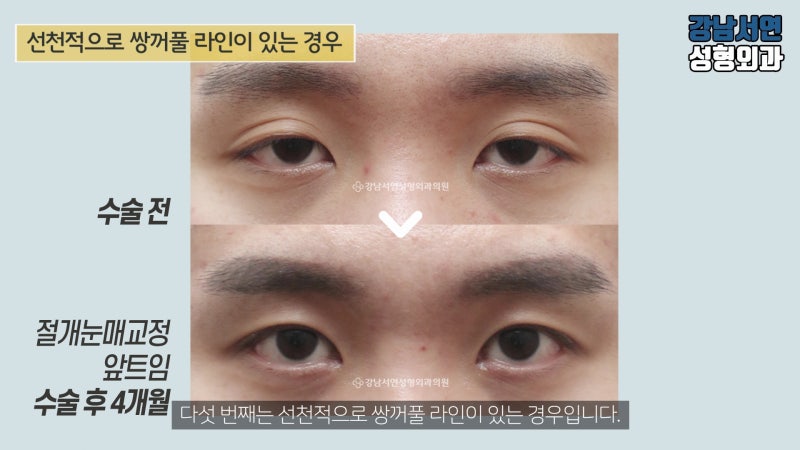
Monolid ptosis correction involves creating a very low double eyelid line and tucking it under the upper eyelid skin.
This creates a large, clear eye without the double eyelid being visible. Without releasing the existing double eyelid, it is difficult to set a low line and tuck it in properly.
This can result in multiple overlapping folds.
6) When the skin is sagging
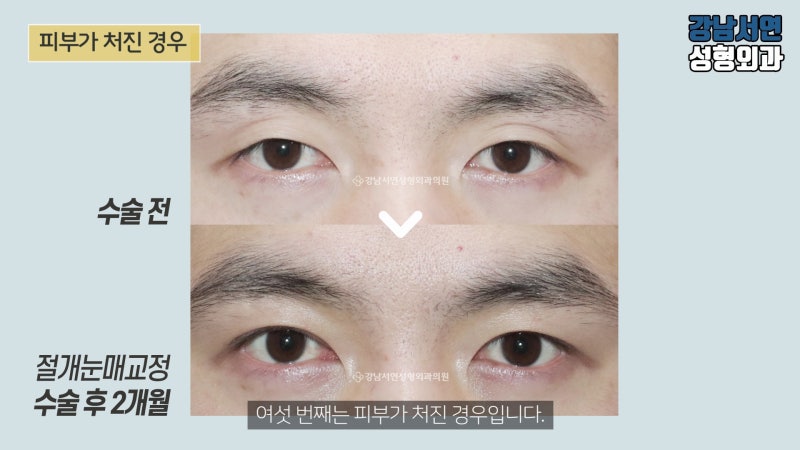
Older patients, in particular, usually have sagging skin.
If surgery is performed without removing the sagging skin, the aesthetic result will be poor.
Cases Where Non-Incisional Ptosis Correction Is Possible
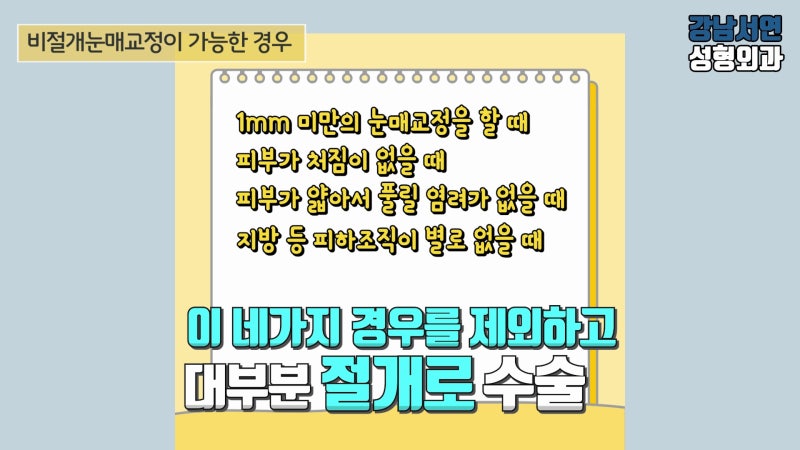
So, when is non-incisional ptosis correction actually possible?
There are four main conditions:
1) When the required correction is less than 1mm
2) When there is no skin sagging
3) When the skin is thin and there is no risk of the fold unraveling
4) When there is very little fat or subcutaneous tissue
Except for these four cases, most surgeries are performed using the incisional method.
Today, we explored why we recommend incisional ptosis correction for men and the potential side effects of the non-incisional method.
I hope this helps you when considering surgery,
and I hope you choose the surgical method that is right for you :)
Regarding male non-incisional ptosis correction,
you can find more details in the video below.
↓↓↓↓↓↓
Gangnam Seoyeon Plastic Surgery complies with medical laws. The photos in this post were taken under the same conditions with the patient’s prior consent. Furthermore, side effects such as bleeding, infection, and inflammation may occur after plastic surgery or procedures depending on the individual, so caution is advised.
- Single Board-Certified Plastic Surgeon Representative Director system - Accurate assessment of eye condition / Recommends only necessary surgeries - Equipped with operating room CCTV |
Feel free to visit us for a
1:1 consultation with a board-certified plastic surgeon :)
If you have any questions or would like a consultation,
please leave a comment, contact us via KakaoTalk Plus Friend @SeoyeonPlasticSurgery,
or call us at 02-535-8889 :)






#GangnamSeoyeonPlasticSurgery #GangnamSeoyeon #SeoyeonPlasticSurgery #Epicanthoplasty #EpicanthoplastyRestoration #EpicanthoplastyReview #DoubleEyelidSurgeryReview #DrChoiDongil
Frequently Asked Questions
Why is the non-incisional method not recommended for male ptosis correction?
The non-incisional method is not recommended for male ptosis correction because men generally have thicker skin and more subcutaneous tissue than women. If surgery is performed with the non-incisional method on thick skin, the double eyelid can easily loosen, so the incisional method, which is more durable and long-lasting, is mainly recommended.
Is non-incisional ptosis correction possible for severe blepharoptosis with weak eye-opening strength?
No, if the eye-opening function is severely impaired, the non-incisional surgery will have little to no effect. Forcing the non-incisional method to pull the Müller's muscle can lead to severe discomfort and side effects such as pulling sensations, so the incisional method is more appropriate.
What surgical method is suitable for eyes with a lot of fat?
If there is a lot of fat in the eyes, the incisional method is suitable. It is difficult to properly remove eye fat with the non-incisional method, so satisfactory results can be achieved by removing fat and the orbicularis oculi muscle together through an incision.
Can non-incisional ptosis correction be performed for revision surgery?
No, revision surgery must be performed using the incisional method. This is because there is a high risk of developing double eyelids or improper correction if non-incisional surgery is performed incorrectly.
When is non-incisional ptosis correction possible for men?
It is only possible under four limited conditions. The non-incisional method can be applied when performing a subtle ptosis correction of less than 1mm, when there is no skin sagging, when the skin is thin and there is no concern about it loosening, and when there is little subcutaneous tissue such as fat.