2026-10-31
Ptosis Meaning and Self-Check: 4–5 mm From Pupil Center to Eyelid Is the Standard (Part 2)
This guide covers why re-diagnosis comes before timing for ptosis revision surgery, the 4–5 mm pupil-to-eyelid self-check standard, and how true and pseudoptosis differ.
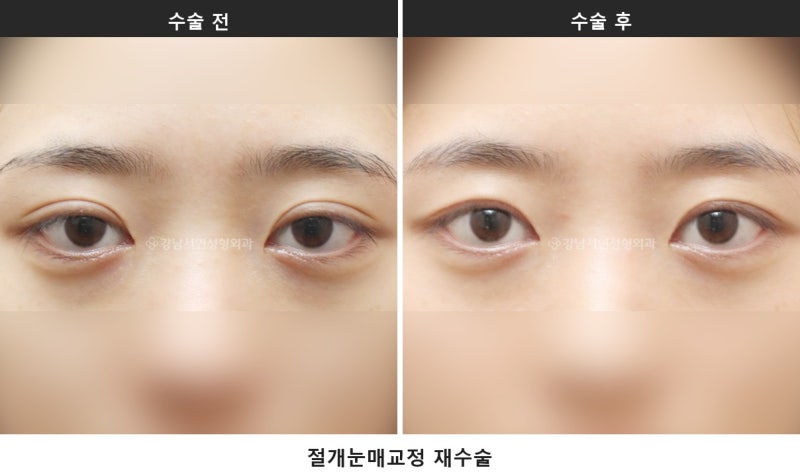
■ For Ptosis Revision Surgery, Re-Examining the Cause Comes Before Timing
Revision surgery should be considered when, even after the first incision-based eyelid correction, the eyes don't open with the strength you expected, the lids start to droop again over time, or the two eyes open to noticeably different degrees. Because this is not simply a matter of the shape of the lid line but is related to muscle function, it requires a diagnosis approached from a different angle than the first surgery.
Revision surgery is performed where adhesions and scar tissue from the previous operation are already present, so it requires a more precise diagnosis than the first surgery. The approach differs depending on whether the problem was insufficient lifting strength, left-right imbalance, or restricted movement caused by tissue adhesion.
The timing is decided after the previous surgical site has fully stabilized and a re-examination has been completed. Performing revision surgery too early can make an accurate diagnosis difficult because the tissue has not yet fully settled, so it is generally standard practice to observe the recovery course before deciding.
■ This Article May Help If You Have These Questions
- Anyone who wants to know the exact meaning of ptosis
- Anyone who wants to understand the difference between true and pseudoptosis
- Anyone who feels their forehead or eyebrows straining when opening their eyes
- Anyone curious about how ptosis and eyelid correction are connected
- Anyone who feels their eyes still don't open fully after ptosis surgery
- Anyone wondering whether a tight, stiff feeling during recovery is a normal part of healing
■ Recovery Timeline
Surgery time: 30–60 minutes
Anesthesia: Sedation or local anesthesia
Clinic treatment visits: 1–2 times
Suture removal: 4–12 days after surgery
Hospitalization: None (same-day discharge)
Return to daily life: 3–7 days after surgery
Major swelling typically subsides within 1–2 weeks, and the natural result settles in around 3–6 months. Timelines may vary depending on the severity of the ptosis and the method chosen.
■ FAQ
Q1. How can I tell whether I have ptosis?
You can use the following as a guide: whether more than 80% of the dark part of the eye is visible when your eyes are open, and whether the distance from the center of the pupil to the upper eyelid margin is 4–5 mm (1–2 mm suggests possible ptosis). For an accurate assessment, it is best to confirm through a medical examination.
Q2. What is the difference between true and pseudoptosis?
True ptosis occurs when the muscle that lifts the eyelid is weak, while pseudoptosis occurs when the muscle itself is fine but the eyelid droops, making it look like ptosis.
Q3. Doesn't the eyelid line loosen after eyelid correction?
The incision method creates the line by reshaping the tissue itself, so the risk of loosening is low. In addition, Gangnam Seoyeon Plastic Surgery Clinic applies dynamic fixation sutures to improve durability.
Q4. Can I also notice a reduction in forehead wrinkles?
Because you use your forehead muscles less when opening your eyes, many people notice that their habit of forehead wrinkling diminishes as recovery progresses.
Q5. How can I tell if I've been overcorrected?
If the upper eyelid barely covers the dark part of the eye and the white of the eye is exposed above it, overcorrection may be suspected. An accurate diagnosis requires confirmation by a specialist.
Q6. Is the method for ptosis revision surgery different from the first surgery?
The basic principles are the same, but because adhesions and scar tissue from the previous surgery must be addressed together, a more precise approach is needed.
■ Gangnam Seoyeon Plastic Surgery Clinic's Approach
At Gangnam Seoyeon Plastic Surgery Clinic, Chief Director Choi Dong-il personally handles everything from consultation to surgery. We comprehensively evaluate eyelid thickness, the strength of the muscles that lift the eyelid, and skin elasticity to first determine whether the condition is true or pseudoptosis and whether it is mild or severe, then take an approach that uses dynamic fixation while preserving the orbicularis oculi muscle.
Gangnam Seoyeon Plastic Surgery Clinic approaches ptosis based on three principles.
First, a precise diagnosis that distinguishes true ptosis from pseudoptosis.
Second, method selection that takes into account eye-opening strength and left-right balance.
Third, delicate surgery that preserves the orbicularis oculi muscle.
If you'd like to see similar cases, you can view eyelid correction cases in the before-and-after photos on the Gangnam Seoyeon Plastic Surgery Clinic website.
■ Disclaimer
This content is written solely to provide medical information and does not recommend any specific surgery or guarantee results. Complications such as bleeding, infection, and inflammation may occur after surgery, and results and recovery periods may vary depending on individual skin condition. Accurate diagnosis and follow-up should always be confirmed through consultation with a specialist.
The photos in this post were taken with the patients' prior consent.
Frequently Asked Questions
How can I check for ptosis through self-diagnosis?
You can use as a guide whether the distance from the center of the pupil to the upper eyelid margin is 4–5 mm and whether more than 80% of the dark part of the eye is visible when your eyes are open. A distance of 1–2 mm may suggest ptosis, but for an accurate assessment, it is best to confirm through a medical examination.
What is the difference between true and pseudoptosis?
True ptosis is when the muscle that lifts the eyelid is weak, while pseudoptosis is when the muscle itself is fine but the eyelid droops, making it look like ptosis. Distinguishing between the two is important, and an accurate distinction is best confirmed through a medical examination.
Is the method for ptosis revision surgery different from the first surgery?
The basic principles are the same, but because adhesions and scar tissue from the previous surgery must be addressed together, a more precise approach is needed. Revision surgery also requires a more precise diagnosis than the first operation.
When is the best time to have ptosis revision surgery?
Generally, the timing is set after the previous surgical site has fully stabilized and a re-examination has been performed. If it's too early, the tissue may not have fully settled yet, which can make an accurate diagnosis difficult.
How long is the recovery period after ptosis surgery?
Major swelling usually subsides within 1–2 weeks, and the natural result settles in around 3–6 months. Return to daily life is guided at 3–7 days after surgery, and suture removal at 4–12 days, though these may vary depending on the severity of the ptosis and the method chosen.
How can I tell if I've been overcorrected after eyelid correction?
If the upper eyelid barely covers the dark part of the eye and the white of the eye is exposed above it, overcorrection may be suspected. An accurate diagnosis requires confirmation by a specialist.