2026-06-20
Ptosis Correction Side Effects and Their Causes: A Detailed Guide
Learn about the causes of ptosis correction side effects, including excessive muscle manipulation and incorrect surgical methods, and how to minimize risks for natural results.
Hello!
To ensure highly satisfying surgical results,
we always do our best at
Gangnam Seoyeon Plastic Surgery Clinic :)
Today, we are going to look into the side effects of ptosis correction and their causes.
During consultations, we often hear questions like:
‘Won’t I get serious side effects if I undergo ptosis correction?’
To give you the conclusion first, undergoing ptosis correction does not inherently cause side effects.
Side effects can occur when the surgery is performed excessively or when an inappropriate surgical method is used.
In fact, ptosis correction is a very common procedure performed today.
If the surgery itself caused serious side effects, it would have been phased out of the medical field long ago.
So today, I will explain what ptosis correction is, why side effects occur after the procedure,
and how to reduce the risk of these side effects.
The photos below have not been edited in any way,
except for brightness adjustments :)

What is Ptosis Correction?
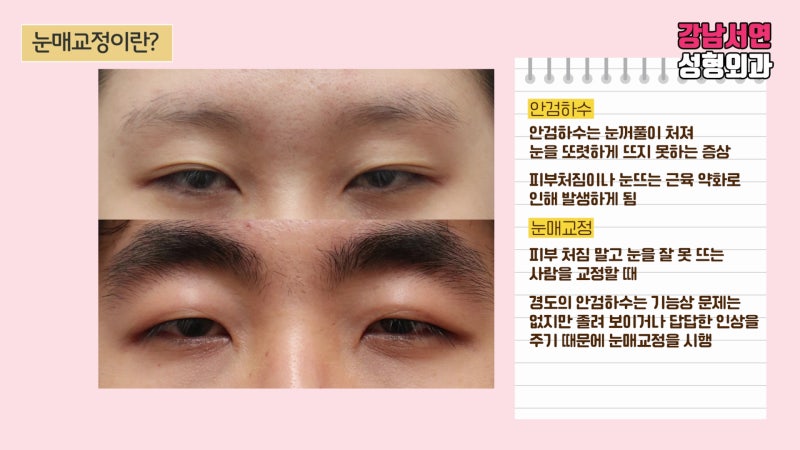
Ptosis correction is a surgery performed to improve blepharoptosis,
which refers to a condition where the eyelids droop, making it difficult to open the eyes clearly.
Blepharoptosis is caused by sagging skin or weakness in the muscles that lift the eye.
Ptosis correction is used to help those who cannot open their eyes well (excluding cases of simple skin sagging).
While mild ptosis may not cause functional issues, it can make one look sleepy or frustrated.
Correcting this for aesthetic reasons is what we euphemistically call ‘ptosis correction’.
Side Effects of Ptosis Correction
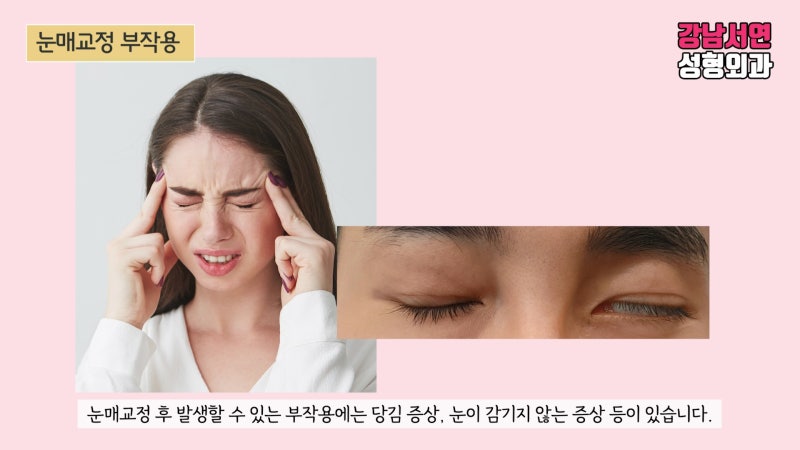
Side effects that can occur after ptosis correction include
a pulling sensation and the inability to close the eyes completely.
Immediately after surgery, lagophthalmos (sleeping with eyes slightly open),
tightness, and tearing are common occurrences.
These phenomena immediately following surgery are not permanent side effects,
but rather mild and temporary reactions caused by the stimulation of surrounding tissues during surgery,
which typically improve over time.
If uncomfortable symptoms persist long after the recovery period, they may then be considered side effects.
Causes of Side Effects After Ptosis Correction
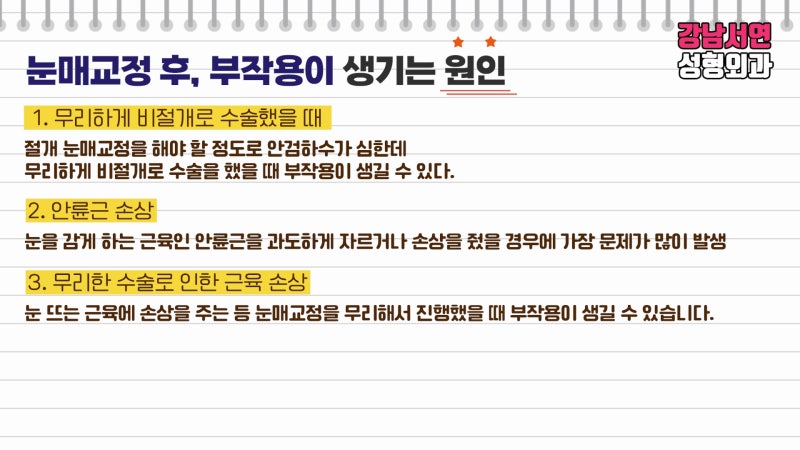
There are three main reasons why side effects occur after ptosis correction.
First, when a patient has severe ptosis that requires an incisional method,
but an over-ambitious non-incisional surgery is performed instead.
Second, the most significant problems occur when the orbicularis oculi muscle (the muscle that closes the eye) is excessively cut or damaged.
Finally, side effects can occur when the surgery is performed too aggressively, such as damaging the levator muscle.
Cause 1: Inappropriate Surgical Method
The first cause of side effects is
when a non-incisional surgery is forced on a patient who actually needs an incisional ptosis correction.
Non-incisional ptosis correction involves tying the Müller’s muscle through the conjunctiva.
Since the amount of correction is limited, I personally believe it is suitable for patients with very mild ptosis—
those who open their eyes almost normally but want them to look slightly larger.
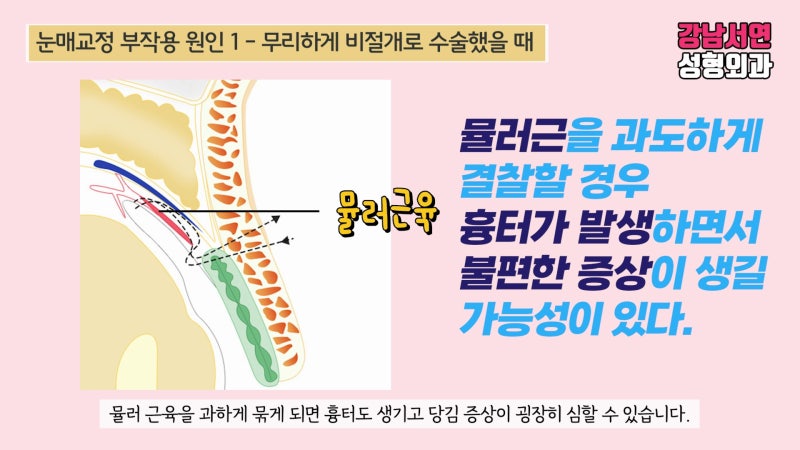
If a non-incisional method is used on an eye that requires an incision,
over-tightening the Müller’s muscle can lead to scarring and severe pulling sensations.
In such cases, using the levator aponeurosis via an incisional method is actually much less burdensome.
Because non-incisional correction only ties the Müller’s muscle, it is difficult to transmit significant lifting force.
Cause 2: Damage to the Orbicularis Oculi Muscle
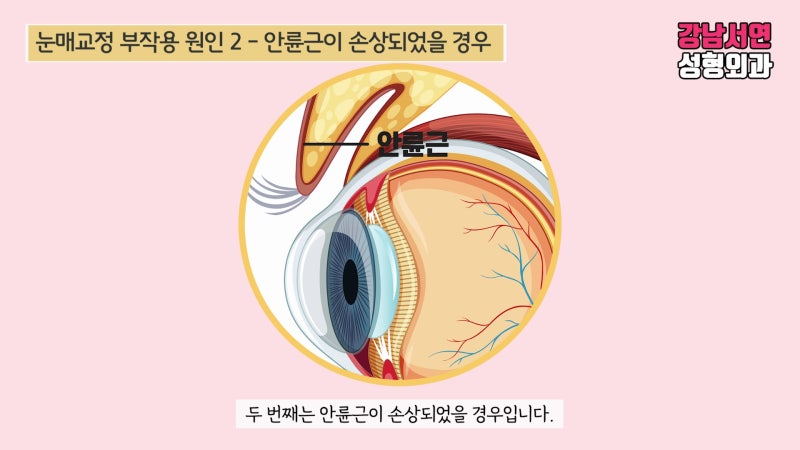
The second cause of side effects
is damage to the orbicularis oculi muscle.
There is a circular muscle located below the double eyelid line called the orbicularis oculi muscle.
This muscle is responsible for closing the eye.
If this muscle is excessively manipulated or damaged during ptosis correction, the eye will not close properly.
This is why it is crucial to have ptosis correction performed by an experienced specialist.
Additionally, repeated revision surgeries using the incisional method
increase the risk of side effects due to tissue damage, muscle damage,
or excessive skin excision across multiple procedures.
Cause 3: Excessive Muscle Resection
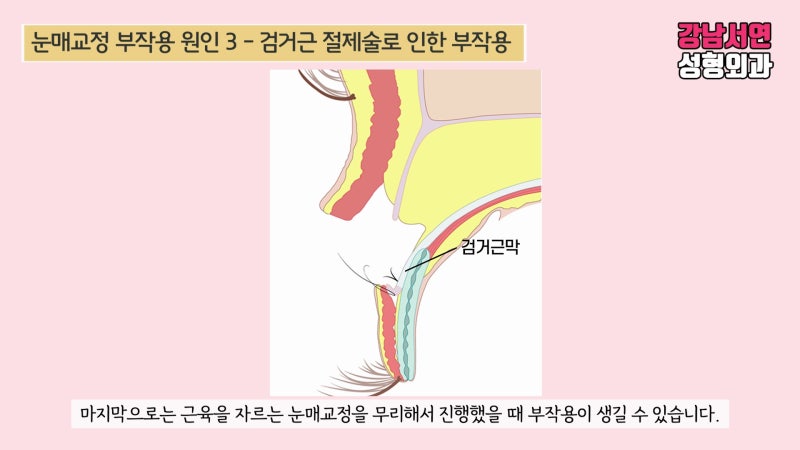
The third cause of side effects
is when muscle resection is performed excessively.
Cutting the muscle during ptosis correction is called levator resection.
Levator resection is a procedure reserved for moderate to severe blepharoptosis,
and it does not apply to the majority of patients.
There are not many patients who require this level of surgery,
and while I perform it occasionally for those who visit our clinic, it is a high-difficulty procedure that is not commonly done.
If such a complex surgery is performed unnecessarily or aggressively, problems are bound to arise.
As mentioned before, performing a levator resection on mild ptosis instead of moderate/severe cases will naturally lead to complications.
How Should Ptosis Correction Be Approached?
Ptosis correction can be very effective in improving a sleepy or stuffy appearance that cannot be resolved by double eyelid surgery alone.
However, rather than blindly trusting ptosis correction and undergoing surgery excessively,
it is important to receive an accurate diagnosis through consultations with multiple specialists.
You should establish a proper surgical plan based on your specific eye condition and avoid setting unrealistic goals.
Regarding the side effects of ptosis correction,
you can find more detailed information in the video below.
↓↓↓↓↓↓
Gangnam Seoyeon Plastic Surgery Clinic complies with medical laws. The photos in this post were taken under the same conditions and with the prior consent of the patient. Furthermore, side effects such as bleeding, infection, and inflammation may occur after plastic surgery or procedures depending on the individual, so caution is advised.
- Single-specialist system led by the Representative Director - Accurate assessment of eye condition / Recommending only necessary surgeries - Operating room equipped with CCTV |
Feel free to visit us for a
1:1 consultation with a plastic surgery specialist :)
If you have any questions or would like a consultation,
please leave a comment, contact us via KakaoTalk Plus Friend @SeoyeonPlasticSurgery,
or call us at 02-535-8889 :)






#GangnamSeoyeonPlasticSurgery #GangnamSeoyeon #SeoyeonPlasticSurgery #PtosisCorrection #PtosisCorrectionSideEffects #EyePulling #Lagophthalmos #DoubleEyelidSurgeryReview #DrChoiDongIl
Frequently Asked Questions
Does ptosis correction surgery always cause side effects?
No. Ptosis correction itself does not necessarily cause side effects. Side effects can occur when the surgery is performed excessively without considering the patient's eye condition or when an inappropriate surgical method is chosen. An accurate diagnosis from a specialist is crucial.
Immediately after surgery, my eyes don't close well and feel tight. Is this a side effect?
No. Mild lagophthalmos, tightness, or tearing immediately after surgery are temporary phenomena caused by irritation to surrounding tissues during the surgery. These symptoms will naturally improve over time, but if they persist for a long time, you should consult a doctor.
What is the reason for severe tightness after non-incisional ptosis correction?
It may be because a non-incisional method was excessively applied to a patient with severe ptosis who actually required an incisional method. If the Müller's muscle is tied too tightly during non-incisional ptosis correction, it can cause scarring and severe tightness, so it is better to choose an incisional method depending on the condition.
What causes the eyes not to close completely after ptosis correction?
It is highly likely that the orbicularis oculi muscle, which is responsible for closing the eyes, has been damaged. If this muscle is excessively manipulated or cut during surgery, side effects such as the inability to close the eyes can occur, so it is essential to have the surgery performed by an experienced specialist.
When is ptosis correction that involves cutting muscles necessary?
It is performed restrictively only for patients with severe ptosis of moderate to severe degree. This is called levator resection, and if it is performed excessively on mild patients, serious side effects can occur. Therefore, it should only be performed when absolutely necessary after an accurate diagnosis.