2026-06-20
Principles of Asymmetrical Eye Correction and Success Stories by an Eyelid Surgery Specialist
Learn the principles of correcting asymmetrical eyes through real surgical cases from Gangnam Seoyeon Plastic Surgery, focusing on ptosis correction and facial symmetry.
Hello!
To ensure highly satisfying surgical results,
we always do our best at
Gangnam Seoyeon Plastic Surgery Clinic :)
Today, I would like to explain asymmetrical eye correction along with various cases.
I will explain the basic principles of correcting asymmetrical eyes
and show you actual surgical cases where asymmetrical eyes were corrected :)
The photos below have not been edited in any way,
except for brightness adjustments :)

Basic Principles of Asymmetrical Eye Correction
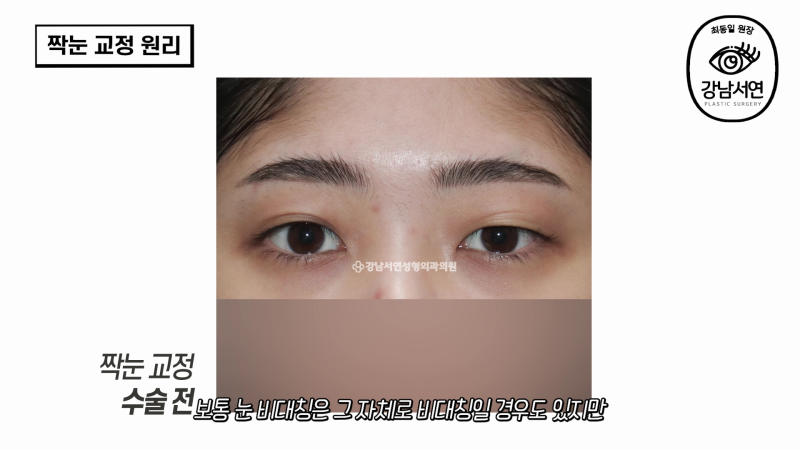
Usually, asymmetrical eyes refer to cases where one eye is larger or smaller than the other.
While eye asymmetry can exist on its own, it is often accompanied by facial asymmetry.
Looking at the photo, this person’s right eye (on the right side of the photo) appears to open less than the other,
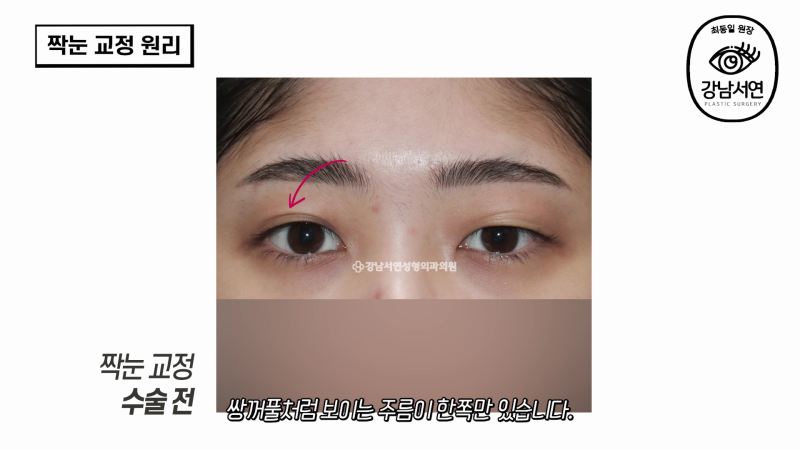
and a crease that looks like a double eyelid is only present on the left eye in the photo.
If you look closely at the eyebrows, the left eyebrow is higher and the right eyebrow is lower.
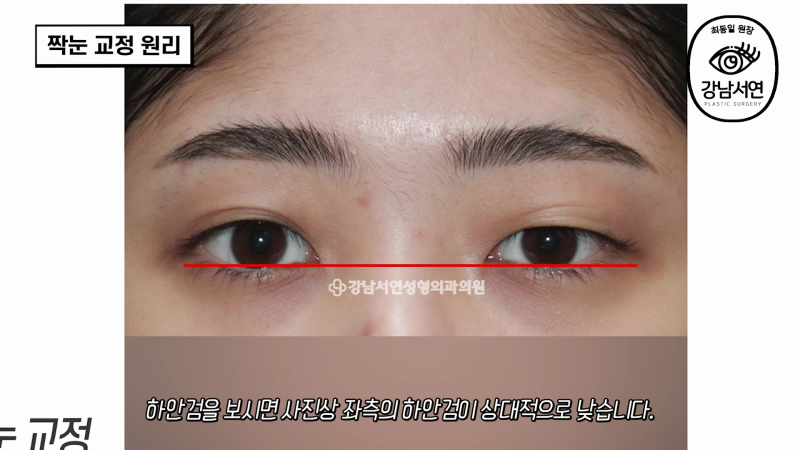
Looking at the lower eyelid, the lower eyelid on the left side of the photo is relatively lower.
This can be described as facial asymmetry where the skeletal structure on the left side of the photo is larger.
In such cases, the degree of ptosis correction and skin removal must be adjusted to make both eyes appear symmetrical.
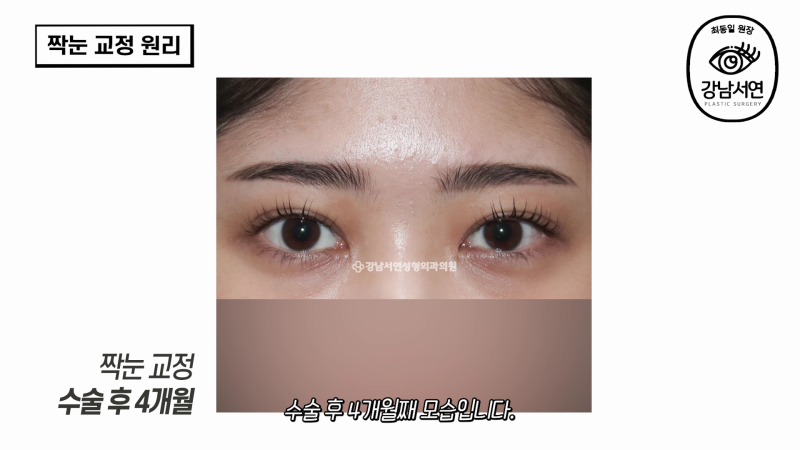
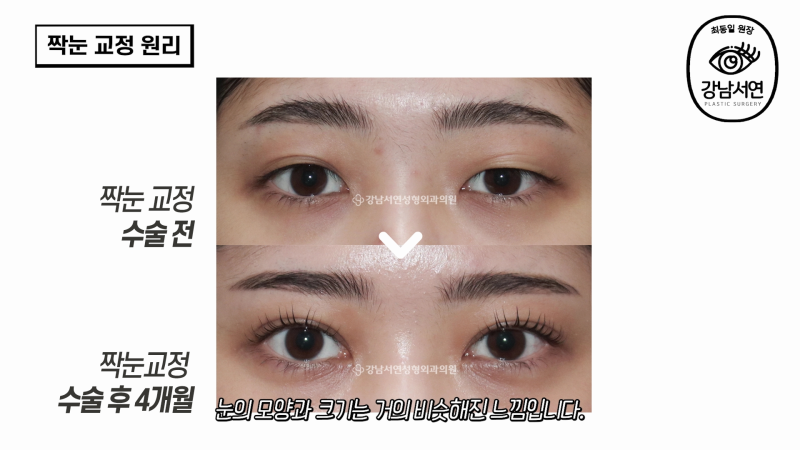
This is the appearance 4 months after surgery.
Asymmetrical Eye Correction Case 1
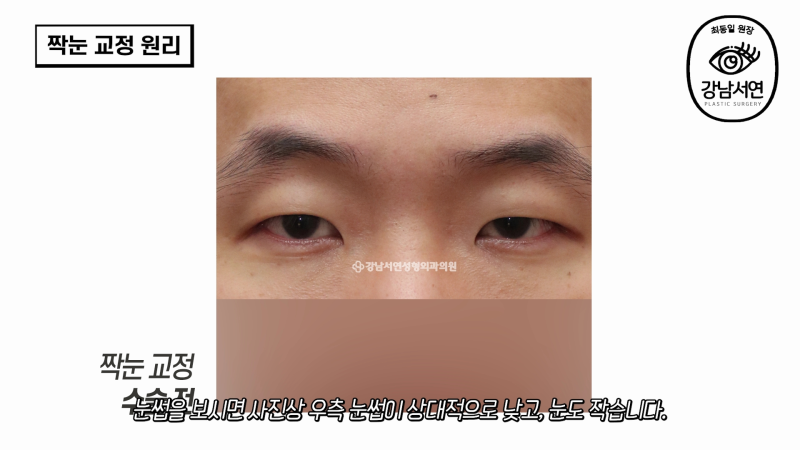
Here is the next case.
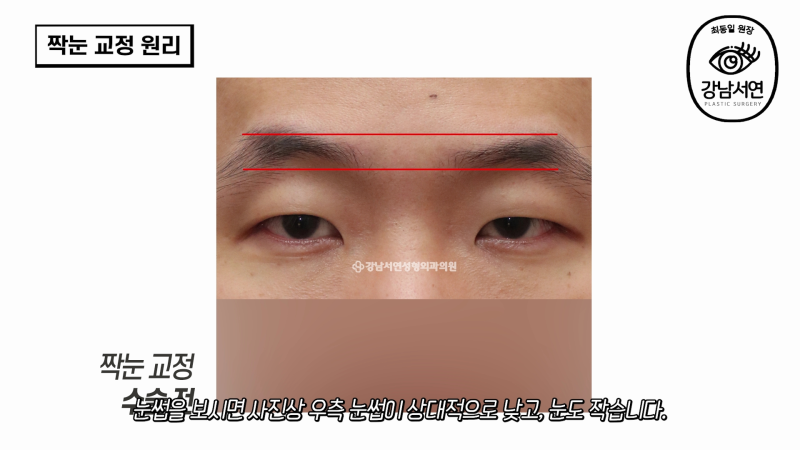
Looking at the eyebrows, the right eyebrow in the photo is relatively lower, and the eye is also smaller.
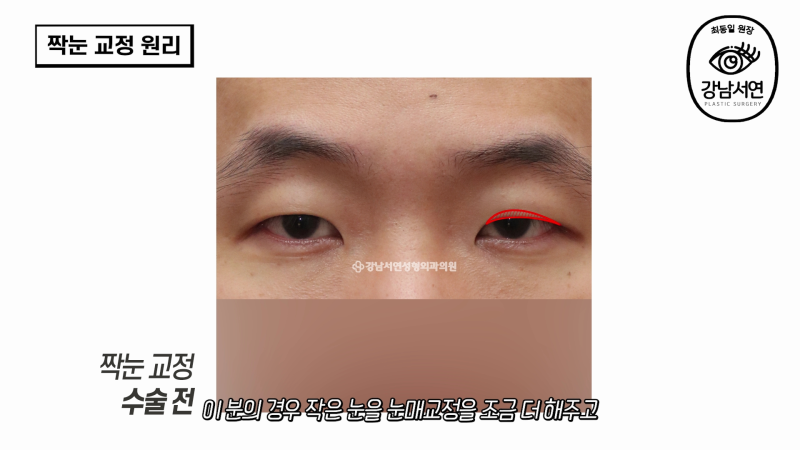
For this patient, procedures such as performing more ptosis correction on the smaller eye and removing more skin are performed.
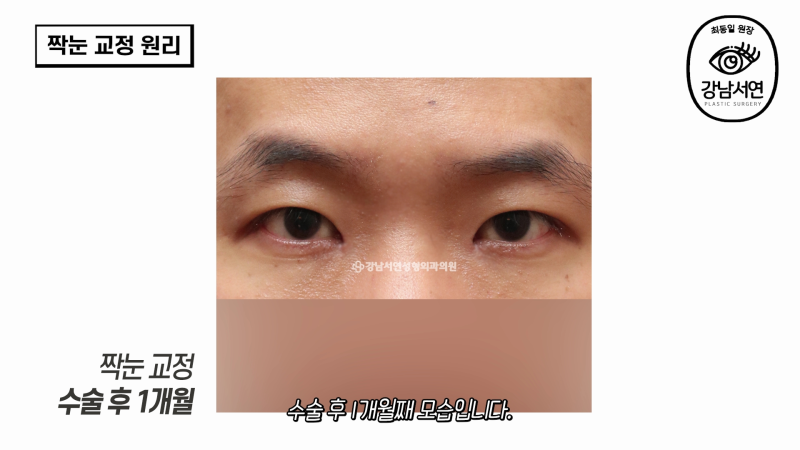
This is the appearance 1 month after surgery.
Asymmetrical Eye Correction Case 2
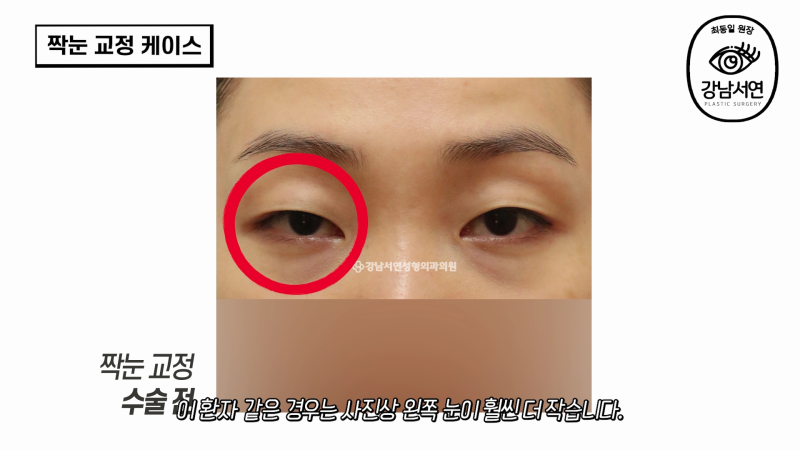
In this patient’s case, the left eye in the photo is much smaller.
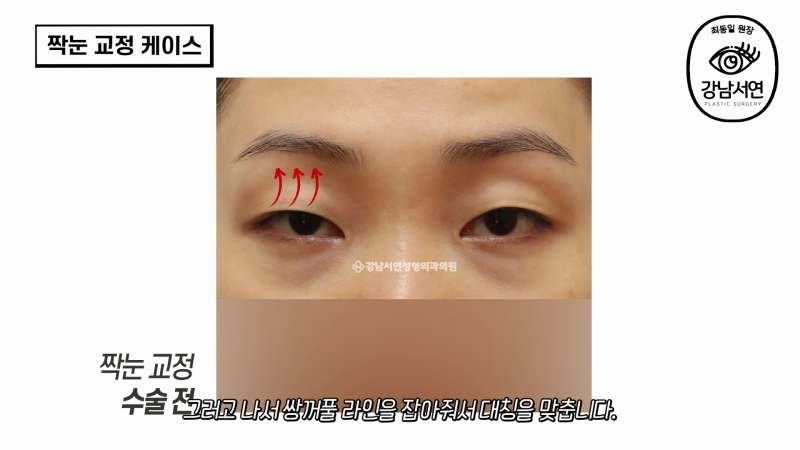
Therefore, to achieve symmetry, more ptosis correction is performed on the left eye in the photo (the patient’s right eye),
and then the double eyelid line is created to match the symmetry.
In cases like this, the degree of skin sagging may differ,
so we have the patient sit up during the procedure to adjust the double eyelid line,
and if there are areas with sagging skin, we trim them slightly to achieve symmetry.
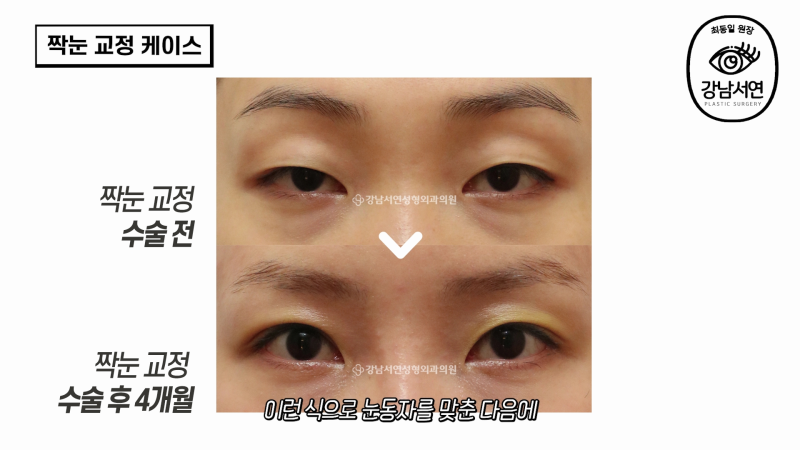
The double eyelid line is set after aligning the pupils in this manner.
Asymmetrical Eye Correction Case 3
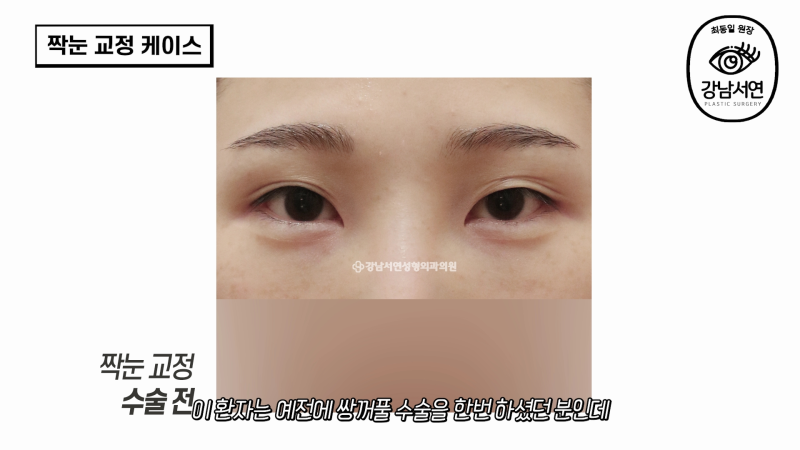
This patient had previously undergone double eyelid surgery,
but the line on one side had unraveled, so we redefined the line
while also performing canthoplasty.
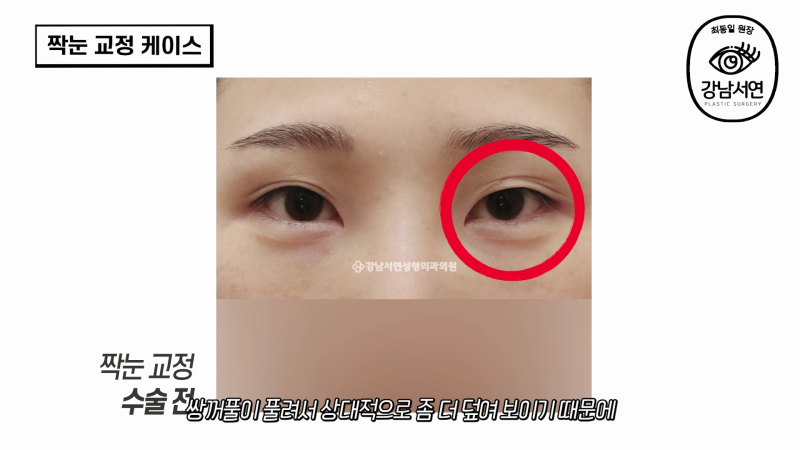
For the right eye in the photo,
the double eyelid had unraveled, making it look relatively more hooded,
so we redefined the line and performed canthoplasty.
By performing lateral and dual canthoplasty, the lower part was lowered,
and the double eyelid line was well-defined.
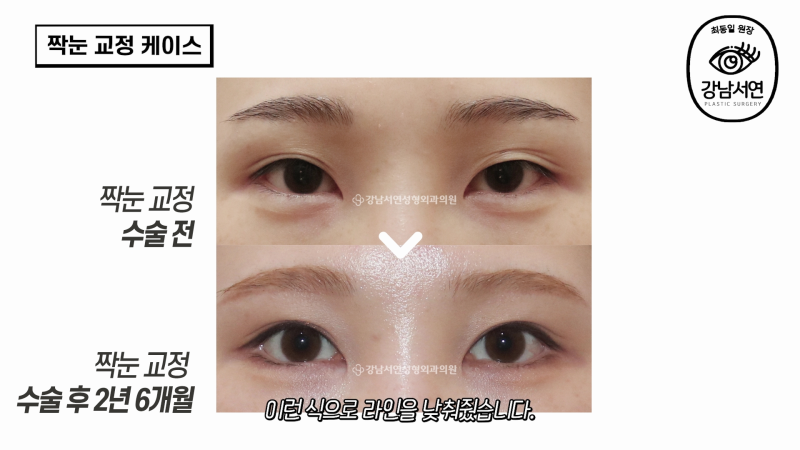
Asymmetrical Eye Correction Case 4
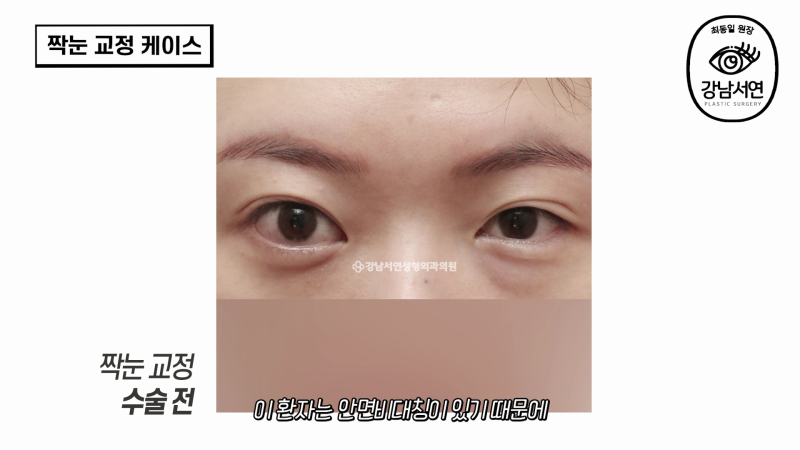
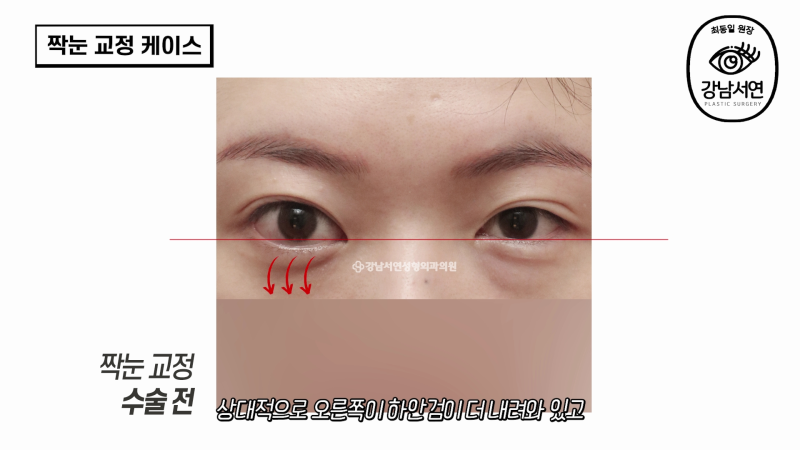
Because this patient has facial asymmetry, the lower eyelid on the left side of the photo is lower,
while the right side is higher.
Also, since the degree of pupil exposure is slightly different,
one could naturally try to lower the right eye in the photo further,
but doing so could actually create another form of asymmetry.
To make them look as similar as possible,
we first matched the double eyelids as much as possible
and made the pupil exposure similar.
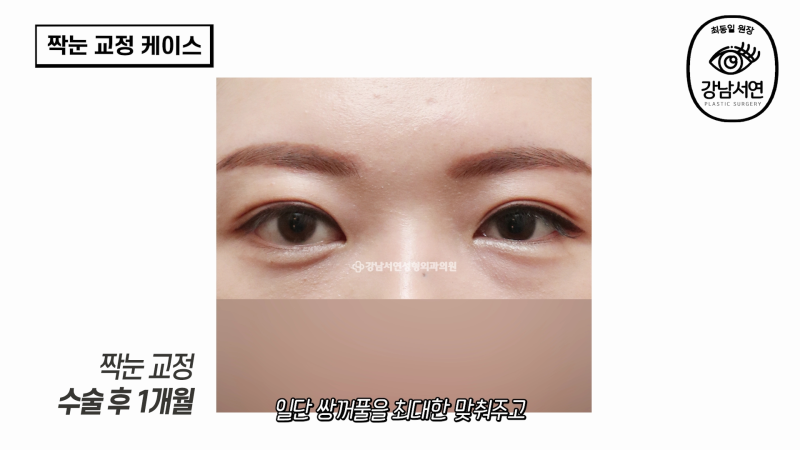
So, while the double eyelids and pupils were matched at the top,
because this patient has facial asymmetry,
there was a risk in lowering the right lower eyelid to match the other side.
I believe finishing at this level was the best possible outcome.
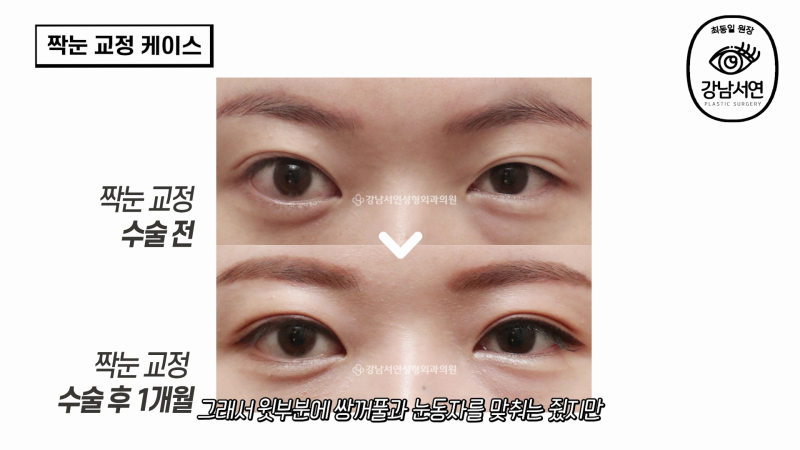
It is difficult to make skeletal asymmetry perfectly identical.
Therefore, the goal is to make them as similar as possible.
Asymmetrical Eye Correction Case 5
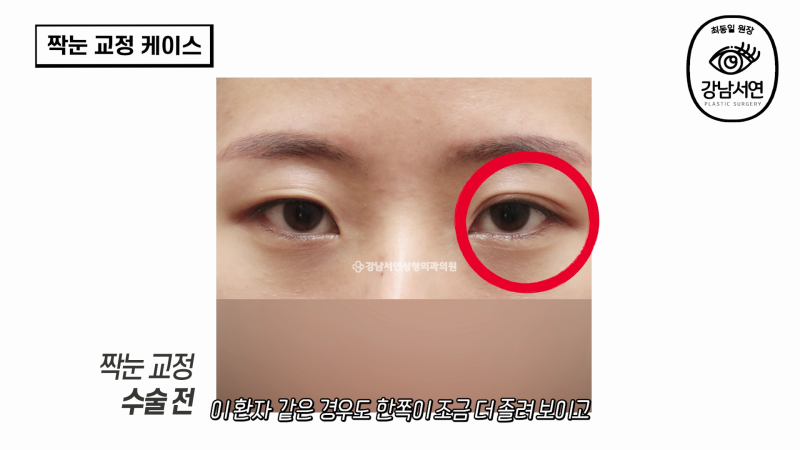
In this patient’s case, one side looked a bit more sleepy,
and the crease was only present on one side.
Therefore, we performed incisional ptosis correction to make the pupil exposure similar
and to create symmetrical double eyelids.
We made the pupil exposure as similar as possible
and then created the double eyelids.
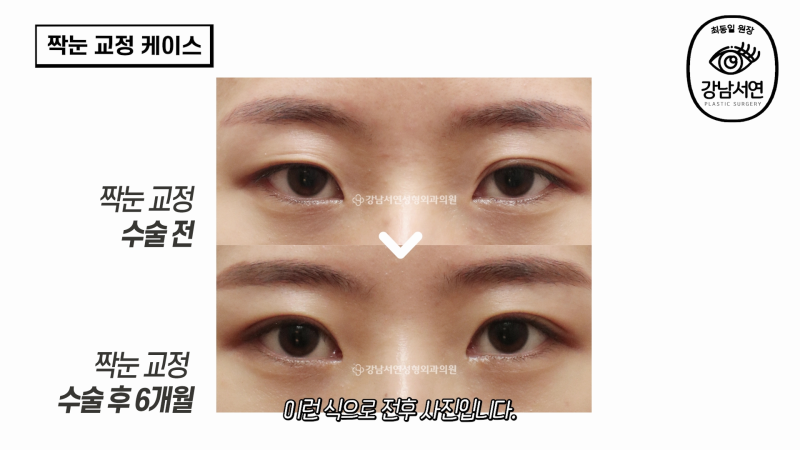
These are the before and after photos.
Asymmetrical Eye Correction Case 6
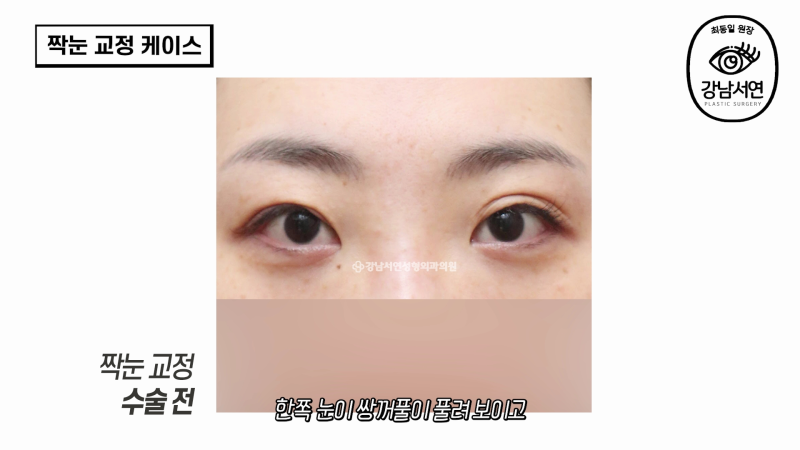
This patient also had different levels of pupil exposure,
one eye’s double eyelid appeared unraveled,
and the line on the left side of the photo was quite low.
So, we aligned the pupils and then corrected the double eyelids.
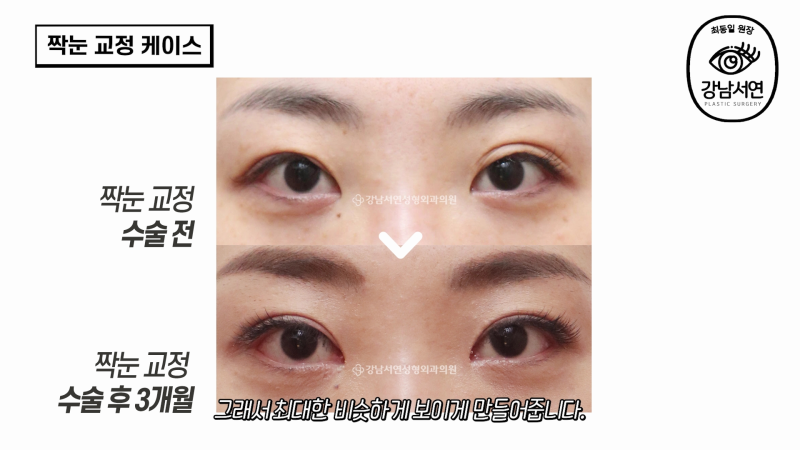
This makes them look as similar as possible.
Asymmetrical Eye Correction Case 7
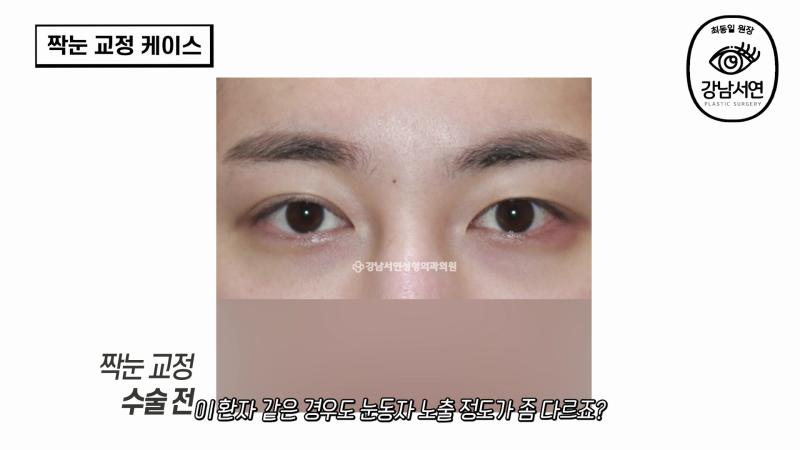
In this patient’s case, the pupil exposure is also quite different, right?
Since the left eye in the photo looks much sleepier,
we aligned the pupils and then corrected the double eyelid lines.
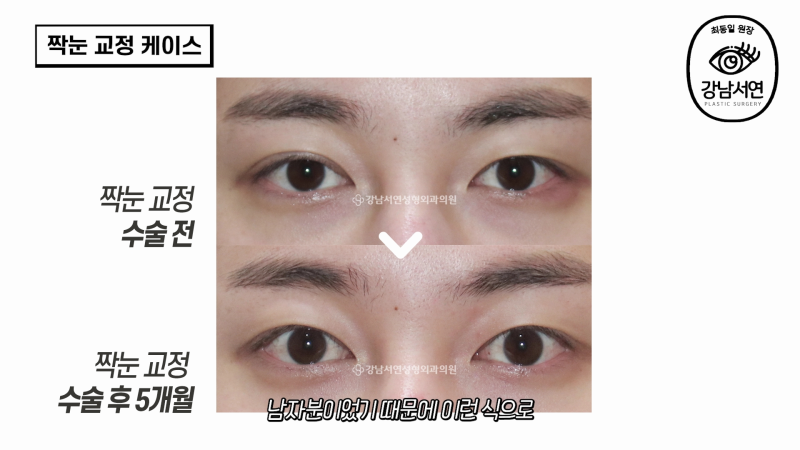
Since he is a man, we performed the procedure in a way that makes the double eyelids as inconspicuous as possible.
Asymmetrical Eye Correction Case 8
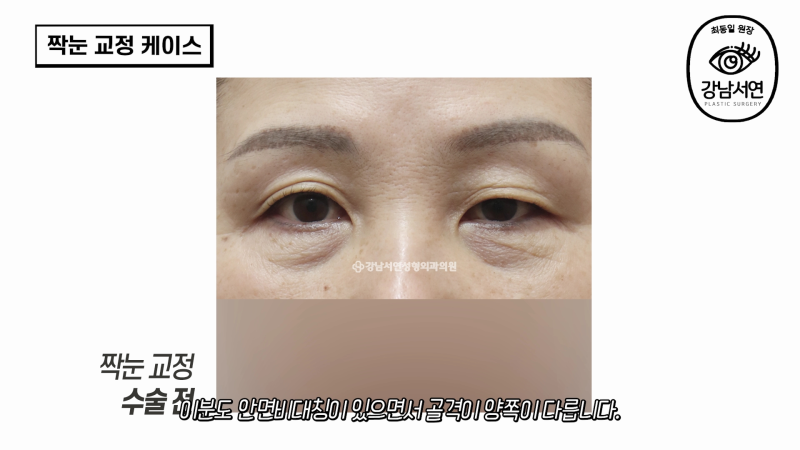
This person also has facial asymmetry with different skeletal structures on both sides.
Because the pupil exposure was different,
we performed more ptosis correction on the right eye in the photo
and then corrected the double eyelids.
We aimed to make them look as similar as possible by calculating the degree of sagging as well.
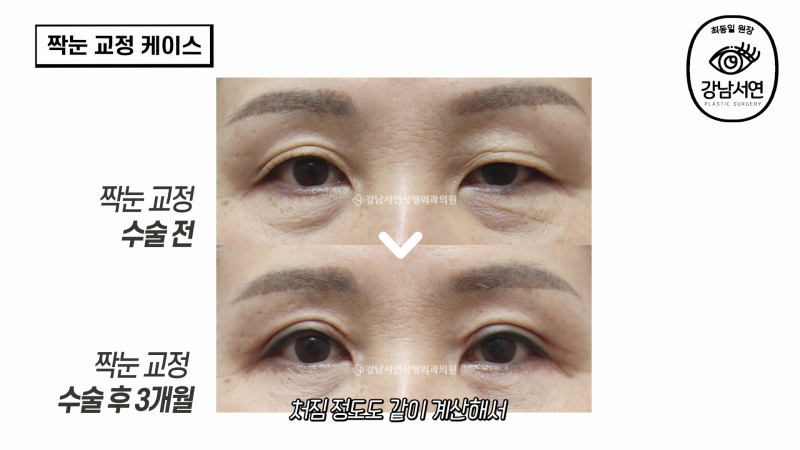
Lower blepharoplasty was also performed.
I hope today’s post was helpful.
Since surgical methods vary greatly depending on the patient’s condition,
it is best to visit in person for a detailed consultation.
Regarding asymmetrical eye correction cases,
you can find more details through the video below.
↓↓↓↓↓↓
Gangnam Seoyeon Plastic Surgery Clinic complies with medical laws. The photos in this post were taken under the same conditions with the patient’s prior consent. Additionally, please be aware that side effects such as bleeding, infection, and inflammation may occur after plastic surgery or procedures depending on the individual.
- Single-specialist system with the Representative Director - Accurately assessing eye condition / recommending only necessary surgeries - Equipped with operating room CCTV |
Feel free to visit us for a
1:1 consultation with a plastic surgery specialist :)
If you have any questions or would like a consultation,
please leave a comment or contact us via KakaoTalk Plus Friend @GangnamSeoyeonPlasticSurgery
or call us at 02-535-8889 :)






#GangnamSeoyeonPlasticSurgery #GangnamSeoyeon #SeoyeonPlasticSurgery #AsymmetricalEyeCorrection #DoubleEyelidSurgeryReview #DrChoiDongIl
Frequently Asked Questions
How does uneven eye correction work?
Uneven eye correction works by adjusting the degree of ptosis correction and skin excision differently for each eye to achieve symmetry. If one eye is smaller or more droopy, the surgeon will have the patient sit up during the operation to meticulously adjust the double eyelid line and pupil exposure, aiming for the most similar appearance possible.
Can uneven eyes be perfectly corrected if I have facial asymmetry?
No, if there is asymmetry in the bone structure itself, it is difficult to make them perfectly identical. However, the goal is to achieve the best possible result by making the pupil exposure and double eyelid lines as similar as possible, thereby improving visual symmetry.
Can uneven eyes with a previously loosened double eyelid be corrected?
Yes, it is possible. If the existing double eyelid line has loosened, causing uneven eyes, the loosened line can be re-established. If necessary, lateral canthoplasty or lower canthoplasty can be performed concurrently to naturally match the symmetry and size of both eyes.
Can double eyelids be made invisible during uneven eye correction for men?
Yes, it is possible. For male patients, we can correct sleepy-looking eyes by adjusting pupil exposure while designing the double eyelid line to be as invisible as possible, achieving a natural and un 부담스러운 result.