2026-11-08
Middle-Age Upper Eyelid Surgery: Irritation and Blocked Vision Are More Than Cosmetic Concerns
Drooping upper eyelids can cause recurring irritation, stinging, and blocked vision, not just a tired look. Upper blepharoplasty corrects skin, fat, and the levator muscle together.
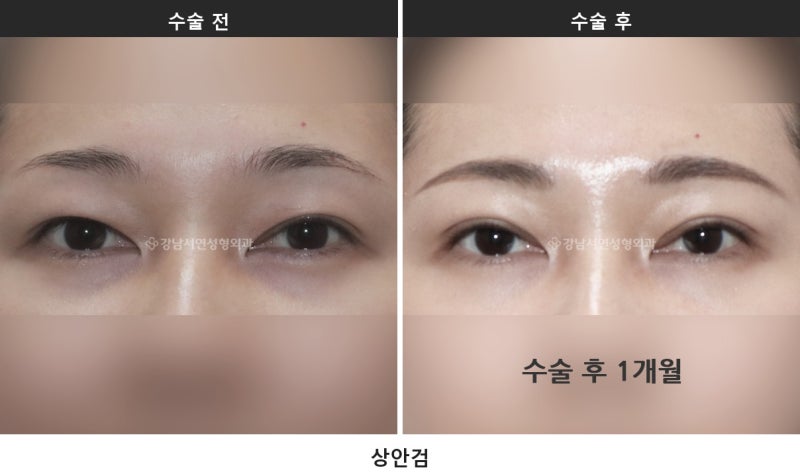
EYE SURGERY · Eye Surgery Guide for Middle Age
Drooping Eyelids Are About More Than Appearance
■ The Bottom Line
As eyelids droop with age, the eyes can look smaller, and the problem can go beyond appearance. The skin inside the eyelid may keep getting raw and stinging, or vision may become blocked. Upper blepharoplasty, the core procedure for drooping eyelids in middle age, removes sagging skin and excess fat and returns the loosened eyelid muscle to its original position. This corrects both the eyelid's lifting function and the drooping contour.
■ Why Do Drooping Eyelids Make the Eyes Raw and Stinging?
Eye irritation and stinging usually result from two overlapping causes. The first is when sagging skin folds over the eyelid, trapping sweat and oil and creating a damp environment. The second is when the muscle that lifts the eyelid (the levator muscle) becomes loose or separates from the tarsal plate. In that case, every time you open your eyes, you strain your forehead and brow, which increases skin friction. The first cause can be eased to some extent with gentle cleansing and moisturizing. The second involves a structural change, so it is difficult to resolve with skincare alone.
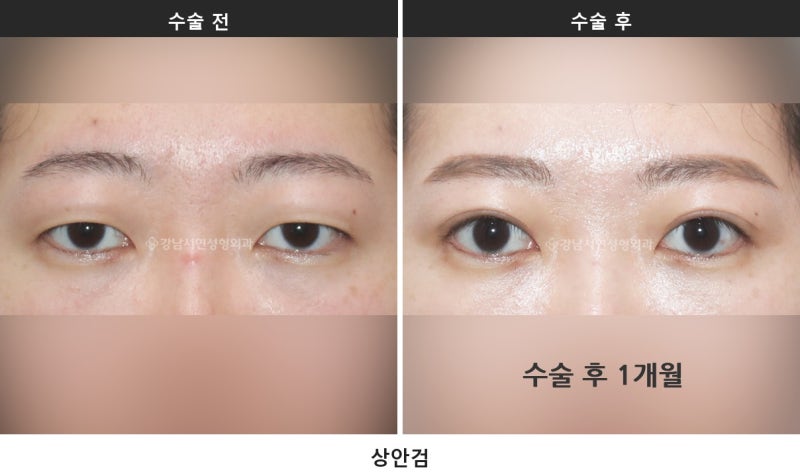
■ The Discomfort of Blocked Vision
When skin sagging becomes severe, the eyelid can cover the upper field of vision. Some people then develop a habit of raising their forehead or brows to open their eyes. In such cases, upper blepharoplasty is considered for functional improvement rather than cosmetic reasons.
■ The Changes Become More Pronounced with Age
After middle age, skin elasticity declines, and drooping tends to be more pronounced. We often see cases where irritation and blocked vision occur together.
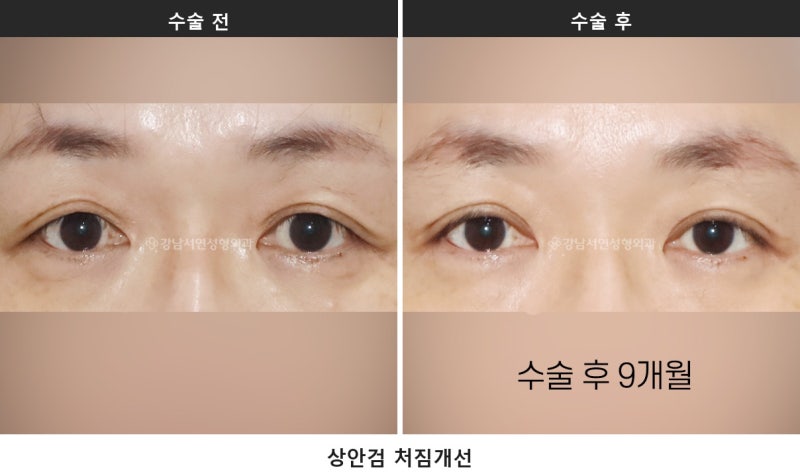
■ Signs It May Be Time for a Consultation
If your eyelids obstruct your vision and leave you feeling restricted, if you find yourself unconsciously tensing your forehead when opening your eyes, or if your eyes feel unusually heavy and tired by afternoon, this may be closer to blepharoptosis (ptosis) than simple cosmetic drooping. If two or more of these apply to you, it is time to get an accurate diagnosis.
■ How Upper Blepharoplasty Is Performed
In upper blepharoplasty, an incision is made along the planned design line to remove wrinkled skin and excess fat. The loosened levator muscle is then returned to where it sat in younger years, and the incision is closed along the original double-eyelid crease. With age, the levator often becomes loose or separates from the tarsal plate, so repositioning it is an important step. Rather than simply cutting away skin, the extent of tissue removal and the degree of muscle correction should be determined after a comprehensive assessment of the skin, fat, and muscle. This helps reduce the chance of irritation or stinging recurring, or of the eye shape looking unnatural.
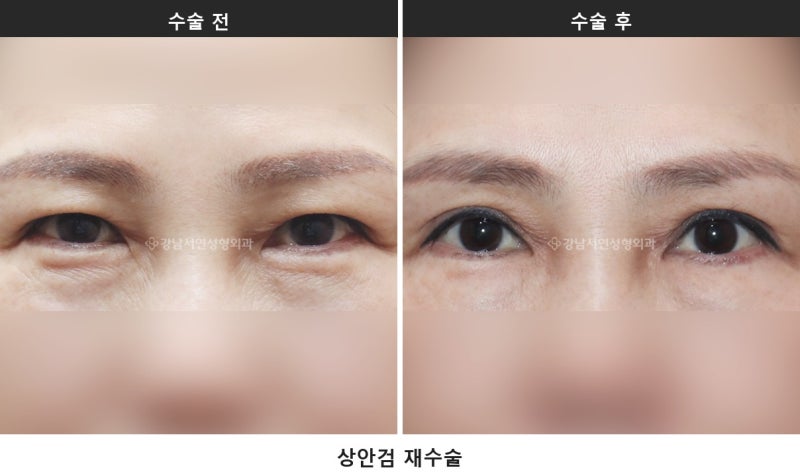
■ This Article May Help If You Are Wondering About the Following
- Anyone whose inner eyelids keep getting raw and stinging
- Anyone whose vision has narrowed due to drooping eyelids
- Anyone whose eyes feel unusually heavy and tired by afternoon
- Anyone wondering which method of middle-age drooping eyelid surgery may be right for them
■ Recovery Timeline
Surgery time: 30–60 minutes
Anesthesia: Sedation or local anesthesia
Clinic visits: 1–2 times
Suture removal: 4–12 days after surgery
Hospital stay: None (same-day discharge)
Return to daily activities: 3–7 days later
Major swelling typically subsides within one week, and you can go out wearing a mask or sunglasses. Natural-looking results settle in around 3–6 months, though this may vary depending on the method chosen and the individual.
■ FAQ
Q1. Do I have to have surgery if my eyelids keep getting raw?
Mild irritation can be eased with gentle cleansing and moisturizing. However, if it comes with blocked vision or a habit of straining the forehead, skincare alone has its limits, so a consultation is needed.
Q2. Can surgery be necessary even if the goal is not cosmetic?
Yes. If you have functional problems such as obstructed vision or chronic irritation, surgery can be considered separately from cosmetic goals.
Q3. Can older adults still have this surgery?
As long as there are no major concerns about overall health, age alone is not an absolute barrier. However, an evaluation that takes into account each person's skin elasticity and healing capacity is needed first.
Q4. Can irritation come back after surgery?
Yes. If the cause of the drooping is not accurately diagnosed and only the skin is removed, it can recur. Correcting the levator muscle as well can help lower the likelihood of recurrence.
■ Gangnam Seoyeon Plastic Surgery Clinic's Approach
At Gangnam Seoyeon Plastic Surgery Clinic, Chief Director Dr. Choi Dong-il, who brings extensive experience and expertise, personally handles consultations and takes responsibility for aftercare. Middle-age eyelid surgery is not judged solely on what is visible on the surface. Instead, we comprehensively assess the degree of skin laxity, skin thickness, the amount of eyelid fat, and the condition of the surrounding muscles to recommend the most suitable approach and combination of procedures.
Gangnam Seoyeon Plastic Surgery Clinic approaches middle-age drooping eyelid surgery based on three principles.
First, a precise diagnosis that considers skin, fat, and muscle together.
Second, upper blepharoplasty that also corrects the position of the eyelid muscle.
Third, a design aimed at a natural eye shape without overdoing it.
If you would like to see similar cases, you can view upper blepharoplasty cases in the before-and-after photos on the Gangnam Seoyeon Plastic Surgery Clinic website.
■ Disclaimer
This content is provided for general medical information purposes. It does not recommend any specific surgery or guarantee results. Complications such as bleeding, infection, and inflammation may occur after surgery, and results and recovery periods may vary depending on individual skin condition. For accurate diagnosis and progress checks, please be sure to consult a specialist.
The photos in this post were taken with the patients' prior consent.
Frequently Asked Questions
Do I have to have surgery if my eyes keep getting raw?
No. Mild irritation can be eased with gentle cleansing and moisturizing. However, if you also have blocked vision or a habit of straining your forehead, skincare alone has its limits, and a consultation is recommended.
Can upper blepharoplasty be considered even if the goal is not cosmetic?
Yes. If you have functional problems such as obstructed vision or chronic irritation, it can be considered separately from cosmetic goals. In such cases, upper blepharoplasty is evaluated for functional improvement rather than appearance.
Can older adults undergo upper blepharoplasty?
As long as there are no major concerns about overall health, age alone is not an absolute barrier. However, an evaluation that considers each person's skin elasticity and healing capacity is needed first.
Can eye irritation come back after surgery?
Yes. If the cause is not accurately diagnosed and only the skin is removed, it can recur. Correcting the levator muscle as well can help reduce the risk of recurrence.
How is upper blepharoplasty performed?
The incision is made along the planned design line to remove wrinkled skin and excess fat. The loosened levator muscle is then restored to where it sat in younger years, and the incision is closed along the original double-eyelid crease.
How long is the recovery period after upper blepharoplasty?
Return to daily activities is generally expected within about 3–7 days. Stitches are removed 4–12 days after surgery, and major swelling is described as subsiding within one week.