2026-10-08
Mid-Life Eye Surgery: How Do Upper Blepharoplasty, Lower Blepharoplasty, and Subbrow Lift Differ?
A guide to choosing between upper blepharoplasty, lower blepharoplasty, and subbrow lift for mid-life eye changes, based on the condition of the skin, fat, and muscle.
EYE SURGERY · Mid-Life Eye Surgery Guide
The right combination depends on your eye condition
■ The Short Answer
Mid-life eye surgery corrects changes in the eye area caused by declining skin elasticity with age. Drooping upper lids are addressed with upper blepharoplasty, puffy lower lids with lower blepharoplasty, and a wide gap between the eye and brow with significant sagging with a subbrow lift. The key is not to decide based only on what is visible, but to assess the condition of the skin, fat, and muscle as a whole and combine the methods that are needed.
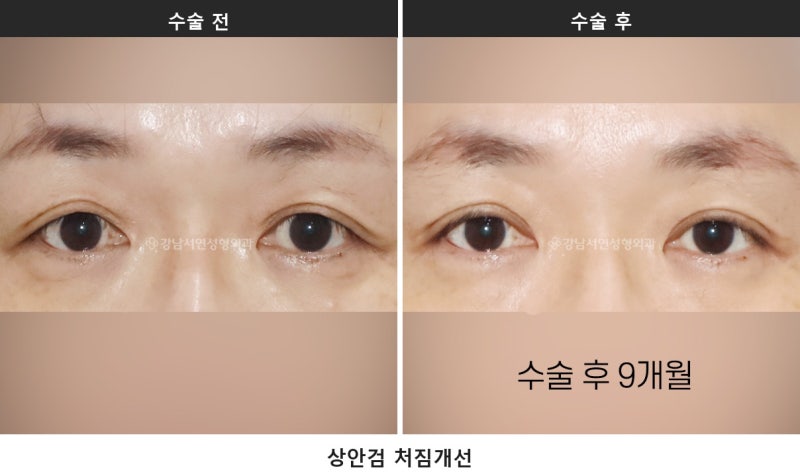
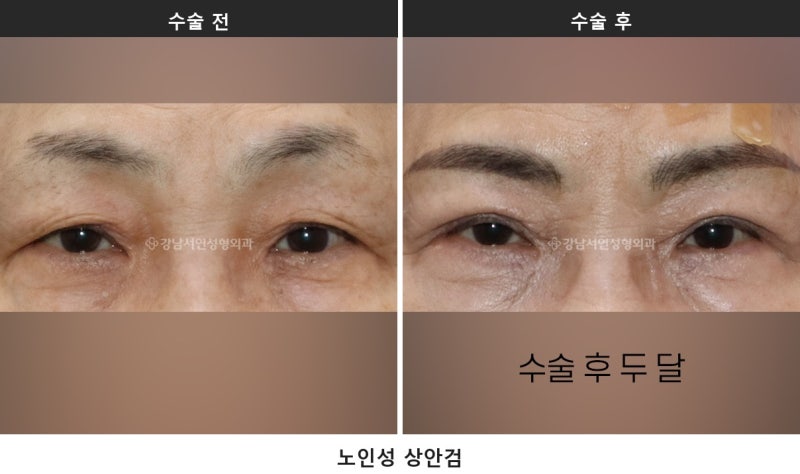
■ Upper Blepharoplasty: Addressing Drooping Lids and Narrowed Vision Together
Upper blepharoplasty improves drooping eyelids while also relieving the discomfort of lashes poking the eye and improving a narrowed field of vision. With age, the levator muscle that lifts the eyelid often loosens or separates from the tarsal plate, so it needs to be returned to its proper position. The surgeon makes an incision along the planned line, removes wrinkled skin and excess fat, returns the levator muscle to its youthful position, and closes the incision along the original double-eyelid line.
■ Lower Blepharoplasty: Smoothing Puffy Under-Eyes Through Fat Repositioning
Lower blepharoplasty repositions the protruding fat under the eyes and strengthens the orbital septum. A midface lift is then performed to improve sagging skin, creating smooth, refreshed under-eyes. The surgeon makes an incision along the planned line to trim excess skin and protruding fat, then lifts and secures the skin and muscle before closing. Repositioning the fat rather than simply removing it is the foundation for a natural-looking result.
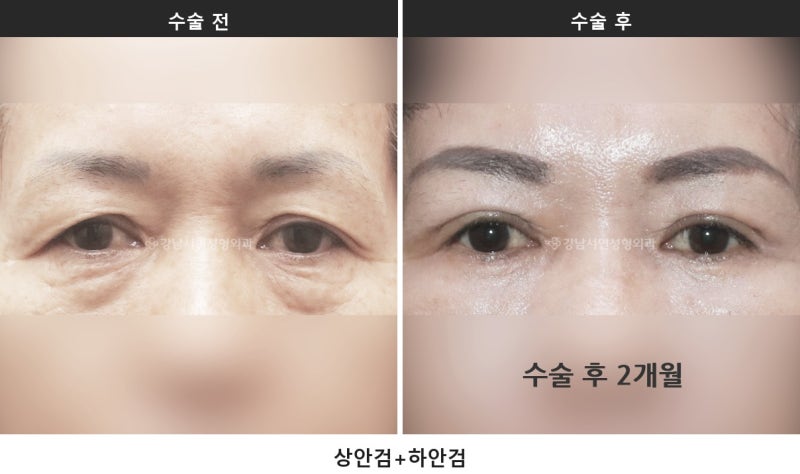
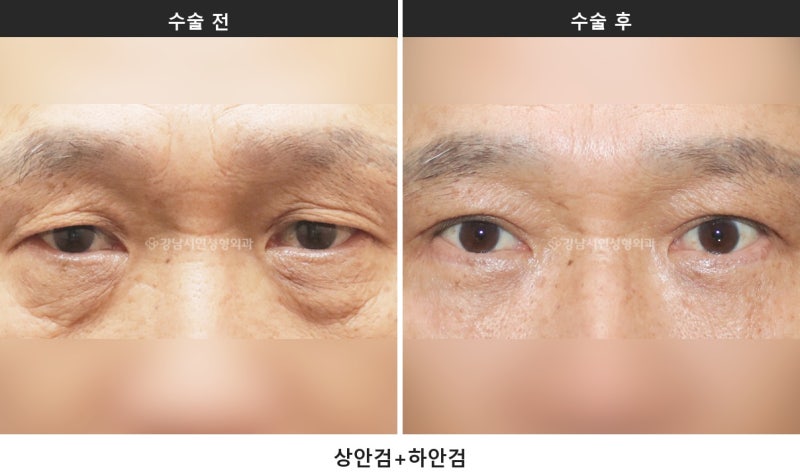
■ Upper and Lower Blepharoplasty Can Be Performed Together
Refining both the upper and lower eyelids helps restore a natural balance across the entire eye, so combining upper and lower blepharoplasty in a single procedure is possible. The right combination is determined through a comprehensive evaluation of the degree of skin laxity, skin thickness, the amount of eyelid fat, and the condition of the surrounding muscles.
■ Subbrow Lift: Considered When the Gap Between the Eye and Brow Is Wide
A subbrow lift is performed when the distance between the eye and brow is wide and eyelid sagging is significant. It is sometimes combined with upper blepharoplasty to address a heavy, full upper lid. The surgeon makes an incision along the planned line, removes the loose skin, secures the tissue firmly to the periosteum, and then closes the incision.
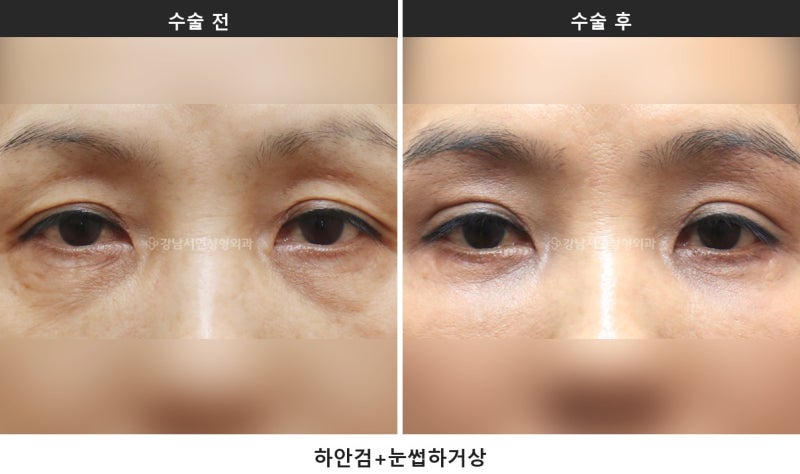
■ This Article May Help If You Are Wondering About the Following
- Your eyelids have drooped as your skin has lost elasticity
- Drooping lids are narrowing your vision or leaving the skin around your eyes raw and weepy
- Lashes poke your eyes and cause discomfort
- Fat bulges out under your eyes
- You are unsure whether upper blepharoplasty, lower blepharoplasty, or a subbrow lift is right for you
■ Recovery Timeline
Surgery time: 30–60 minutes
Anesthesia: Sedation or local anesthesia
Clinic visits for treatment: 1–2
Suture removal: 4–12 days later
Hospital stay: None (same-day discharge)
Return to daily life: 3–7 days later
Significant swelling typically subsides within one week, and you can go out wearing a mask or sunglasses. Natural-looking results settle in over 3–6 months. Timelines may vary depending on the procedure chosen and the individual.
■ FAQ
Q1. How is upper blepharoplasty different from a standard double-eyelid surgery?
It differs from standard double-eyelid surgery in that it corrects drooping lids while also creating a natural-looking line. Improving your field of vision is also taken into account.
Q2. Won't the under-eyes droop after lower blepharoplasty?
By strengthening the orbital septum and performing a midface lift at the same time, sagging is minimized. Whether this approach is suitable for you is determined in a 1:1 consultation.
Q3. Can I have upper and lower blepharoplasty at the same time?
Yes, it is possible, and we recommend it as a combined approach to refine both the upper and lower eyelids. The extent of treatment needed is determined through evaluation.
Q4. When is a subbrow lift needed in addition to upper blepharoplasty?
When the gap between the eye and brow is wide and eyelid sagging is significant, performing both procedures together is a natural choice.
■ Gangnam Seoyeon Plastic Surgery Clinic's Approach
At Gangnam Seoyeon Plastic Surgery Clinic, Chief Director Dr. Choi Dong-il, who has extensive experience and expertise, personally handles consultations and follow-up care. Mid-life eye surgery is not judged solely by what is visible. Instead, we comprehensively assess the degree of skin laxity, skin thickness, the amount of eyelid fat, and the condition of the surrounding muscles to recommend the most suitable combination of upper blepharoplasty, lower blepharoplasty, and subbrow lift.
Gangnam Seoyeon Plastic Surgery Clinic approaches mid-life eye surgery based on three principles.
First, a precise diagnosis that considers skin, fat, and muscle together.
Second, selecting the procedures and combinations that match your eye condition.
Third, a system in which the chief director personally oversees everything from consultation through follow-up care.
If you would like to see similar cases, you can view mid-life eye surgery results in the before-and-after photos on the Gangnam Seoyeon Plastic Surgery Clinic website.
■ Disclaimer
This content is provided solely for the purpose of medical information. It does not recommend any specific surgery or guarantee results. Bleeding, infection, inflammation, and other complications may occur after surgery. Results and recovery periods may vary depending on individual skin condition and the method chosen. Please be sure to confirm an accurate diagnosis and choice of method through consultation with a specialist.
The photos in this post were taken with the patients' prior consent.
Gangnam Seoyeon Plastic Surgery Clinic | Choi Dong-il, Chief Director
20, Gangnam-daero 154-gil, Gangnam-gu, Seoul (Exit 7, Sinsa Station, Shinbundang Line)
Weekdays 09:30–18:30 · Saturday 09:30–16:30 · Closed on Sundays and public holidays
02-535-8889

Dr. Choi Dong-il
Board-certified plastic surgeon
Current: Chief Director, Gangnam Seoyeon Plastic Surgery Clinic (2015–present)
Former: Director, BK Plastic Surgery Clinic (2011–2013)
Former: Director, Regen Plastic Surgery Clinic (2013–2015)
Outpatient Professor, Department of Plastic Surgery, Korea University College of Medicine
Chair, Academic Committee, Eyelid Surgery Research Group, Korean Society of Plastic Surgeons
Outpatient Professor, Department of Plastic Surgery, Kangdong Sacred Heart Hospital
Full Member, Korean Society of Plastic Surgeons
Full Member, Korean Society of Aesthetic Plastic Surgery
Full Member, Korean Society of Craniofacial Plastic Surgery
Member, International Society of Plastic Surgery (IPRAS)
Full Member, Korean Society for Surgery of the Hand
Full Member, Korean Association of Plastic Surgeons
Member, Academic Committee, Korean Society of Plastic Surgeons
Expert Reviewer, Editorial Committee, Korean Society of Aesthetic Plastic Surgery
Former Finance Director, current Information Director, Korean Association of Plastic Surgeons
Member, Information and Communications Committee and Public Relations Committee, Korean Society of Aesthetic Plastic Surgery
Full Member, Eyelid Surgery Research Group, Korean Society of Plastic Surgeons
Former General Affairs Director, Eyelid Surgery Research Group, Korean Society of Plastic Surgeons
Full Member, Rhinoplasty Research Group, Korean Society of Plastic Surgeons
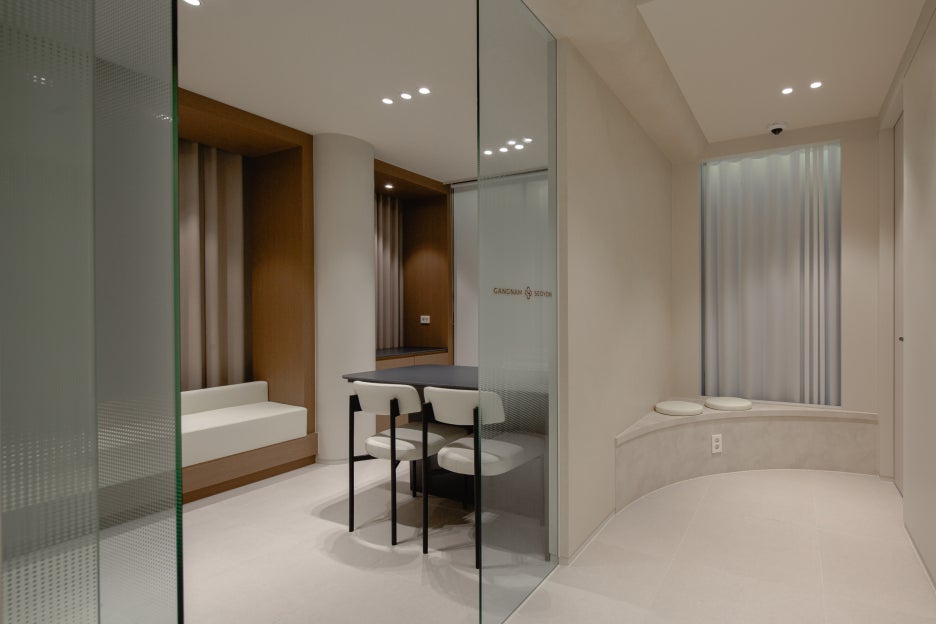

The clinic's waiting lounge with dark sofas, wood-panelled walls, a TV and a corridor beyond.
Inside Gangnam Seoyon clinic: glass partitions, a table with white chairs and built-in benches.
Gangnam Seoyeon Plastic Surgery Clinic complies with the Medical Service Act. The photos in this post were taken under the same conditions and with the patients' prior consent. In addition, bleeding, infection, inflammation, and other side effects may occur after plastic surgery or procedures, depending on the individual, so caution is advised.
- One board-certified plastic surgeon serving as chief director - Accurately assessing your eye condition, and recommending only the surgery you need - Surgery room equipped with CCTV |
Visit with no pressure and speak with a board-certified plastic surgeon
in a 1:1 consultation :)
If you have any questions or would like a consultation,
leave a comment or add us on KakaoTalk Plus Friend @강남서연성형외과의원
or call 02-535-8889 :)






Frequently Asked Questions
How is upper blepharoplasty different from a standard double-eyelid surgery?
Upper blepharoplasty differs from a standard double-eyelid surgery in that it corrects drooping lids while creating a natural-looking line. It also takes into account narrowed vision and the discomfort of lashes poking the eye, and includes repositioning the loosened levator muscle.
Will the under-eyes droop after lower blepharoplasty?
This approach strengthens the orbital septum and performs a midface lift to improve sagging skin. Possible sagging and whether this method suits you are determined in a 1:1 consultation, and results may vary depending on individual skin condition.
Can I have upper and lower blepharoplasty at the same time?
Yes, it is possible. This combination refines both the upper and lower eyelids to balance the entire eye. The extent of treatment is determined after evaluating the degree of skin laxity, skin thickness, the amount of eyelid fat, and the condition of the surrounding muscles.
When is a subbrow lift necessary?
It is considered when the gap between the eye and brow is wide and eyelid sagging is significant. It is sometimes performed alongside upper blepharoplasty to address a heavy upper lid. After the loose skin is removed, the tissue is secured to the periosteum and then closed.
How long is the recovery period?
You can typically return to daily life 3–7 days after surgery, and suture removal takes place 4–12 days after surgery. Significant swelling subsides within one week, and natural-looking results settle in over 3–6 months. Timelines may vary depending on the individual and the procedure chosen.
What about anesthesia and hospital stay?
Anesthesia is either sedation or local anesthesia. No hospital admission is required, and patients are discharged the same day. Surgery takes 30–60 minutes, and clinic visits for treatment total 1–2.