2026-10-09
Men's Non-Crease Eye-Shape Correction and Crease Lowering, Explained in One Place
A guide to men's non-crease eye-shape correction and crease lowering, covering how to achieve an open, clear, and natural-looking eye shape.
EYE SURGERY · Men's Eye Surgery Information
A method to keep the eyelid crease unnoticeable while making the eyes look open and refreshing
■ The Bottom Line
Men's eye surgery isn't just about making the eyes bigger; it's about preserving both masculinity and natural beauty. Because a thick eyelid crease can look heavy, we create an open, clear, and natural eye shape using either non-crease eye-shape correction, which adjusts the muscle that lifts the eyelid without creating a crease, or by lowering an existing crease.
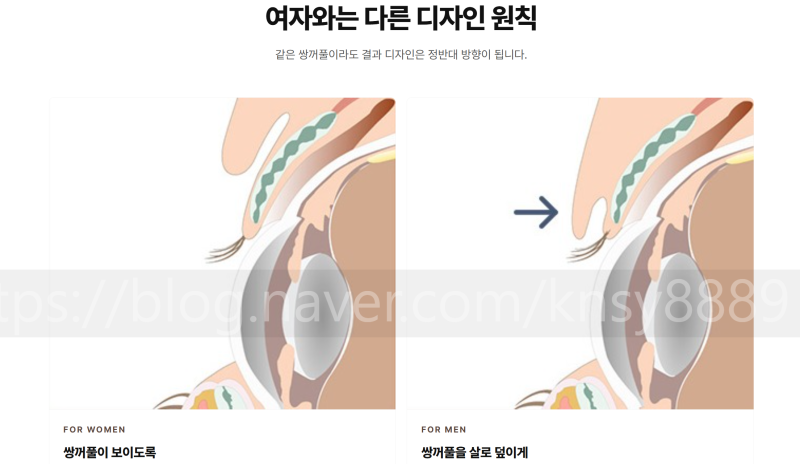
■ Men and Women Follow Different Design Principles
For women, the design typically makes the crease clearly visible, whereas for men, even when a crease is present, the goal is to keep it hidden beneath the surrounding soft tissue so it doesn't look prominent. Removing the crease by cutting away tissue can cause many side effects, so we take the approach of covering the crease with soft tissue.
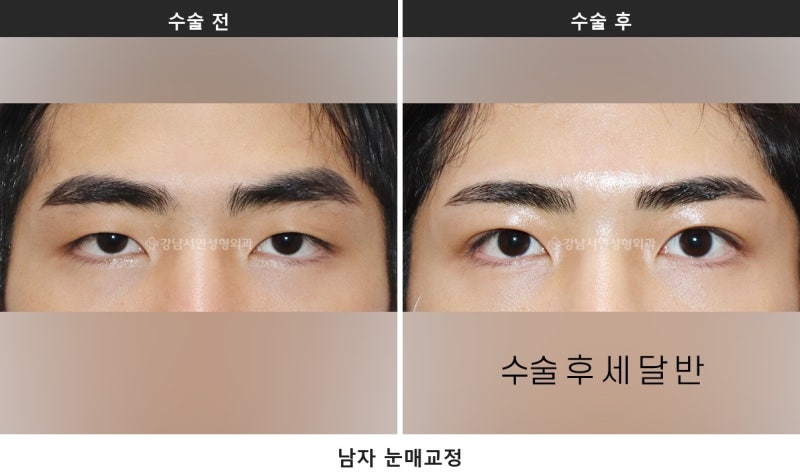
■ Non-Crease Eye-Shape Correction: Correcting the Eye-Opening Force Without Creating a Crease
Non-crease eye-shape correction creates an open, clear eye shape by adjusting the tension of the muscle that opens the eyes, instead of forming an eyelid crease. Men's skin is often thick and tends to loosen easily, so most cases are performed with an incision. Non-incision methods are carefully applied in only about 10–20% of cases, depending on the eye condition. The incision method preserves the orbicularis oculi muscle and finishes with dynamic fixation to keep the result from loosening.
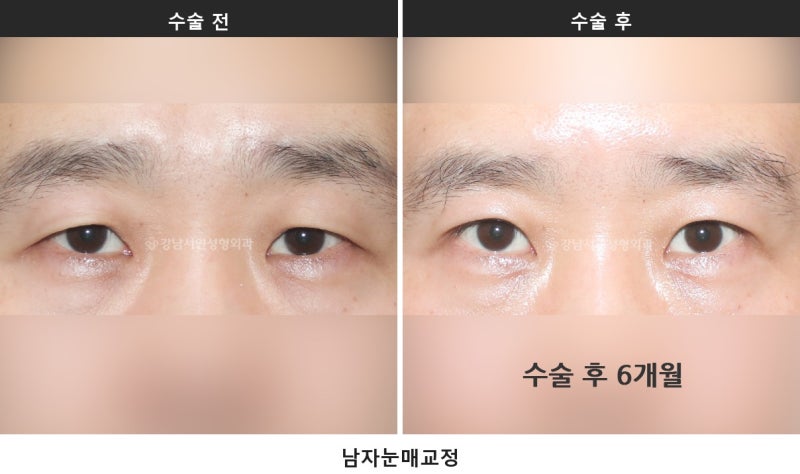
■ If the Eyelid Crease Feels Too Heavy, Lowering It Is an Option Too
We consider removing or reducing the crease when a natural crease sits too high, when a surgically created crease looks unnatural, or when the overall impression feels heavy or slick. The goal is to keep the eyes open and clear while achieving a more masculine and approachable look. In these cases, we select an approach known as double eyelid lowering or line lowering, based on the eye condition.
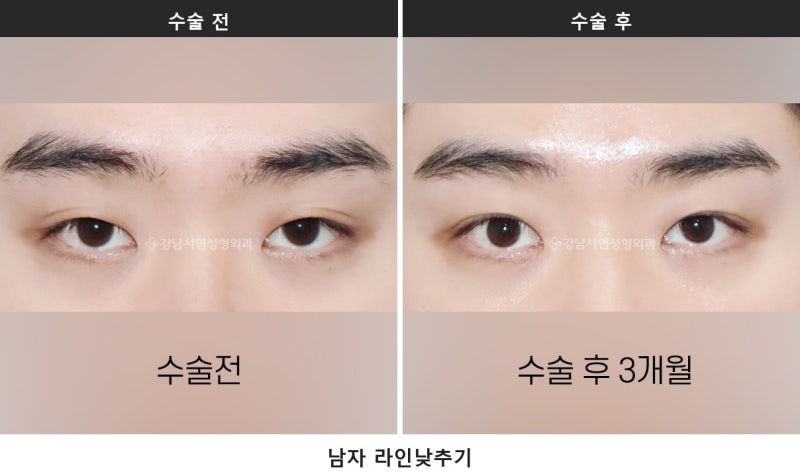
■ Diagnosis Determines Which Method Is Right
After comprehensively evaluating skin thickness, the strength of the eye-opening muscle, and whether an existing crease is present, we determine whether a non-crease or inner double eyelid approach is most suitable. If the eyes are drooping, eye-shape correction is the main focus; if an existing crease is high or unnatural, lowering the crease becomes the core approach. In some cases, both are performed together.
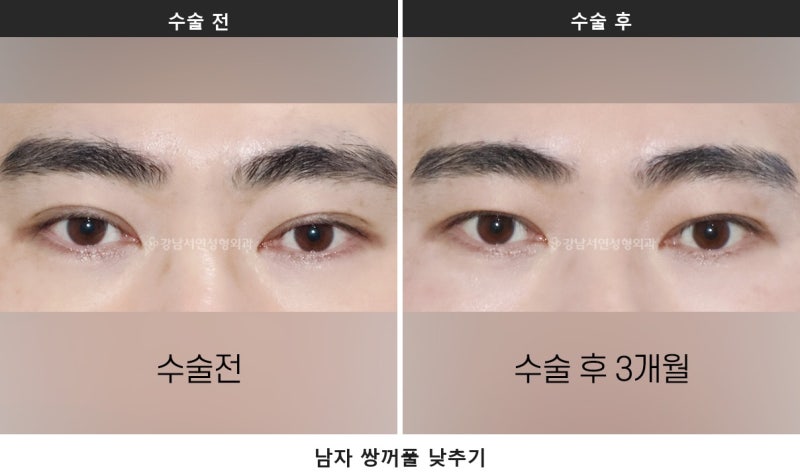
■ What Changes
The goals are an open, clear eye shape; a natural change that doesn't look obvious; a clean impression without a heavy look; and less use of the forehead muscles when opening the eyes. Results and recovery vary from person to person.
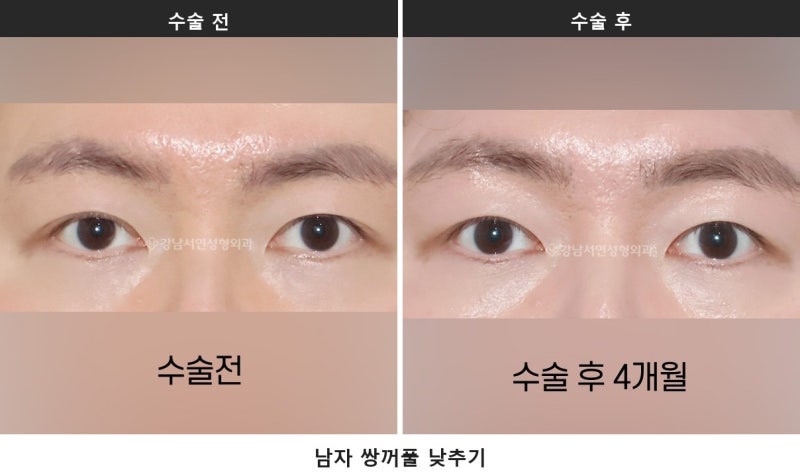
■ This Article Can Help If You Have These Questions
- Want an open, clear eye shape without a double eyelid crease
- Find your eyelid crease too high or heavy and want to lower it
- Are curious how men's eye surgery differs from women's
- Are unsure whether eye-shape correction or crease lowering is right for you
■ Recovery Timeline
Surgery time: 30–60 minutes
Anesthesia: Sedation or local anesthesia
Clinic visits: 1–2 times
Stitch removal: 4–12 days later
Hospital stay: None (same-day discharge)
Return to daily activities: 3–7 days later
These timelines may vary depending on the method chosen and your eye condition.
■ FAQ
Q1. Will non-crease eye-shape correction create no eyelid crease at all?
Depending on your eye condition, a faint crease may remain. The design, either non-crease or inner double eyelid, is determined based on your eye condition and the impression you want.
Q2. Can men also have it done without an incision?
It is possible in some cases, but only a small minority, about 10–20%. Because men's skin is thick and tends to loosen easily, most procedures are performed with an incision.
Q3. I don't like my existing double eyelid. Can it be removed?
Methods to remove or lower the crease can be considered depending on your eye condition, and the extent will be determined during consultation.
Q4. Can eye-shape correction and crease lowering be done together?
If your eyes are drooping and the crease also feels heavy, the two may be performed together. The necessary scope is determined through diagnosis.
■ Gangnam Seoyeon Plastic Surgery's Approach
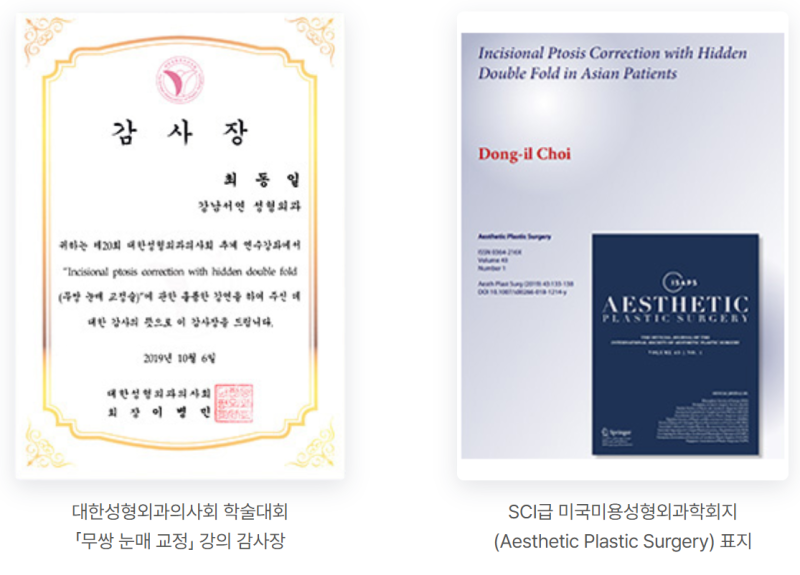
At Gangnam Seoyeon Plastic Surgery, Director Choi Dong-il personally handles everything from consultation to surgery. In 2018, the clinic published the world's first SCI-level paper on men's non-crease eye-shape correction in the U.S. journal Aesthetic Plastic Surgery, demonstrating its safety and expertise.
Gangnam Seoyeon Plastic Surgery approaches men's eye surgery based on three principles.
First, a precise diagnosis by an experienced board-certified plastic surgeon.
Second, a customized method selected by comprehensively considering skin thickness, muscle strength, and the existing crease.
Third, a natural design in which the crease is covered by soft tissue.
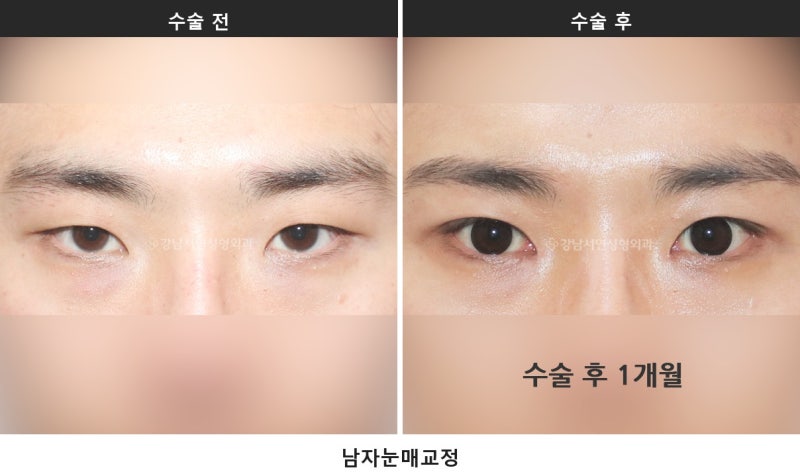
If you'd like to see similar cases, you can view men's eye-shape correction and men's crease-lowering cases in the before-and-after photos on the Gangnam Seoyeon Plastic Surgery website.
■ Disclaimer
This content is provided solely for medical information purposes and does not recommend any specific surgery or guarantee results. Complications such as bleeding, infection, and inflammation may occur after surgery, and results and recovery periods may vary depending on individual skin condition and the method chosen. Please be sure to confirm an accurate diagnosis and choice of method through consultation with a specialist.
The photos in this post were taken with the patients' prior consent.
Gangnam Seoyeon Plastic Surgery Clinic | Director Choi Dong-il
20, Gangnam-daero 154-gil, Gangnam-gu, Seoul (Exit 7, Sinsa Station, Sinbundang Line)
Weekdays 09:30–18:30 · Saturday 09:30–16:30 · Closed on Sundays and public holidays
02-535-8889

Director Choi Dong-il
Board-Certified Plastic Surgeon
Current: Director, Gangnam Seoyeon Plastic Surgery (2015–present)
Former: Director, BK Plastic Surgery (2011–2013)
Former: Director, Regen Plastic Surgery (2013–2015)
Outpatient Professor, Department of Plastic Surgery, Korea University College of Medicine
Academic Committee Chair, Eyelid Surgery Research Society, Korean Society of Plastic and Reconstructive Surgeons
Outpatient Professor, Department of Plastic Surgery, Kangdong Sacred Heart Hospital
Full Member, Korean Society of Plastic and Reconstructive Surgeons
Full Member, Korean Society of Aesthetic Plastic Surgery
Full Member, Korean Society of Craniofacial Plastic Surgery
Member, International Confederation of Plastic, Reconstructive and Aesthetic Surgery (IPRAS)
Full Member, Korean Society for Surgery of the Hand
Full Member, Korean Association of Plastic Surgeons
Member, Academic Committee, Korean Society of Plastic and Reconstructive Surgeons
Expert Reviewer, Editorial Committee, Korean Society of Aesthetic Plastic Surgery
Former Finance Director, current Information Director, Korean Association of Plastic Surgeons
Member, Information and Communications Committee and Public Relations Committee, Korean Society of Aesthetic Plastic Surgery
Full Member, Eyelid Surgery Research Society, Korean Society of Plastic and Reconstructive Surgeons
Former General Affairs Director, Eyelid Surgery Research Society, Korean Society of Plastic and Reconstructive Surgeons
Full Member, Rhinoplasty Research Society, Korean Society of Plastic and Reconstructive Surgeons
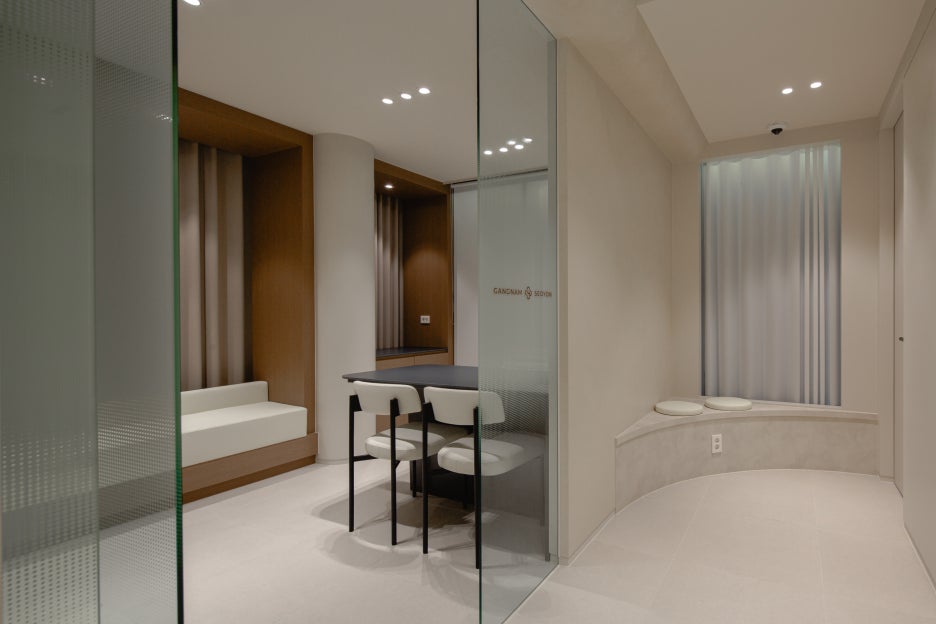
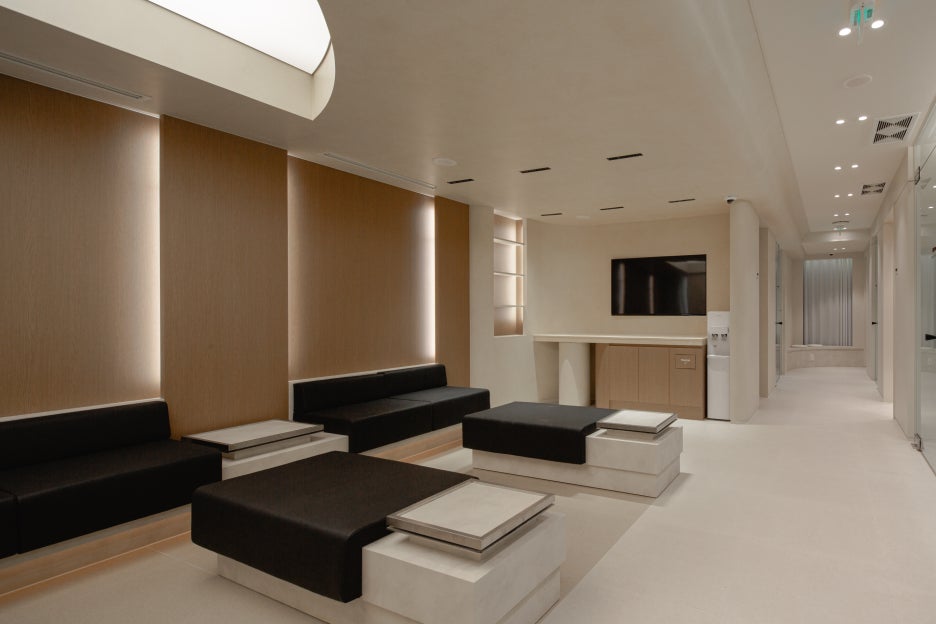
The clinic's waiting lounge with black sofas, a TV and a long hallway.
Interior of Gangnam Seoyon: a glass partition, a table and white chairs.
Gangnam Seoyeon Plastic Surgery Clinic complies with the Medical Service Act. The photos in this post were taken under identical conditions and with the patients' prior consent. In addition, side effects such as bleeding, infection, and inflammation may occur after plastic surgery or procedures depending on the individual, so caution is advised.
- One board-certified plastic surgeon serving as director - Accurate assessment of eye condition / only necessary surgery recommended - Operating room equipped with CCTV |
Feel free to visit and speak with a board-certified plastic surgeon
for a 1:1 consultation :)
If you have any questions or would like to consult with us,
please leave a comment or add us on KakaoTalk Plus Friends: @강남서연성형외과의원
or call us at 02-535-8889 :)






Frequently Asked Questions
Will non-crease eye-shape correction create no eyelid crease at all?
Not necessarily. Depending on your eye condition, a faint crease may remain. Non-crease eye-shape correction adjusts the tension of the eye-opening muscle instead of creating a crease, and the design, either non-crease or inner double eyelid, is chosen based on your eye condition and the impression you want.
Can men also have non-crease eye-shape correction without an incision?
It is possible in some cases, but only a small minority, about 10–20%. Because men's skin is thick and tends to loosen easily, most procedures are performed with an incision, and non-incision methods are carefully applied depending on the eye condition.
I don't like my existing double eyelid. Can it be removed?
Depending on your eye condition, methods to remove or reduce the double eyelid can be considered. These are reviewed in cases such as when a natural crease sits too high or a surgically created crease looks unnatural, and the extent is determined through diagnosis and consultation.
How does men's eye surgery differ from women's in design principles?
For men, the design keeps the crease covered by soft tissue so it isn't visible, even when one is present, whereas for women, the design generally makes the crease clearly visible. Removing the crease by cutting away tissue can cause many side effects, so we take the approach of covering the crease with soft tissue.
How is it decided whether non-crease or inner double eyelid is right for me?
It is determined after a comprehensive evaluation of skin thickness, the strength of the eye-opening muscle, and whether an existing crease is present. If the eyes are drooping, eye-shape correction is the main approach; if the existing crease is high or unnatural, lowering the crease becomes the focus. In some cases, both are performed together.
How long is the recovery after men's eye surgery?
You can usually return to daily activities 3–7 days after surgery, and stitches are removed 4–12 days after surgery. Surgery takes 30–60 minutes, with same-day discharge and no hospital stay, and treatment requires 1–2 clinic visits. The timeline may vary depending on the method chosen and your eye condition.