2026-11-15
Lower Blepharoplasty vs. Under-Eye Fat Repositioning: What's the Difference?
Lower blepharoplasty and under-eye fat repositioning both address puffy under-eye fat, but skin laxity determines which method is right. Here is a guide to choosing between them.
EYE SURGERY · Under-Eye Surgery Guide
Skin laxity determines which surgical method is right for you
■ The Short Answer
Lower blepharoplasty and under-eye fat repositioning are both procedures that address puffy fat under the eyes, but they take different approaches. As a general rule, when there is little to no skin laxity and only the fat needs to be addressed, under-eye fat repositioning is chosen. It is performed through the inner conjunctiva (the lining on the inside of the lower eyelid). When skin laxity is also present and the skin needs to be addressed, lower blepharoplasty, which involves a skin incision, is the usual choice.
■ Under-Eye Fat Repositioning: Accessed from Inside the Eyelid
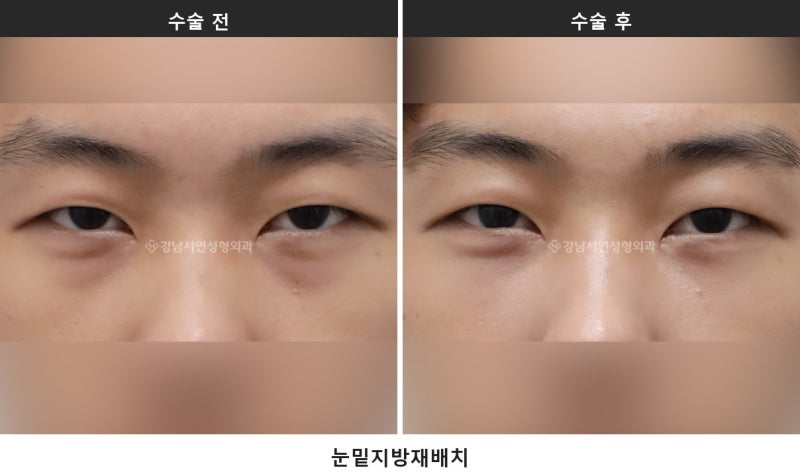
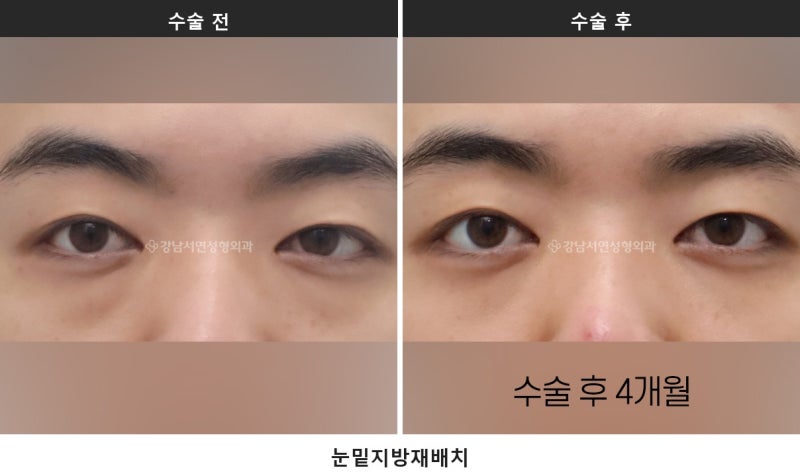
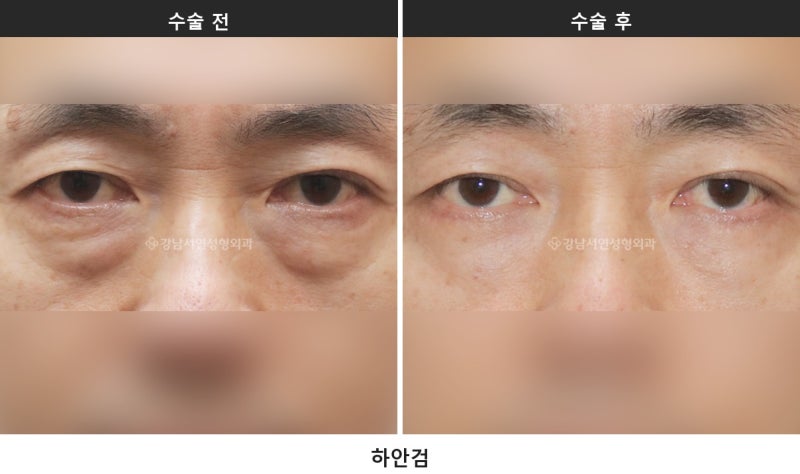
Under-eye fat repositioning works through the inner conjunctiva, so there is no visible scar on the skin. Rather than removing the fat, the procedure moves it into hollowed areas to fill them. To help reduce the chance of the bulge returning, orbital septum reinforcement is performed alongside the repositioning. In cases where the midface also looks hollow, not just the fat protrusion, fat grafting may be added to restore volume.
■ Lower Blepharoplasty: Addressing the Skin Along with the Fat
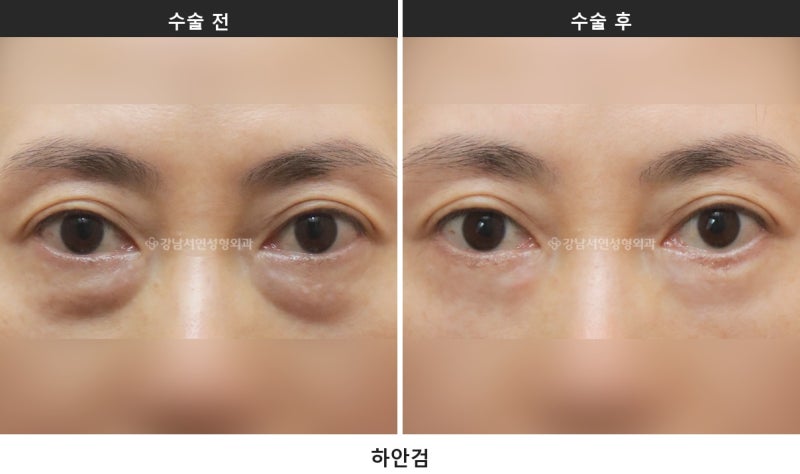
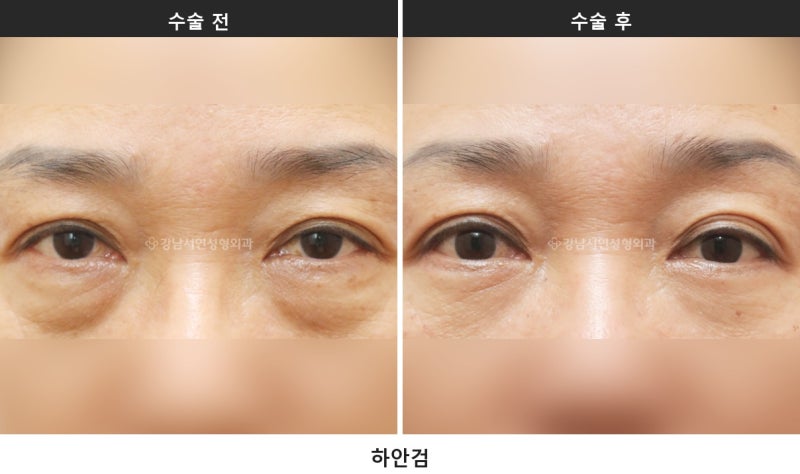
Lower blepharoplasty is a skin-incision fat repositioning procedure, performed when there is skin laxity or when midface lifting is needed. An incision is made along a pre-planned line to remove excess skin and protruding fat. After orbital septum reinforcement and midface lift are also carried out, the skin and muscle are pulled upward, secured in place, and sutured closed.
■ Skin Laxity Determines Which Surgery Fits
When there is little skin laxity and only the fat needs to be addressed, the transconjunctival method is suitable. When skin laxity is present and must be addressed together, lower blepharoplasty with a skin incision is the better fit. Simply removing fat tends to lead to re-hollowing or loss of firmness over time, which is why both methods are built around repositioning an appropriate amount of fat.
■ This Article May Help If You Are Wondering About
- The difference between lower blepharoplasty and under-eye fat repositioning
- Puffiness under the eyes
- Whether your dark circles are caused by fat shadows
- Which procedure is right for you
■ Recovery Timeline
Surgery time: 30–60 minutes
Anesthesia: Sedation or local anesthesia
Follow-up visits: 1–2
Suture removal: 4–12 days after surgery
Hospital stay: None (same-day discharge)
Return to daily activities: 3–7 days later
These timeframes may vary depending on the surgical method and each person's condition under the eyes.
■ FAQ
Q1. Wouldn't it be better to simply remove the fat?
Simple removal is more likely to cause the area to hollow out again or lose firmness over time. We believe repositioning an appropriate amount of fat looks more natural and lasts longer.
Q2. Will dark circles improve as well?
If under-eye fat protrudes and casts a shadow that looks like a dark circle, fat repositioning alone can significantly improve it. Dark circles caused by pigmentation may require separate treatment.
Q3. Will the under-eye area sag after lower blepharoplasty?
Orbital septum reinforcement and midface lift are performed together to minimize sagging. Whether this is appropriate for you is determined through a one-on-one consultation.
Q4. Can the problem come back?
Orbital septum reinforcement is performed to help reduce the likelihood of recurrence. However, natural changes due to aging may appear over time.
■ Gangnam Seoyeon Plastic Surgery Clinic's Approach
At Gangnam Seoyeon Plastic Surgery Clinic, Chief Director Choi Dong-il carefully assesses the type of under-eye fat and the degree of skin laxity to determine whether the transconjunctival or skin-incision method is the better fit. The focus is on creating a natural, three-dimensional under-eye contour while preserving the aegyosal (smile lines).
Gangnam Seoyeon Plastic Surgery Clinic approaches under-eye surgery based on three principles.
First, a precise diagnosis that distinguishes between fat type and skin laxity.
Second, surgery centered on repositioning and orbital septum reinforcement rather than removal.
Third, a natural design that preserves the aegyosal (smile lines).
If you would like to see similar cases, you can view before-and-after photos of under-eye fat repositioning and lower blepharoplasty cases on the Gangnam Seoyeon Plastic Surgery Clinic website.
■ Disclaimer
This content is written for the purpose of providing medical information. It does not recommend any specific surgery or guarantee results. Complications such as bleeding, infection, and inflammation may occur after surgery, and results and recovery periods may vary depending on individual skin condition and the method chosen. Please be sure to confirm an accurate diagnosis and the choice of method through a consultation with a specialist physician.
The photos in this post were taken with the patients' prior consent.
Gangnam Seoyeon Plastic Surgery Clinic | Chief Director Choi Dong-il
20 Gangnam-daero 154-gil, Gangnam-gu, Seoul (Exit 7, Sinsa Station, Sinbundang Line)
Weekdays 09:30–18:30 · Saturday 09:30–16:30 · Closed on Sundays and public holidays
02-535-8889

Dr. Choi Dong-il
Board-certified plastic surgeon
Current: Chief Director, Gangnam Seoyeon Plastic Surgery Clinic (2015–present)
Former: Director, BK Plastic Surgery Clinic (2011–2013)
Former: Director, Regen Plastic Surgery Clinic (2013–2015)
Outpatient Faculty, Department of Plastic Surgery, Korea University College of Medicine
Chair, Academic Committee, Eyelid Surgery Study Group, Korean Society of Plastic Surgeons
Outpatient Faculty, Department of Plastic Surgery, Kangdong Sacred Heart Hospital
Full Member, Korean Society of Plastic Surgeons
Full Member, Korean Society of Aesthetic Plastic Surgery
Full Member, Korean Society of Craniofacial Plastic Surgery
Member, International Confederation for Plastic, Reconstructive and Aesthetic Surgery (IPRAS)
Full Member, Korean Society for Surgery of the Hand
Full Member, Korean Association of Plastic Surgeons
Member, Academic Committee, Korean Society of Plastic Surgeons
Expert Reviewer, Editorial Committee, Korean Society of Aesthetic Plastic Surgery
Former Finance Director, current Information Director, Korean Association of Plastic Surgeons
Member, Information & Communications Committee and Public Relations Committee, Korean Society of Aesthetic Plastic Surgery
Full Member, Eyelid Surgery Study Group, Korean Society of Plastic Surgeons
Former General Affairs Director, Eyelid Surgery Study Group, Korean Society of Plastic Surgeons
Full Member, Rhinoplasty Study Group, Korean Society of Plastic Surgeons
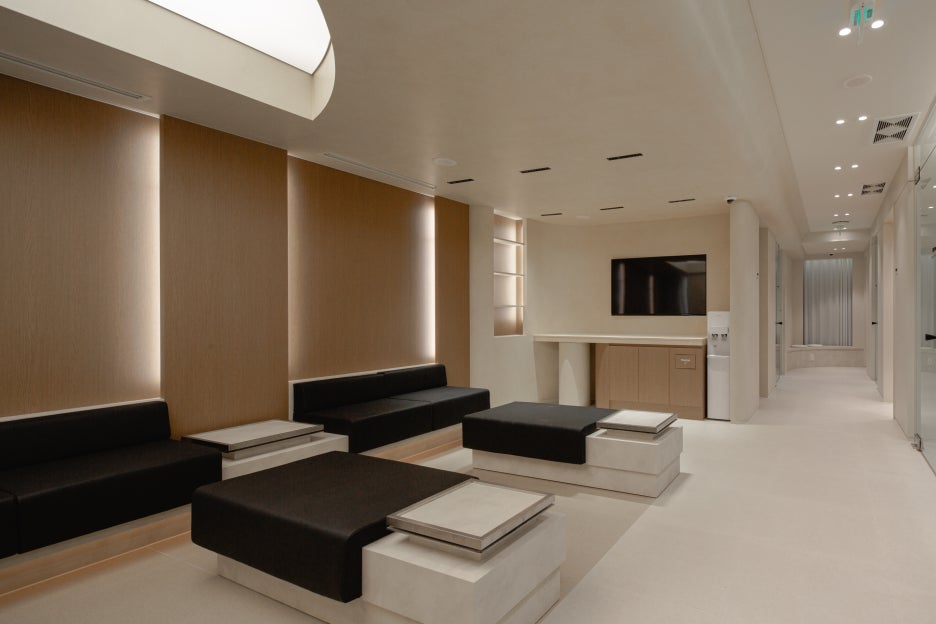
The clinic's waiting lounge with dark sofas, wood-panelled walls, a TV and a long corridor.
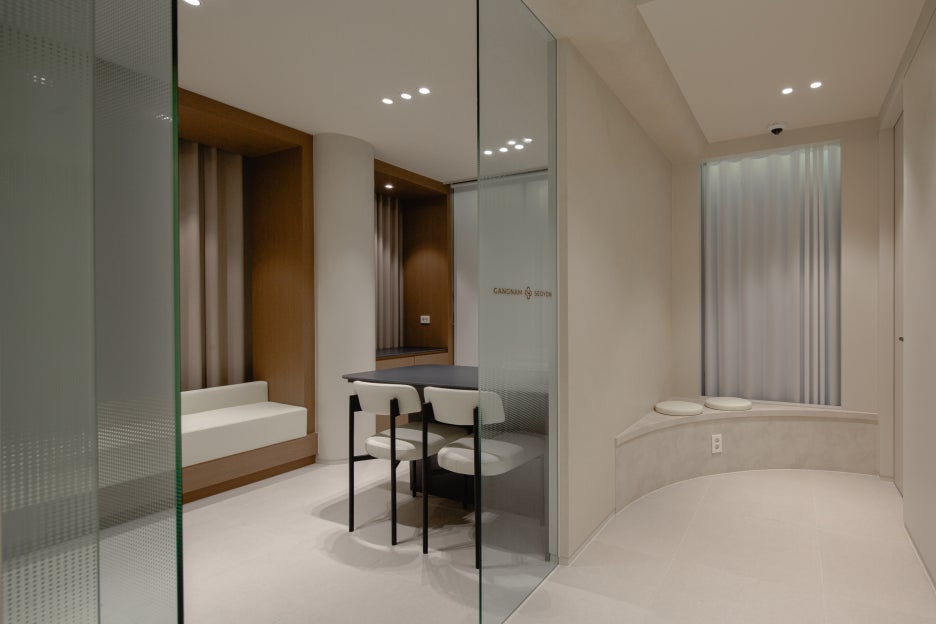
Inside the Gangnam Seoyon clinic: a glass-walled room with a table and two chairs, next to a curved seating area.
Gangnam Seoyeon Plastic Surgery Clinic complies with the Medical Service Act. The photos in this post were taken under identical conditions, with patients' prior consent. Also, depending on the individual, complications such as bleeding, infection, and inflammation may occur after plastic surgery or procedures, so caution is advised.
- Single board-certified plastic surgeon serving as chief director - Accurate assessment of your eye condition, and only the surgery you need is recommended - Operating room equipped with CCTV |
Feel free to visit us and receive
a 1:1 consultation with a board-certified plastic surgeon :)
If you have any questions or would like a consultation,
please leave a comment or add us on KakaoTalk Plus Friends at @강남서연성형외과의원
or call 02-535-8889 :)






Frequently Asked Questions
Is it better to simply remove the fat?
We believe repositioning an appropriate amount of fat looks more natural and lasts longer than simple removal. Simply removing fat is more likely to cause the area to hollow out again or lose firmness over time.
When is under-eye fat repositioning suitable?
It is generally considered suitable when there is little to no skin laxity and only the fat needs to be addressed. The procedure is performed through the inner conjunctiva, and its main feature is that no scar is visible on the outside.
When is lower blepharoplasty chosen?
It is a skin-incision procedure performed when there is skin laxity or when midface lifting is needed. An incision is made along a pre-planned line to remove excess skin and protruding fat.
Will the under-eye area sag after lower blepharoplasty?
During lower blepharoplasty, orbital septum reinforcement and midface lift are performed together to minimize sagging. However, the clinic explains that whether this is appropriate for you is determined through a one-on-one consultation.
How long is the recovery period?
Returning to daily activities is guided at 3–7 days after surgery, and suture removal at 4–12 days. These timeframes may vary depending on the surgical method and each person's condition under the eyes.
Will dark circles improve too?
The clinic explains that when under-eye fat protrudes and creates shadows, fat repositioning alone can significantly improve the appearance. Pigmentation-related dark circles may require separate care.