2026-06-20
Everything You Need to Know About Ptosis and Ptosis Correction
Learn about ptosis (droopy eyelids) and how ptosis correction surgery can transform a sleepy appearance into a bright, clear gaze.
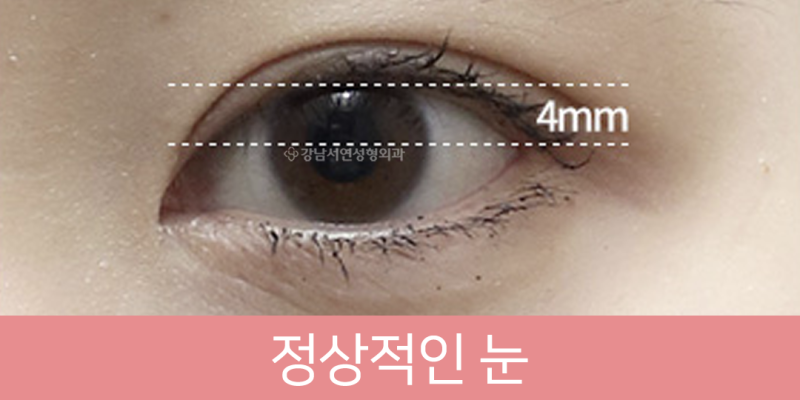
Ptosis correction is a surgical method used to treat mild ptosis rather than severe pathological ptosis.
Recently, some people have misunderstood that ptosis correction inevitably leads to side effects.
However, when the surgery is performed safely, side effects are almost non-existent!
Let’s dive into everything you need to know about ptosis correction!
In a normal eye, the distance between the center of the pupil and the eyelid margin should be approximately 4 to 5 mm.
So, what exactly is ptosis?
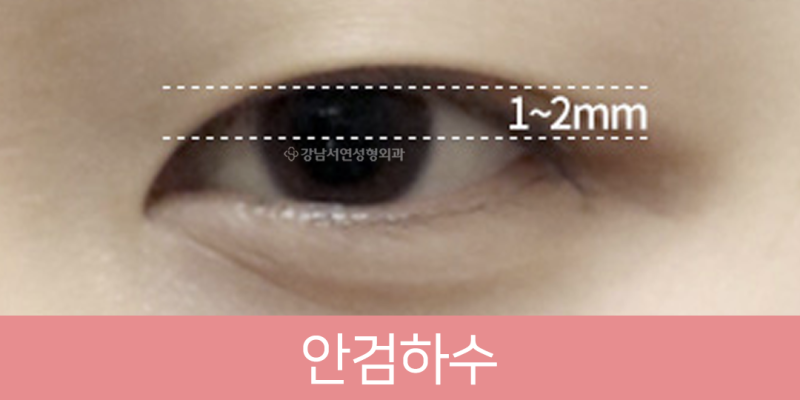
Ptosis refers to a condition where the distance between the center of the pupil and the eyelid is only 1 to 2 mm.
Because the eyelid covers a significant portion of the eye, it creates a ‘sleepy’ or tired impression.
Furthermore, ptosis can be divided into ‘True Ptosis’ and ‘Pseudo-ptosis’.
True Ptosis occurs when the muscle responsible for lifting the eyelid is weak, causing the eyelid to cover the pupil and forcing the person to use their forehead muscles to open their eyes, which is quite uncomfortable.
Pseudo-ptosis occurs when there is no problem with the eyelid-lifting muscle itself, but sagging skin makes the eye appear as if it has ptosis.
Those with mild cases of ptosis can achieve normal-looking, bright eyes through ptosis correction surgery.
Let’s look more specifically at who is a good candidate for ptosis correction!
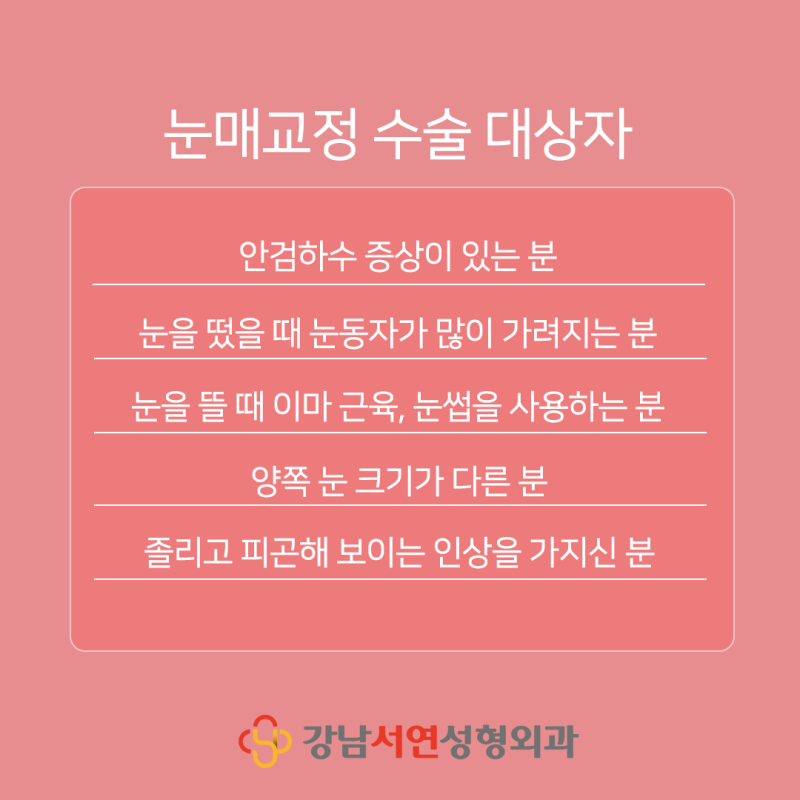
Ptosis correction is divided into non-incisional and incisional methods.
The surgical method is determined by the head surgeon based on the patient’s specific condition.
First, let’s look at the surgical method and characteristics of non-incisional ptosis correction!
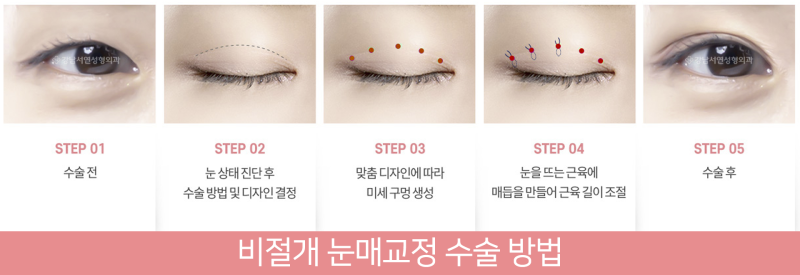
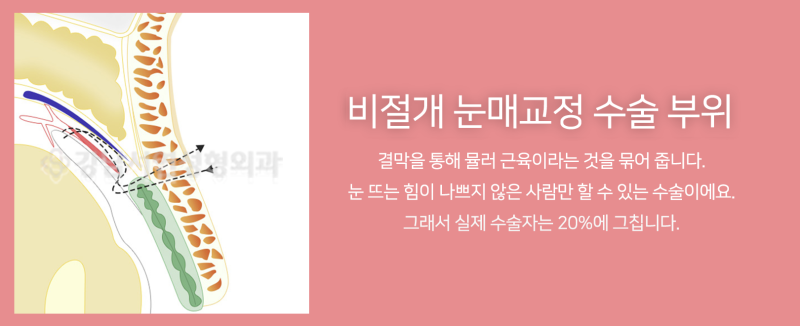
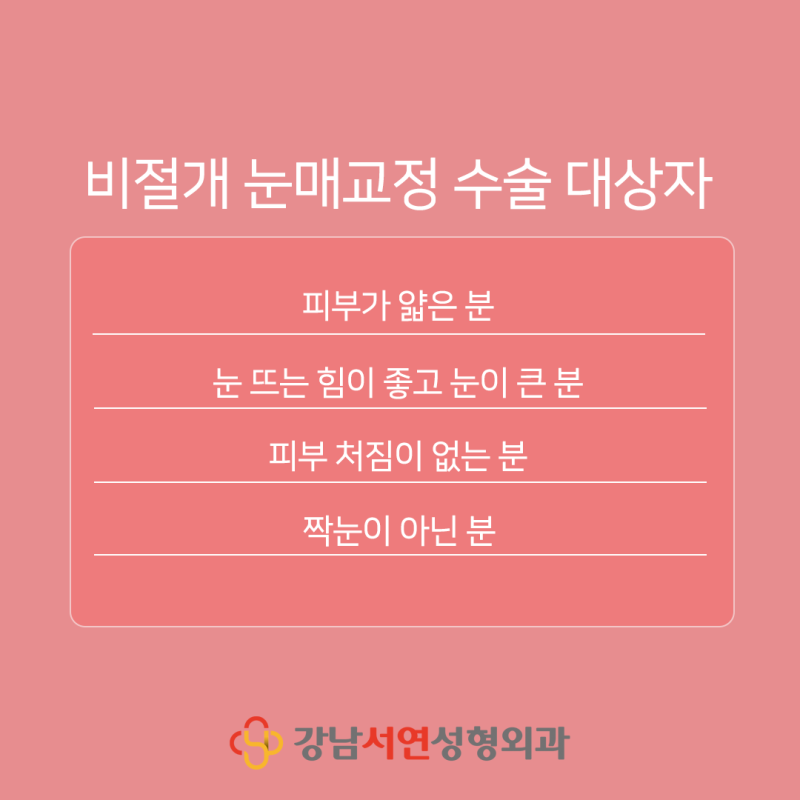
Candidates for non-incisional ptosis correction include:
Next, let’s look at the surgical method and characteristics of incisional ptosis correction!
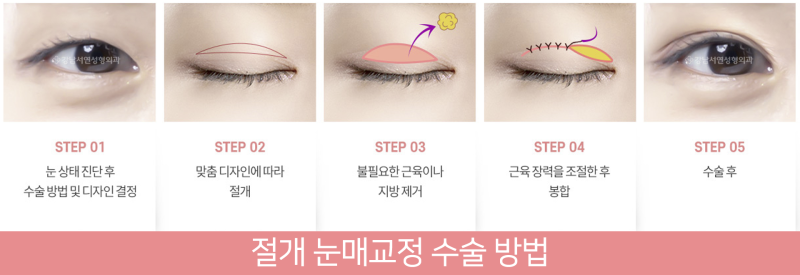
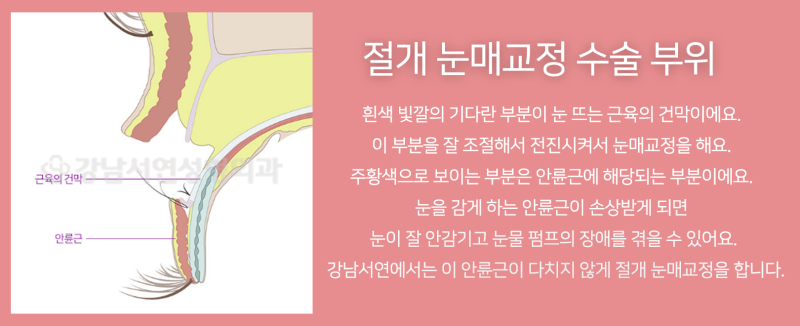
Most patients who visit Gangnam Seoyeon Plastic Surgery for ptosis correction tend to undergo the incisional method.
Please watch the incisional ptosis correction review video below.
Finally, please take a look at these before and after photos!
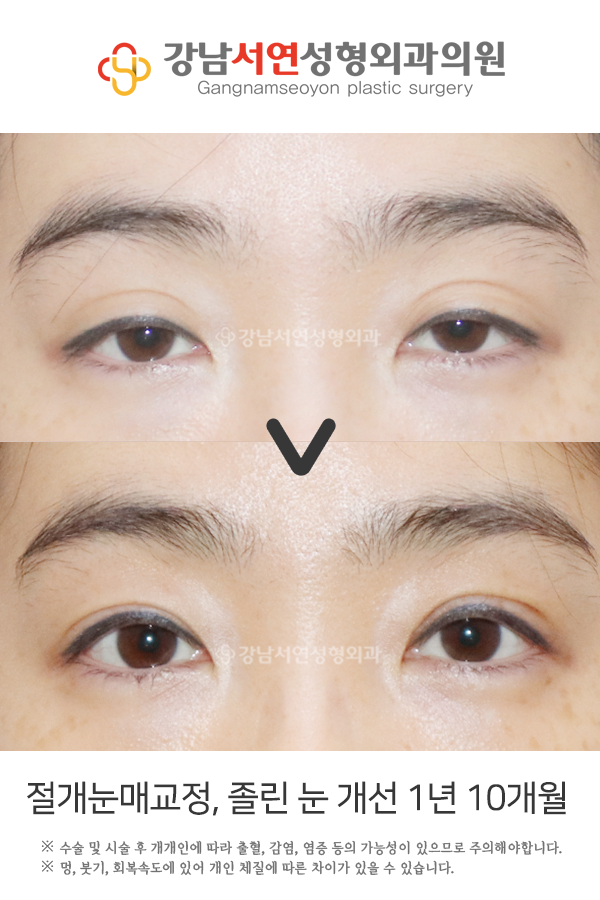
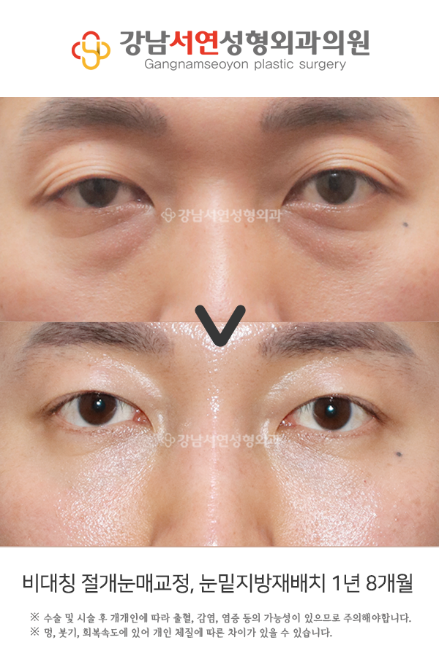
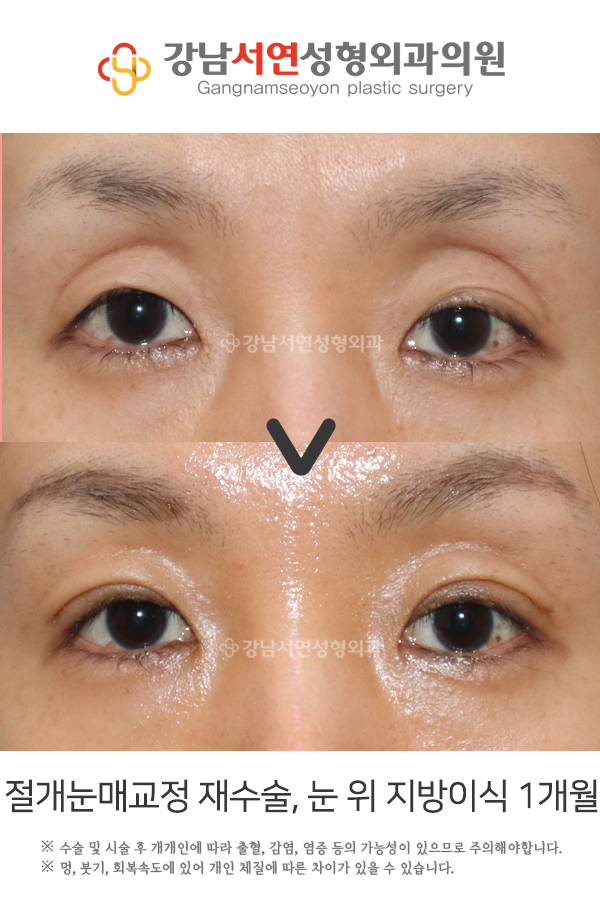
Gangnam Seoyeon Plastic Surgery Clinic complies with all medical laws. The photos in this post were taken under identical conditions with the patient’s prior consent. Additionally, please be aware that side effects such as bleeding, infection, and inflammation may occur after plastic surgery or procedures depending on the individual.
- Single Specialist System led by the Representative Director - Accurate assessment of eye condition / Only necessary surgeries recommended - Operating rooms equipped with CCTV |
Feel free to visit us for a 1:1 consultation with a board-certified plastic surgeon :)
If you have any questions or would like a consultation,
Please leave a comment, contact us via KakaoTalk Plus Friend @GangnamSeoyeonPlasticSurgery,
Or call us at 02-535-8889 :)






#GangnamSeoyeonPlasticSurgery #GangnamSeoyeon #SeoyeonPlasticSurgery #Ptosis #IncisionalMethod #NonIncisionalMethod #SleepyEyes #PtosisCorrection #DoubleEyelidConsultation #PtosisSurgeryReview #DrChoiDongIl
Frequently Asked Questions
What is ptosis?
Ptosis refers to a condition where the distance between the center of the pupil and the eyelid is 1-2mm. This causes the eyes to be significantly covered, giving a sleepy impression, and can occur due to weak eyelid muscles or sagging eyelids.
What is the difference between true ptosis and pseudoptosis?
True ptosis is when the eyelid muscles are weak, causing the eyelid to cover the pupil. Pseudoptosis, on the other hand, is when there is no problem with the eyelid muscles, but sagging eyelids make it appear like ptosis.
Can there be side effects after ptosis correction surgery?
No, it is said that there are almost no side effects if the surgery is performed safely. However, as with all plastic surgeries and procedures, side effects such as bleeding, infection, and inflammation can occur depending on the individual, so caution is required.
What are the types of ptosis correction surgery methods?
Ptosis correction surgery is broadly divided into non-incisional and incisional methods. A specialist will diagnose the patient's eye condition and determine the most suitable surgical method.
In what cases is ptosis correction necessary?
Ptosis correction is necessary for individuals with mild ptosis, not pathological ptosis. It can be considered when the eyelids cover the pupils, giving a sleepy impression.