2026-09-20
Epicanthoplasty Revision: How Long Does Recovery Take? | Before and After Photos
Discover the recovery timeline, V-Y flap reconstruction method, and surgical details for epicanthoplasty revision at Gangnam Seoyeon Plastic Surgery in Sinsa.
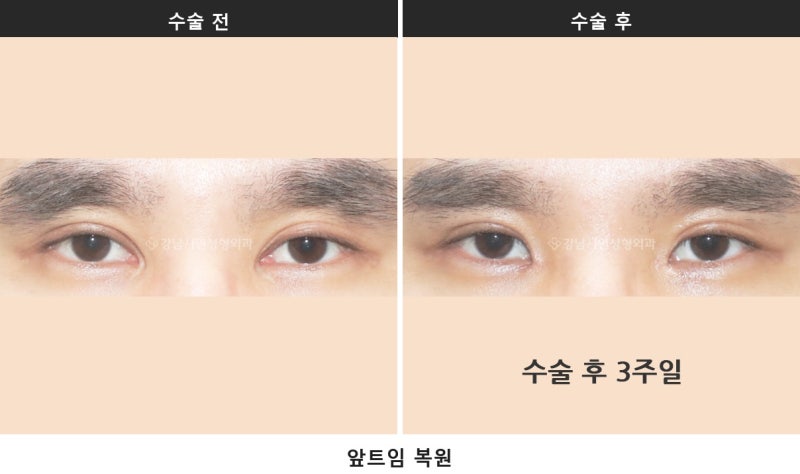
EYE REVISION · Eye Revision Surgery Information
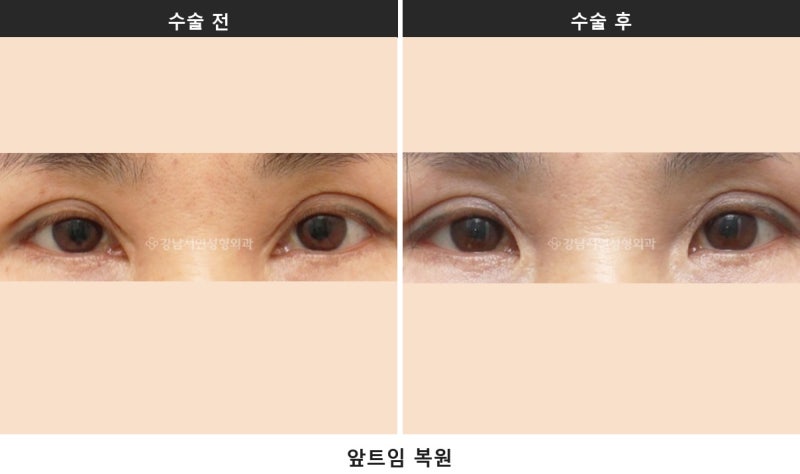
When the lacrimal caruncle is excessively exposed, meticulous reconstruction is required.
■ The Bottom Line
Epicanthoplasty revision (canthoplasty restoration) is a reconstructive procedure designed to correct an overexposed lacrimal caruncle (the pink flesh at the inner corner of the eye) following a previous epicanthoplasty. Gangnam Seoyeon Plastic Surgery published a research paper on epicanthoplasty reconstruction in the Journal of Plastic and Reconstructive Surgery in 2019. We approach this procedure using V-Y advancement flaps and transposition flaps to minimize scarring while restoring a natural inner eye corner.
■ When is Epicanthoplasty Revision Needed?
Revision is typically considered when the lacrimal caruncle is overly exposed, leading to an unnatural appearance, or when the inner corners appear hollowed and overly excavated. The goal is to recreate a natural Mongolian fold line and restore harmonious, gentle eye contours.
■ What is the V-Y Advancement Flap Technique?
This is a delicate reconstructive technique where surrounding skin tissue is incised in a V shape and advanced into a Y shape, naturally filling in the missing skin and soft tissue. When necessary, transposition flaps are utilized concurrently to minimize scarring during restoration.
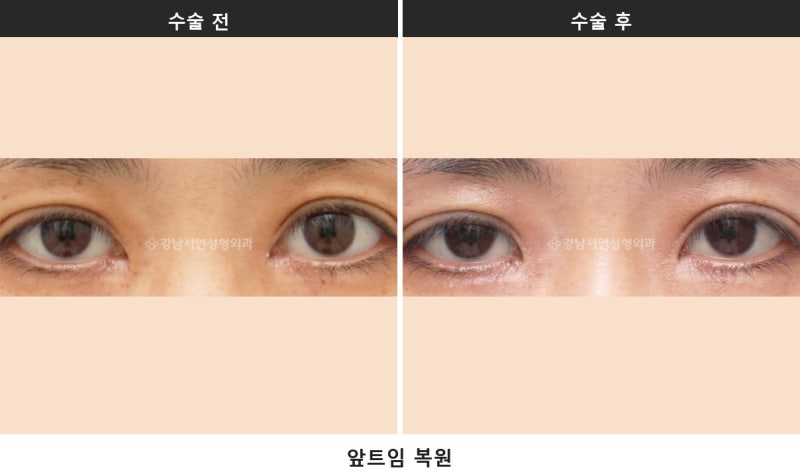
■ Epicanthoplasty Revision Recovery Period
Immediately following surgery, the reconstructed area may appear swollen and feel sensitive. Stitches are typically removed between 4 to 12 days post-op, after which the transposed tissues begin to settle. The final shape and scar maturation generally require an stabilization period of around 6 months.
■ Candidates for Epicanthoplasty Revision
- Those with excessive caruncle exposure after previous epicanthoplasty
- Those whose inner eye corners look unnaturally sharp or hollowed
- Those considering revision after undergoing surgery at another clinic
- Those concerned about noticeable scarring from reconstructive procedures
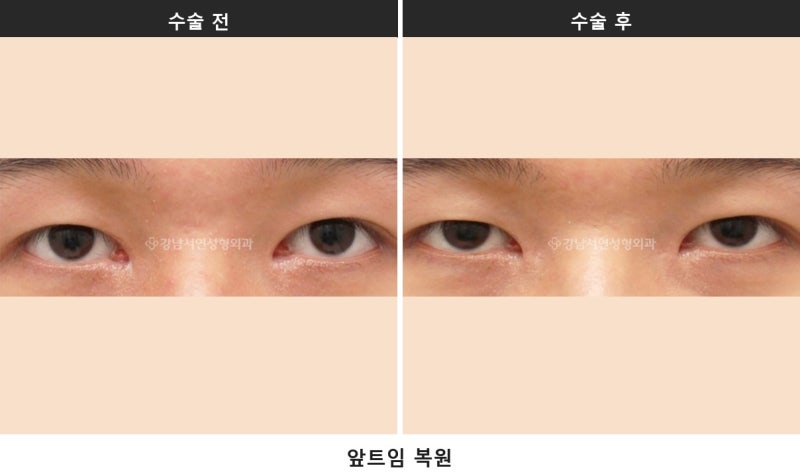
■ Recovery Timeline
Surgery Duration: 30–60 minutes
Anesthesia: Twilight (sedation) or local anesthesia
Follow-up Visits: 1–2 times
Stitch Removal: 4–12 days post-op
Hospitalization: None (same-day discharge)
Return to Daily Life: 5–7 days post-op
Final Stabilization: Approximately 6 months
Timelines may vary based on the extent of initial exposure and individual tissue characteristics.
■ FAQ
Q1. Does epicanthoplasty revision leave severe scarring?
We employ precise reconstructive methods such as V-Y advancement flaps to minimize visible scarring. However, results can vary depending on individual healing responses.
Q2. Can I get a revision if my initial surgery was done at another clinic?
In most cases, yes. We assess your previous surgical history and current eye anatomy before tailoring a corrective plan.
Q3. Will the inner corner overexpose again after revision?
A thorough diagnosis and structural plan are critical to minimize recurrence. Outcomes also depend on personal healing and tissue elasticity.
Q4. How long does recovery take?
Stitches come out in 4–12 days, and resuming daily activities is typical within 5–7 days. The final contour is fully realized around the 6-month mark.
■ The Gangnam Seoyeon Plastic Surgery Approach
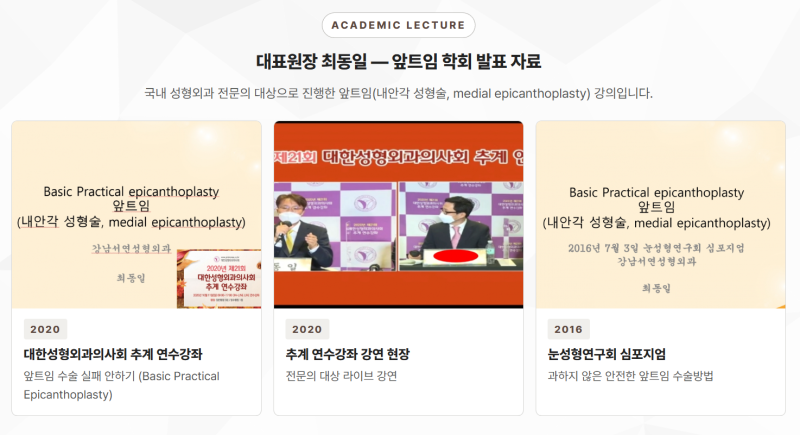
At Gangnam Seoyeon Plastic Surgery, board-certified plastic surgeon Dr. Dong-il Choi oversees the entire process from consultation to surgery. Leveraging his clinical expertise and research published in the Journal of Plastic and Reconstructive Surgery (2019), he meticulously assesses the degree of caruncle exposure and tissue condition to formulate an optimal reconstruction plan.
Gangnam Seoyeon follows three key principles for inner corner reconstruction:
First, precise diagnosis by an experienced, board-certified plastic surgeon.
Second, customized design balancing the inner eye shape with overall facial harmony.
Third, thorough surgical planning and delicate execution to minimize tissue trauma.
To view real patient cases, please explore the before-and-after gallery on the Gangnam Seoyeon Plastic Surgery website.
■ Medical Disclaimer
This content is provided for informational purposes only and does not constitute medical advice or a guarantee of surgical outcomes. As with any surgical procedure, complications such as bleeding, infection, and inflammation may occur. Recovery times and aesthetic results vary depending on individual tissue characteristics and prior surgical history. Please consult a board-certified plastic surgeon for an accurate diagnosis and treatment plan.
The photos in this post were taken with the prior consent of the patients.
Gangnam Seoyeon Plastic Surgery Clinic | Lead Surgeon Dr. Dong-il Choi
20 Gangnam-daero 154-gil, Gangnam-gu, Seoul (Shinbundang Line, Sinsa Station Exit 7)
Mon–Fri 09:30–18:30 · Sat 09:30–16:30 · Closed Sundays & Public Holidays
+82-2-535-8889

Dr. Dong-il Choi
Board-Certified Plastic Surgeon
Current) Chief Director, Gangnam Seoyeon Plastic Surgery (2015–Present)
Former) Director, BK Plastic Surgery (2011–2013)
Former) Director, Regen Plastic Surgery (2013–2015)
Clinical Professor of Plastic Surgery, Korea University College of Medicine
Academic Committee Chair, Ophthalmic Plastic Surgery Research Society, Korean Society of Plastic and Reconstructive Surgeons (KPRS)
Clinical Professor of Plastic Surgery, Gangdong Sacred Heart Hospital
Full Member, Korean Society of Plastic and Reconstructive Surgeons
Full Member, Korean Society for Aesthetic Plastic Surgery (KSAPS)
Full Member, Korean Cleft Palate-Craniofacial Association
Member, International Plastic and Reconstructive Aesthetic Surgery (IPRAS)
Full Member, Korean Society for Surgery of the Hand
Full Member, Korean Association of Plastic Surgeons
Academic Committee Member, Korean Society of Plastic and Reconstructive Surgeons
Editorial Reviewer, Korean Society for Aesthetic Plastic Surgery
Former Financial Director, Current IT Director, Korean Association of Plastic Surgeons
Information & Communications / Public Relations Committee Member, KSAPS
Full Member, Ophthalmic Plastic Surgery Research Society, KPRS
Former Secretary General, Ophthalmic Plastic Surgery Research Society, KPRS
Full Member, Rhinoplasty Research Society, KPRS
Gangnam Seoyeon Plastic Surgery strictly complies with medical laws. The photographs in this post were taken under standardized conditions with patient consent. As with any plastic surgery or aesthetic procedure, individual complications such as bleeding, infection, and inflammation may occur, requiring proper care and caution.
- Single-surgeon practice led entirely by a board-certified plastic surgeon - Precise evaluation of eye conditions / Only necessary procedures recommended - CCTV-equipped operating rooms |
Feel free to visit for a personalized 1:1 consultation
with our board-certified plastic surgeon :)
If you have any questions or wish to book an appointment,
please leave a comment, message us on KakaoTalk Plus Friend @강남서연성형외과의원,
or call us at +82-2-535-8889 :)






Frequently Asked Questions
When can stitches be removed and daily routines resumed after epicanthoplasty revision?
Stitches are removed between 4 to 12 days after surgery, and returning to daily routines is usually possible after 5 to 7 days. Mild swelling and sensitivity are normal early on, while final scar maturation and shape stabilization typically take around 6 months.
Can I have epicanthoplasty revision if my primary surgery was done elsewhere?
Yes, revision is possible in most cases even if previous surgery was performed at another clinic. A board-certified surgeon will conduct a detailed evaluation of your surgical history, inner canthal exposure, and remaining tissue to establish a customized reconstructive plan.
Does epicanthoplasty revision leave noticeable scars?
Techniques are chosen specifically to minimize scarring. By employing advanced reconstructive methods such as V-Y advancement flap elevation and transposition flaps, missing tissue is naturally restored while keeping scar visibility low. However, results depend on individual healing factors.
How does the V-Y advancement flap work in epicanthoplasty revision?
It is a meticulous reconstructive method where adjacent tissue is incised in a V shape and advanced forward into a Y configuration. This naturally replenishes deficient skin and soft tissue around the inner corners. When needed, transposition flaps are combined to minimize scarring and recreate a natural fold line.
How long is the surgery and what type of anesthesia is used?
The surgery takes about 30 to 60 minutes and is performed under local anesthesia or twilight sedation. It is an outpatient procedure allowing same-day discharge, with typically 1 to 2 post-operative clinic visits. Schedules and recovery can vary based on individual tissue conditions.