2026-06-20
3 Types of Double-Line Fold Lowering Side Effects and a Complete Guide to Successful Revision Eye Surgery
Learn about the side effects of double-line fold lowering (sausage eye correction) and how to prevent revision surgery failure through expert anatomical techniques.
3 Types of Double-Line Fold Lowering Side Effects and a Complete Guide to Successful Revision Eye Surgery
Hello. This is Gangnam Seoyeon Plastic Surgery.
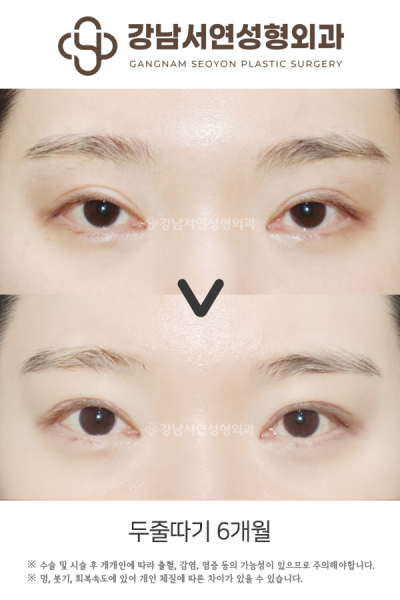
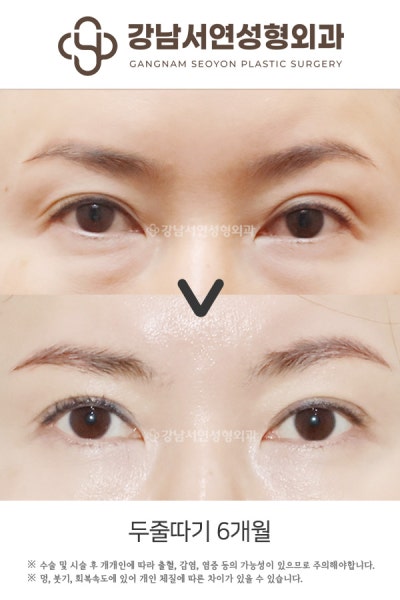
‘Double-line fold lowering’ is a highly satisfying revision eye surgery that lowers high crease lines—so-called ‘sausage eyes’—caused by previous failed double eyelid surgeries without skin excision.
However, for patients who have already experienced a failed first surgery, it is natural to feel anxious, wondering, ‘What if I fail again after double-line fold lowering?’ or ‘Are there side effects to this procedure?’ Like all plastic surgeries, double-line fold lowering can lead to side effects if anatomical principles are not strictly followed.
Today, we will explain in detail the three types of side effects that can occur after double-line fold lowering and what points to check to perfectly prevent them.
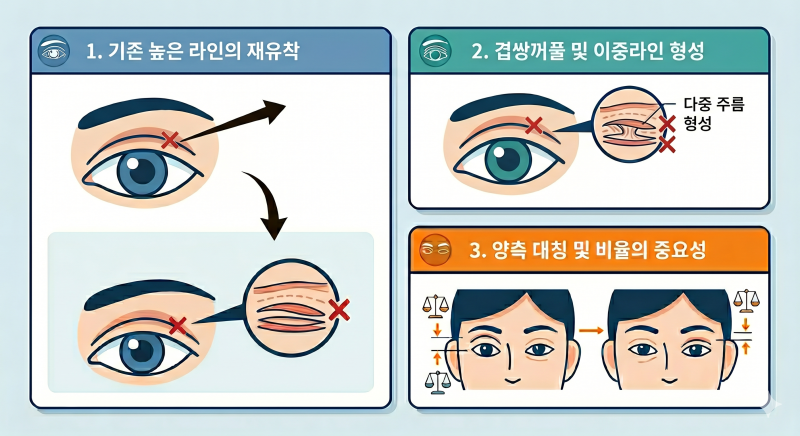
■ 3 Representative Side Effects That Can Occur After Double-Line Fold Lowering
As double-line fold lowering is a delicate surgery that creates a new line below the existing one, the following side effects may appear if the surgeon lacks sufficient expertise.
1. Re-adhesion of the Existing High Line (Re-folding Phenomenon) This is the most common side effect, where the old, higher double eyelid line folds again over time instead of the new lower line. This happens when the scars and adhesions of the existing line were not completely released or when the treatment to prevent the released space from re-adhering was insufficient. 2. Triple Folds and Double Line Formation This is a side effect where the existing line and the newly created line fold simultaneously when opening the eyes, creating messy double or triple lines on the eyelid. This mainly occurs when the eyelid skin is too thin or when the internal tissues are not properly aligned even though the existing adhesions were released. 3. Asymmetry (Uneven Eyes) The degree of existing adhesion and skin thickness on each eye varies slightly for every individual. If the surgery is performed mechanically and identically without considering these factors, one side may lower well while the other side remains high or gets pulled back up, resulting in severe bilateral asymmetry.
■ How to Prevent Side Effects? _ 3 Key Prevention Methods
To fundamentally block these side effects and finish revision eye surgery in a single attempt, three core technical skills based on anatomical principles must be supported.
① Perfect Micro-dissection of Internal Eyelid Scar Tissue (Adhesion) The most important first step in preventing side effects is ‘how cleanly the existing adhesions are released.’ The connection between the tarsal plate and the scar tissue hardened by the previous surgery must be finely and precisely severed so that the existing line completely loses its power to fold again. ② Robust Fat Relocation (Barrier Formation) Know-how No matter how well the adhesions are released, the body has a tendency to return to its original state. To prevent this, orbital fat or surrounding tissues must be appropriately moved into the released space to create a solid ‘barrier’ similar to an anti-adhesion film. This process must be certain for the lines to fall into a clean single line without triple folds over time. ③ Concurrent Ptosis Correction to Distinguish ‘Fake’ Sausage Eyes If a patient’s double eyelids look thick because of weak eye-opening power (ptosis), simply lowering the line with double-line fold lowering is not enough. Ptosis correction must be performed concurrently to strengthen the eye-opening muscles so the eyes open clearly and the newly created lower line naturally rolls inward, preventing side effects.
■ The Standard for Successful Revision Eye Surgery, Gangnam Seoyeon Plastic Surgery
Double-line fold lowering is a safe surgical method that does not cut away skin, but it is considered one of the most difficult plastic surgeries because it requires remodeling the already damaged internal structure of the eye. This is why results vary drastically depending on the surgeon’s skill level.
Located near Serosu-gil by Sinsa Station, Gangnam Seoyeon Plastic Surgery scientifically analyzes the causes of failure to perform customized revision eye surgery.
Precision Anatomical Diagnosis: We accurately identify the depth of existing scar tissue and the strength of adhesions through ultrasound and visual diagnosis.

1:1 Dedicated Surgery by the Chief Surgeon: We promise responsible treatment from consultation to micro-dissection and aftercare without any proxy surgeons.
Minimizing Tissue Damage: By reducing unnecessary bleeding and damage, we minimize swelling and bruising to help a fast return to daily life.
Understanding the emotional distress patients have faced due to their first surgery’s failure, Gangnam Seoyeon Plastic Surgery will provide a safe and natural final revision eye surgery. If you need an accurate diagnosis and consultation for your eye condition, please feel free to contact us at any time.
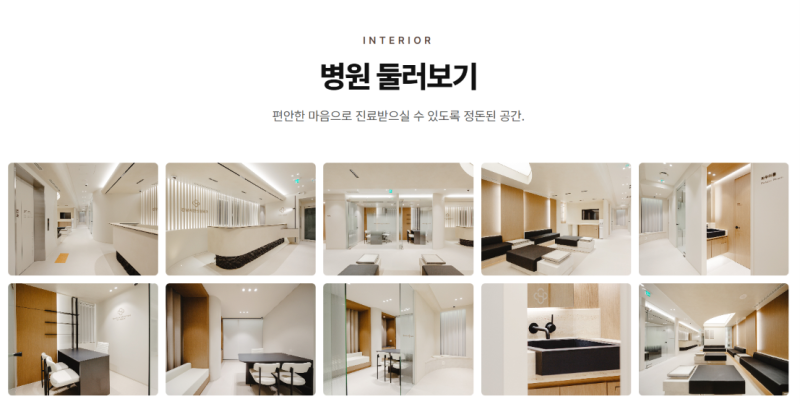
Location: Gangnam-gu, Seoul (2-minute walk from Sinsa Station / Near Serosu-gil, Gangnam Seoyeon Plastic Surgery)
Consultation & Reservation: [KakaoTalk @GangnamSeoyeonPlasticSurgery / Phone 02-535-8889]
Gangnam Seoyeon Plastic Surgery Clinic complies with medical laws. The photos in this post were taken under the same conditions with the patient’s prior consent. Additionally, please be aware that side effects such as bleeding, infection, and inflammation may occur after plastic surgery and procedures depending on the individual.
- Single Board-Certified Plastic Surgeon Chief System - Accurately identifies eye condition / Recommends only necessary surgeries - Equipped with operating room CCTV |
Feel free to visit and receive a
1:1 consultation from a board-certified plastic surgeon :)
If you have any questions or would like a consultation,
please leave a comment or contact us via KakaoTalk Plus Friend @GangnamSeoyeonPlasticSurgeryClinic
or call 02-535-8889 :)




Frequently Asked Questions
What is the 'Double Line Revision' surgery?
Yes, it is an eye revision surgery that lowers the existing high double eyelid line (sausage eye) without skin excision. It is mainly performed to correct high lines caused by previous unsuccessful surgeries and is one of the most satisfying eye revision surgeries.
What are the possible side effects after 'Double Line Revision' surgery?
There are three main side effects. First, re-adhesion where the existing high line folds again; second, multiple lines forming on the eyelid, creating a 'multiple double eyelid'; and third, asymmetrical eyes where the lines on both eyes are lowered differently.
How can I prevent the side effect of the existing line folding again?
It is necessary to meticulously dissect the scar tissue and adhesions inside the eyelid. By precisely severing the connection between the hardened scar tissue from the previous surgery and the tarsal plate, the existing line loses its power to fold back, thus preventing the side effect.
What is the process of forming a 'barrier' to prevent multiple double eyelids?
It is a process of moving orbital fat or surrounding tissue into the space where adhesions were released and laying down a firm membrane. To prevent the body from returning to its original state, a barrier, like an anti-adhesion film, must be created to maintain a clean single line over time.
If I have ptosis, is 'Double Line Revision' alone sufficient?
No, it is recommended to combine it with ptosis correction. In cases of 'fake sausage eyes' where the double eyelid appears thick due to weak eye-opening strength, strengthening the eye-opening muscles through ptosis correction is necessary to allow the newly created lower line to naturally fold inward and prevent side effects.