2026-06-20
9 Essential Tips to Avoid Side Effects of Eye Surgery
Learn how to avoid side effects like sausage eyes and ptosis correction issues with 9 expert tips from Gangnam Seoyeon Plastic Surgery.
Hello!
To ensure highly satisfying surgical results,
Gangnam Seoyeon Plastic Surgery Clinic always does its best :)
Today, we have prepared a post to answer frequently asked questions regarding double eyelid surgery to resolve your curiosities.
If you have more questions about double eyelid surgery, feel free to leave a question on the Gangnam Seoyeon Naver Cafe :)

We will now discuss 9 things you must know to avoid side effects of eye surgery.
Q1. How can I avoid getting ‘sausage eyes’?
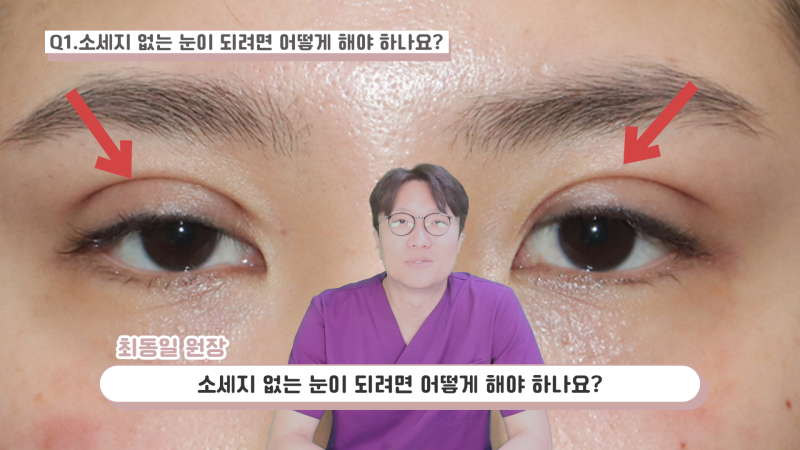
First, the double eyelid line should not be too high.
The higher the line, the more it creates a ‘sausage’ look.
High lines cause several issues.
Besides the sausage effect, multiple layers of wrinkles can form below the incision line or double eyelid line.
A high line can also make you look sleepy.
However, a high line is not the only cause of sausage eyes.
Even if the line is low, if the skin itself is thick, it can still appear like a sausage.
Q2. I’m worried I might tense up my eyes during surgery.
You might tense your eyes during surgery, but don’t worry.
Some people frown during anesthesia, but we administer the injection accordingly.
Once the area is numbed and pain-free, most people do not tense up.
However, the surgery is not performed under complete general anesthesia.
While methods vary by surgeon, at Gangnam Seoyeon, we perform the surgery while the patient is conscious because you need to open and close your eyes or sit up during the process to check the results.
Instead, we can provide light sedation only during the local anesthesia injection to minimize pain.
Q3. Is it impossible to have revision surgery using the buried method after an initial incisional surgery?
Generally, if the first surgery was done with the incisional method, the principle is to perform the revision using the incisional method as well.
While there are cases where revision with the buried method is possible, it is not recommended.
The buried method requires soft tissue.
If you want a buried method revision after an incisional surgery, it might be okay if scarring is minimal. However, if scarring is severe, the line may look pinched, uneven, or loosen over time.
Therefore, we mostly recommend the incisional method for revisions following an initial incisional surgery.
Q4. What are the criteria for diagnosing ptosis?
In a normal eye, the eyelid should cover about 1–2mm of the pupil.
If it hangs lower than that, it can be considered ptosis.
Ptosis is divided into ‘pseudo-ptosis’ and ‘true ptosis’.
Pseudo-ptosis is when the eye itself is large, but sagging skin makes it look small.
True ptosis is when the eye remains small even when the forehead is lifted.
In such cases, ptosis correction surgery may be necessary.
Q5. Does ptosis correction always lead to side effects?
There is a common misconception that ptosis correction always causes side effects.
If everyone who had the surgery experienced side effects, the government would have banned it.
But that’s not the case, right?
The reason it seems like there are many side effects is that the rare individuals who experience them often post about it online.
Those who suffer side effects naturally want to share their frustration.
Reading these posts can create the misunderstanding that many people suffer from them.
Problems can occur if the surgery is performed excessively or when ptosis correction wasn’t actually needed.
However, this is not typical.
If you experience a pulling sensation or headaches after ptosis correction, you should have it released quickly.
If released immediately, most symptoms improve, but if left too long, they may not resolve.
Q6. Are there disadvantages for those who use double eyelid tape frequently?
Since double eyelid tape uses adhesive, it can damage the skin.
If dermatitis occurs and the skin becomes rough or hardened, it won’t fold properly.
A double eyelid needs to fold naturally.
So, if you are planning surgery, it is best to stop using it at least shortly before the procedure.
Also, some people mistakenly believe that eyelid tape causes skin sagging.
When you apply the tape, the skin folds and makes the eye look larger.
When the tape is removed, the skin returns to its original position, which can be misinterpreted as sagging.
However, eyelid tape does not actually stretch the skin.
Nevertheless, it can cause atopy or dermatitis, so it is best for surgical candidates to avoid using it.
Q7. Will the double eyelid line look exactly like it did during the consultation?
Yes, it will look almost the same.
While variables can occur, it usually turns out very similar.
For example, if ptosis correction was performed and the correction loosens over time, the shape might change.
In most cases, the double eyelid line follows the pre-surgical plan.
Q8. In what cases can the eyes not close fully?
Our eyes have a muscle called the ‘orbicularis oculi’.
The name comes from the words for ‘eye’ and ‘wheel’.
It refers to the circular muscle around the eye.
Its role is to contract and close the eye.
As long as this muscle is intact, there is no issue with closing the eyes.
In most cases, there are no problems, but if the orbicularis oculi is damaged, the eye may not close.
Facial nerve palsy can also cause this if the relevant muscles are paralyzed.
Additionally, if too much skin is removed regardless of the muscle, the eye may not close.
In such cases, other procedures like skin grafting may be required.
Q9. Is double eyelid surgery related to eyesight?
Double eyelid surgery has no significant correlation with eyesight.
However, temporary astigmatism may occur immediately after surgery.
Also, because the eyes may not close fully right after surgery, dry eye syndrome can occur.
This leads some people to mistakenly believe their vision has worsened initially.
In reality, there is no major link between the surgery and eyesight.
If your vision actually drops, it is better to visit an ophthalmologist for a diagnosis rather than blaming the eye surgery.
Sometimes another cause coincides with the timing of the surgery, leading to a misunderstanding. You must visit an eye clinic to be sure.
If you found these Q&As helpful,
why not visit our channel to watch the full video?
Please subscribe, like, and turn on notifications.
Regarding Eye Surgery Q&A,
you can find more details in the video below.
↓↓↓↓↓↓
Gangnam Seoyeon Plastic Surgery Clinic complies with medical laws. The photos in this post were taken under the same conditions with the patient’s prior consent. Furthermore, side effects such as bleeding, infection, and inflammation may occur after plastic surgery or procedures depending on the individual, so caution is advised.
- Single Board-Certified Plastic Surgeon Representative Director system - Accurately assesses eye condition / Recommends only necessary surgeries - Operating room CCTV equipped |
Feel free to visit us for a 1:1 consultation with a board-certified plastic surgeon :)
If you have any questions or wish to consult,
please leave a comment, contact us via KakaoTalk Plus Friend @GangnamSeoyeonPlasticSurgery,
or call us at 02-535-8889 :)



#GangnamSeoyeonPlasticSurgery #GangnamSeoyeon #SeoyeonPlasticSurgery #SausageEyes #IncisionalMethod #BuriedMethod #Ptosis #PtosisCorrection #DoubleEyelidDesign #EyeSurgeryConsultation #EyelidTape #Lagophthalmos #Eyesight #DoubleEyelidReview #ChoiDongIl