2026-06-20
Men’s Monolid Ptosis Correction: Surgical Methods and Before & After Photos
Learn about men’s monolid ptosis correction at Gangnam Seoyeon Plastic Surgery, including incisional vs. non-incisional methods and real recovery photos.
Hello!
To ensure surgery with high satisfaction,
Gangnam Seoyeon Plastic Surgery Clinic always does its best :)
Today, we are going to learn about Men’s Monolid Ptosis Correction by Director Choi Dong-il of Gangnam Seoyeon Plastic Surgery.
We will explain who is suitable for this procedure,
the surgical methods involved,
and look at before and after photos.
The photos below have not been edited in any way except for brightness adjustment :)

Incisional Ptosis Correction vs. Non-Incisional Ptosis Correction
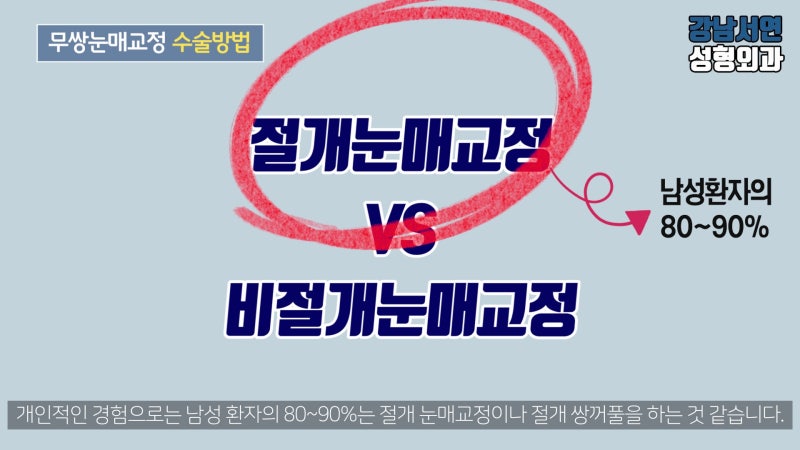
First, men’s monolid ptosis correction is performed using either the incisional or non-incisional method.
In my personal experience, about 80–90% of male patients
seem to undergo incisional ptosis correction or incisional double eyelid surgery.
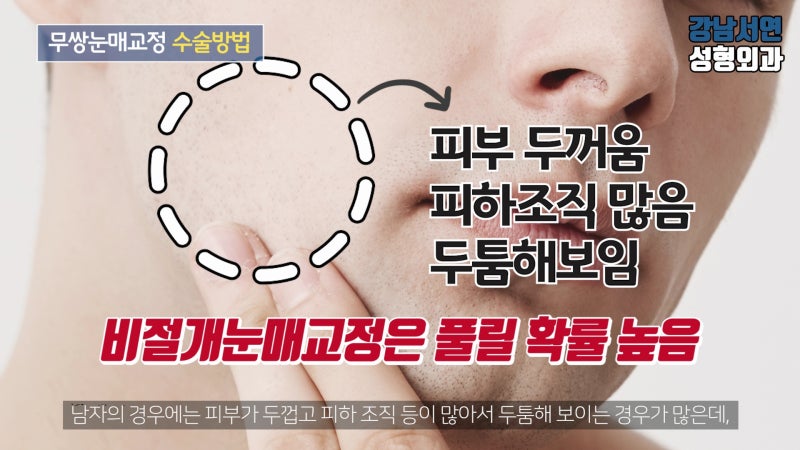
In the case of men, the skin is often thick and there is a lot of subcutaneous tissue,
which frequently results in a puffy appearance.
If non-incisional ptosis correction is performed in these cases, there is a high probability of it loosening.
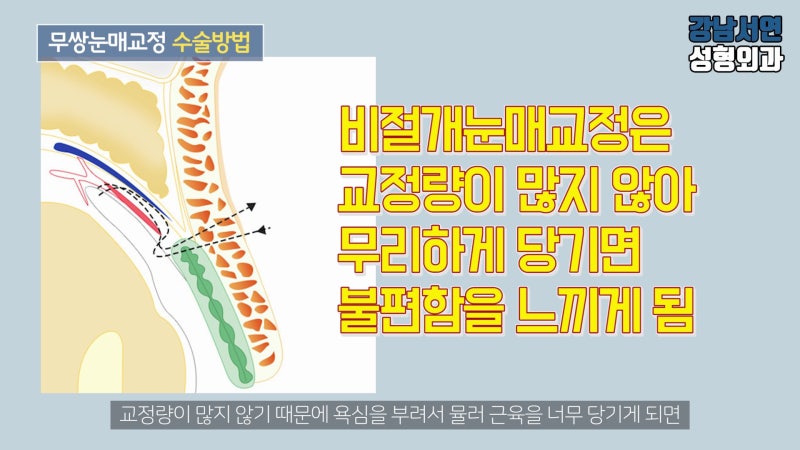
In the non-incisional method, the Müller muscle is tied through the conjunctiva to correct the eye shape. Since the amount of correction is limited, being too ambitious and pulling the Müller muscle excessively can cause significant discomfort.
Because of this, there are many unfortunate cases where patients come in for a secondary incisional surgery after a non-incisional one.
When Non-Incisional Ptosis Correction is Possible
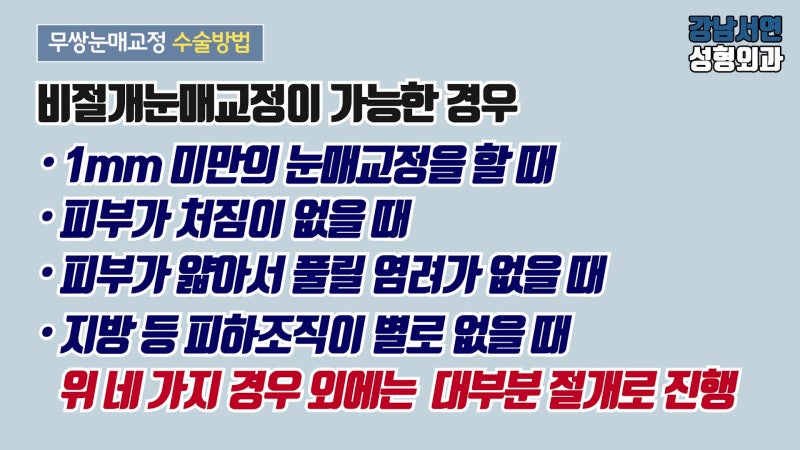
There are four cases where non-incisional ptosis correction is possible:
When less than 1mm of correction is needed
When there is no skin sagging
When the skin is thin and there is no concern about loosening
When there is very little fat or subcutaneous tissue
Except for these four cases, most procedures are performed using the incisional method.
Who Needs Men’s Monolid Ptosis Correction?
So, for whom is men’s monolid ptosis correction suitable?
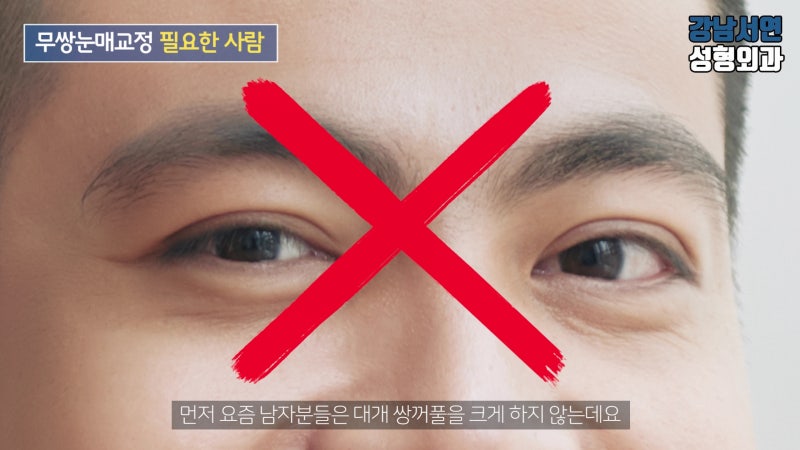
First of all, most men these days do not want large, visible double eyelids.
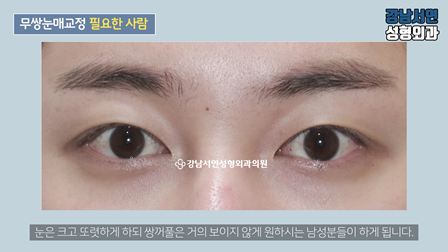
Therefore, men’s monolid ptosis correction is basically for men who want their eyes to look large and clear while keeping the double eyelid fold almost invisible.
Let’s look at specific cases:
Case 1. People whose eyes look small and stuffy
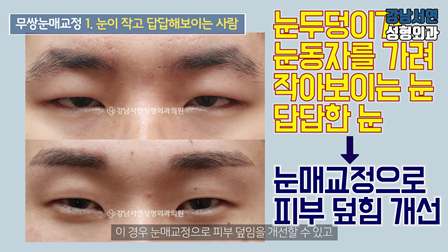
First, when the upper eyelid covers too much of the pupil, making the eyes look small or ‘stuffy’.
In this case, ptosis correction can improve the skin coverage.
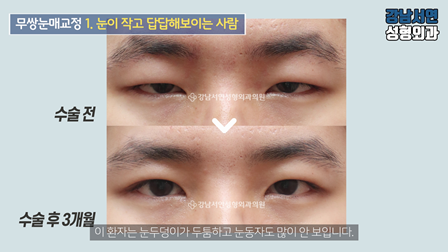
This patient had thick eyelids and very little of the pupil was visible.
In addition to fat removal, the orbicularis oculi muscle, the fat layer behind it, and the septum were appropriately removed.
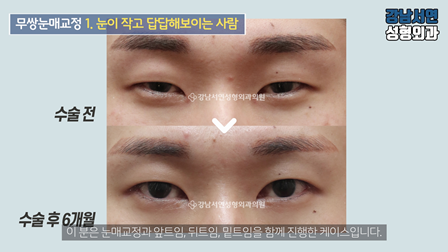
This is a case where ptosis correction was performed along with epicanthoplasty, lateral canthoplasty, and lower canthoplasty.
Case 2. People who use their forehead to open their eyes
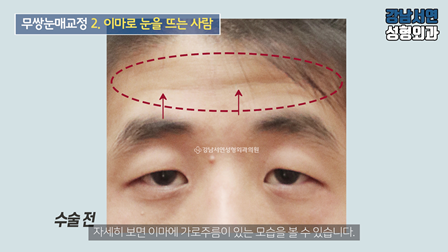
Second is the case of opening eyes using the forehead muscles.
Usually, people who lack the strength to open their eyes properly use their forehead to help.
If you look closely, you can see horizontal wrinkles on the forehead.

This is the appearance one year after surgery.
Sometimes, it may seem like there isn’t a huge difference before and after monolid ptosis correction.
This is because, before surgery, the patient was using their forehead to force their eyes open wider.
So, while the eyes alone might not look drastically different, if you look at the forehead, you can see that after surgery, they can open their eyes wide without using the forehead muscles.
Case 3. People with eye asymmetry
The third case is eye asymmetry.
Asymmetry can be limited to the eyes, but it is often accompanied by facial asymmetry.
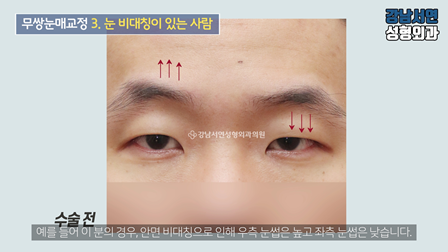
For example, in this case, due to facial asymmetry, the left eyebrow (on the photo) is high and the right eyebrow is low.
Also, the right eye is relatively smaller than the left.
In such cases, even with ptosis correction, the position of the eyebrows will not become perfectly level, making it very difficult to achieve exact symmetry. However, ptosis correction can make them look as similar as possible.
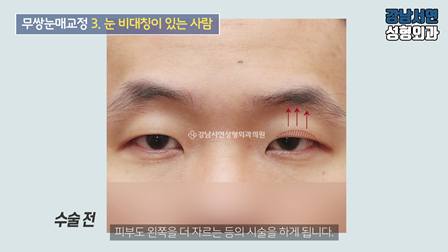
For this patient, more ptosis correction and skin excision were performed on the right eye, which was smaller than the left.
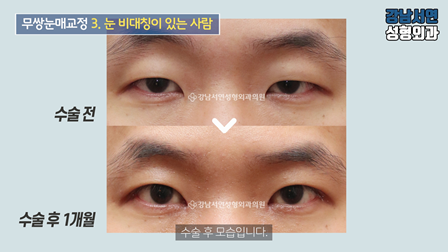
This is the appearance after surgery.
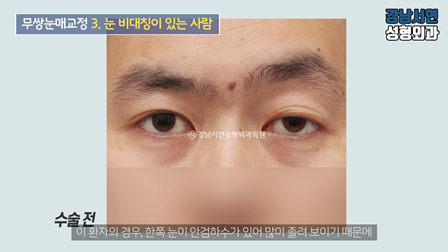
In this patient’s case, one eye has ptosis and looks very sleepy, so that side needs correction.
However, because variables like Hering’s Law can occur, we cannot operate on only one side; both eyes are operated on.
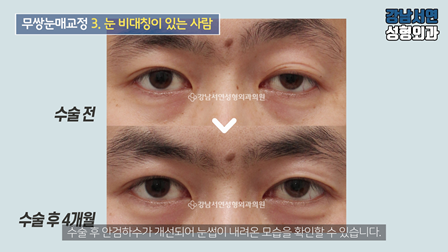
This is the appearance after surgery.
Swelling After Men’s Monolid Ptosis Correction
When consulting for men’s ptosis correction, the most frequent question patients ask is about swelling.
So, I would like to show you the appearance at 1 week and 1 month after surgery.
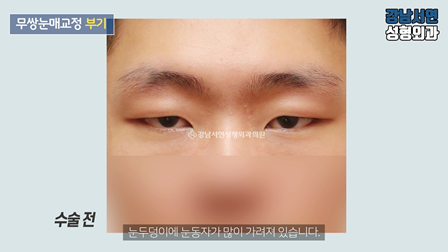
Before surgery.
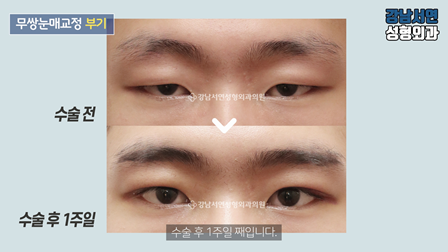
1 week after surgery.
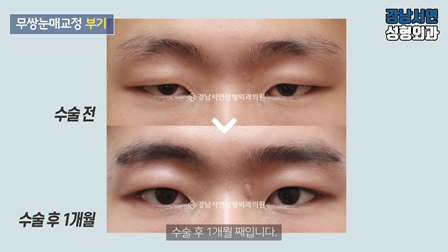
1 month after surgery.
Here is another patient.
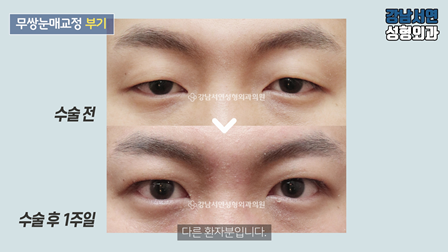
This is 1 week after surgery; the swelling might make the impression look slightly sharp or strong.
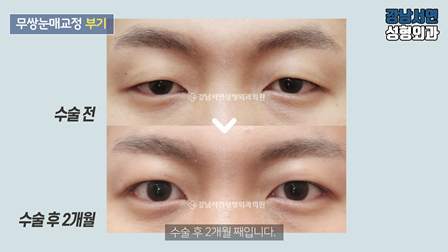
2 months after surgery.
Regarding men’s monolid ptosis correction,
you can find more detailed information in the video below.
↓↓↓↓↓↓
Gangnam Seoyeon Plastic Surgery Clinic complies with medical laws. The photos in this post were taken under the same conditions and with the patient’s prior consent. Additionally, side effects such as bleeding, infection, and inflammation may occur after plastic surgery and procedures depending on the individual, so caution is advised.
- Single Board-Certified Plastic Surgeon Representative Director System - Accurately identifies eye condition / recommends only necessary surgeries - Operating room CCTV equipped |
Feel free to visit and receive a
1:1 consultation with a plastic surgery specialist :)
If you have any questions or would like a consultation,
please leave a comment, contact us via KakaoTalk Plus Friend @GangnamSeoyeonPlasticSurgery,
or call us at 02-535-8889 :)






#GangnamSeoyeonPlasticSurgery #GangnamSeoyeon #SeoyeonPlasticSurgery #DoubleEyelidSurgery #PtosisCorrection #MensPtosisCorrection #MensEyeSurgery #DoubleEyelidSurgeryReview #ChoiDongIl #DirectorChoiDongIl #MonolidPtosisCorrection
Frequently Asked Questions
Is male ptosis correction usually performed using the incisional method?
Yes, 80-90% of male patients undergo incisional ptosis correction. This is because men tend to have thicker skin and more subcutaneous tissue, which increases the likelihood of the non-incisional method loosening. If non-incisional surgery is performed excessively, it can cause discomfort when opening the eyes, so caution is needed.
What are the conditions for men who can undergo non-incisional ptosis correction?
It is restrictively possible for those with thin skin, no sagging, and little subcutaneous tissue such as fat. Additionally, non-incisional ptosis correction can be applied when the correction amount is small, less than 1mm. If these four conditions are not met, most surgeries are performed using the incisional method.
Can the habit of opening eyes with the forehead also be corrected with ptosis correction?
Yes, it can be effectively improved through ptosis correction. Patients who used their forehead muscles due to insufficient strength to open their eyes can open their eyes comfortably without using their forehead after surgery. Even if the change in eye size appears small after surgery, there is an effect of improving forehead wrinkles.
Can asymmetrical eyes due to facial asymmetry be corrected?
Yes, ptosis correction can be used to make them appear as similar as possible. While it is difficult to achieve perfect symmetry if the bone structure or eyebrow position differs due to facial asymmetry, the amount of correction and skin excision for each eye are adjusted differently to effectively alleviate asymmetry.
When does the swelling subside after male monolid ptosis correction surgery?
Typically, significant swelling subsides and the eyes become more natural over 1 week to 1 month. In the first week after surgery, the impression may appear somewhat strong due to swelling, but over time, the eyes will gradually settle into a softer and clearer look.